Tel: +86 139 0589 5606
E-mail:info@globri.com

Tel: +86 139 0589 5606
E-mail:info@globri.com
The urban trail lighting project, while appearing glamorous, actually harbors a common concern for both the engineering contractor and the client - expensive wiring, high electricity bills, and difficult maintenance. Traditional solutions rely on mains electricity for power, and every step from cable laying to lighting maintenance is a cost sinkhole. Nowadays, with the minimalist logic of "absorbing light during the day and emitting light at night," Shimingli's inorganic light-storing self-luminous tiles have completely disrupted this dilemma: no electricity, no wiring, one-time laying with long-term peace of mind, allowing trail lighting to return to its essence.
Pain point 1 of pathway lighting: expensive construction wiring, with infrastructure construction eating into profits
The first step in path lighting is "power installation". The process involves excavating the road surface, laying cables, installing distribution boxes, applying for electricity usage quotas... It is cumbersome and time-consuming, with infrastructure costs often accounting for more than 40% of the total cost. Projects in remote suburbs are even more challenging, due to long power installation distances and expensive transformer capacity expansion. Many projects are forced to be "abandoned due to electricity issues". What is even more frustrating is that cable aging and interface failures become long-term hidden dangers, leading to constant repairs during the warranty period and repeated erosion of profits.
Pain point 2 of trail lighting: high electricity bills, burning through a house's worth of money in ten years
For a 3-kilometer standard footpath, the annual electricity cost for LED street lights is approximately 60,000 to 80,000 yuan, which amounts to over 600,000 yuan in electricity fees over ten years. For the client, this represents a continuous financial burden; for the engineering contractor, disputes over electricity fees often become a "stumbling block" to final payment. Some projects have tried solar energy solutions, but the hidden costs of replacing batteries every three years and cleaning and maintaining photovoltaic panels are equally staggering.

The third pain point of trail lighting: difficult maintenance, with "lighting rate" becoming a political achievement hurdle
Lighting malfunctions, short circuits, control system failures... Traditional lighting is "70% maintenance and 30% construction," requiring the operation and maintenance team to be on standby 24/7. In the event of a typhoon and rainstorm, widespread blackouts can lead to public opinion pressure; slow response to maintenance on remote trails can result in complaints from citizens about "dark streets and no lights." The client assesses the "lighting rate," and the contractor bears the "legacy" of being held responsible.
Shi Mingli inorganic light-storing self-luminous floor tiles: four steps to end pain points
1. No electricity needed - zero electricity bill, once and for all
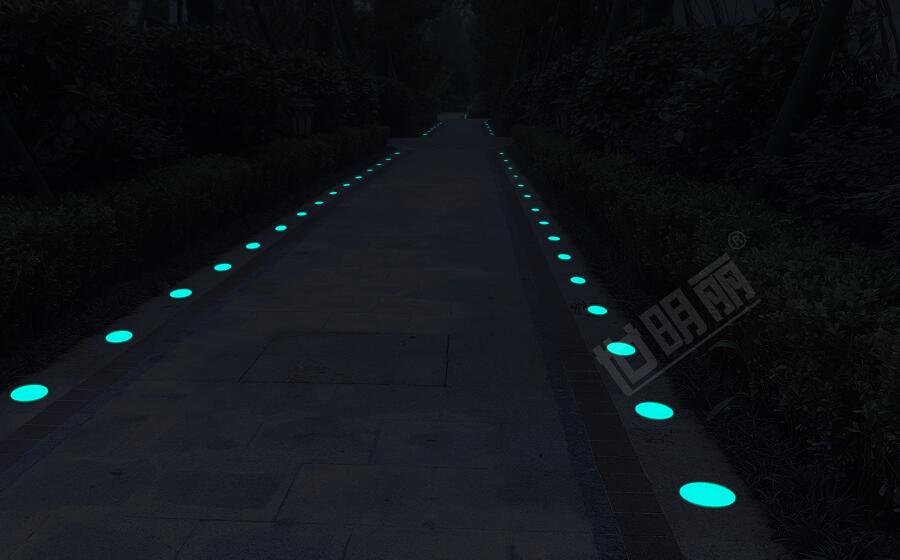
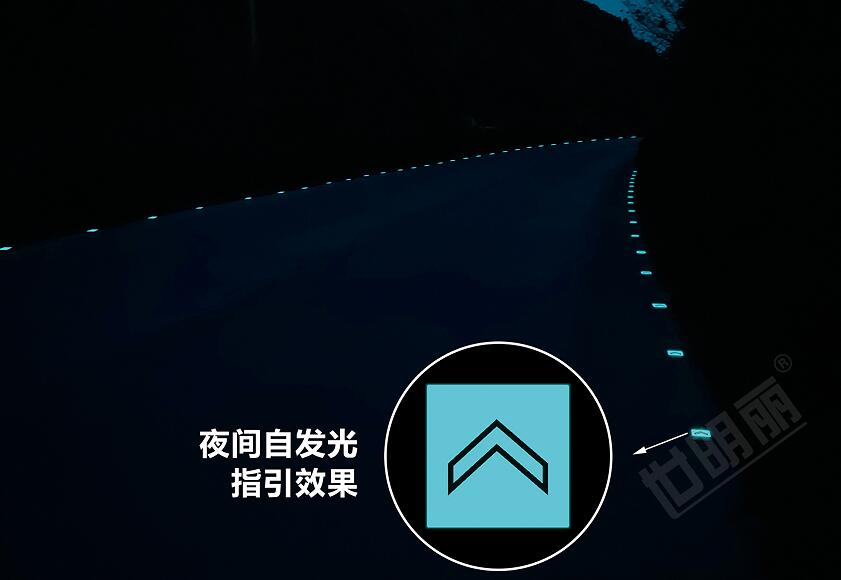
Using rare earth aluminate inorganic light-storing materials, it absorbs natural light or ambient light for 10-20 minutes during the day and continues to emit light autonomously for over 10 hours at night. Throughout its entire life cycle, it requires no electricity, and the electricity savings over ten years are sufficient to build another footpath. This significantly reduces the budget pressure on the client and greatly increases the quotation space for engineering contractors.
2. No wiring - zero infrastructure, light construction
Bid farewell to cables, distribution boxes, and transformers once and for all. The floor tiles serve as the light source, and the installation is complete upon laying. The construction period is shortened by over 50%, and labor costs are significantly reduced. Scenarios with limited power supply, such as mountainous areas, waterfronts, and historic districts, are no longer "forbidden zones".
3. Maintenance-free - zero operation and maintenance, worry-free for life
Inorganic materials are fused at a high temperature of thousands of degrees, resulting in high hardness, wear resistance, anti-aging, and no yellowing, with a service life of 15-20 years. There are no circuit failures, no lamp replacements, and no nighttime emergency repairs. After delivery by the engineering contractor, the project is "a breeze" for the party A, and there are "zero complaints" after use.
4. All-weather - stable lighting, safe online
Whether it's sunny or rainy, visible light can trigger light storage. Although the light emission duration may be slightly shortened during continuous rainy weather, the basic brightness still meets the safety guidelines, truly achieving 24-hour all-weather protection.
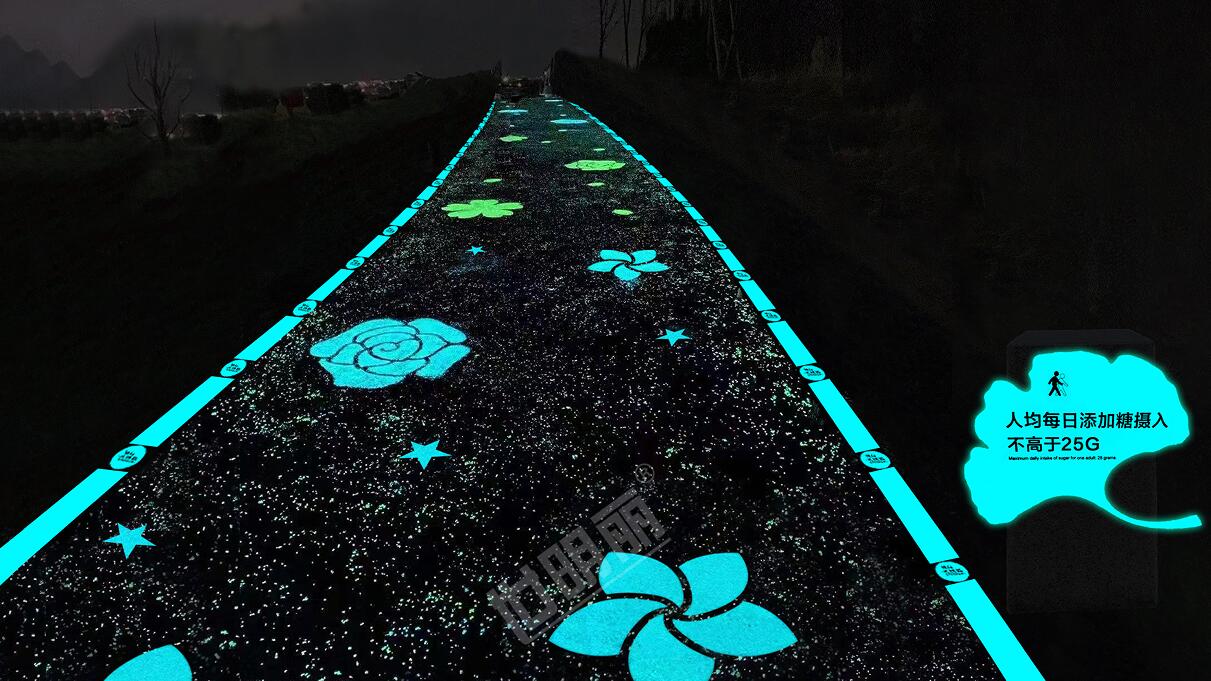
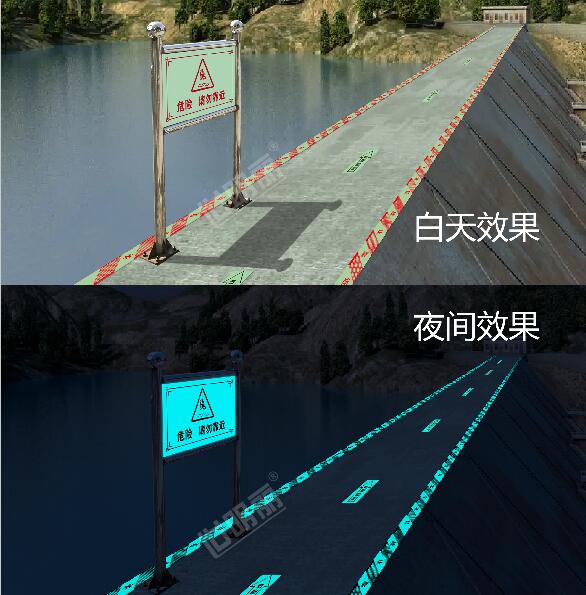
Application Scenario: From "Functional" to "User-Friendly". Urban Greenways/Fitness Trails: Replace traditional street lights to create a zero-carbon nighttime landmark. Park Squares/Waterfront Landscapes: Outline patterns with luminous tiles, attracting internet celebrities and generating traffic. Commercial Districts/Cultural and Tourism Attractions: Without damaging historical features and without overhead lines, ancient charm and modernity coexist. Emergency Exits/Safety Exits: Automatically illuminate in case of sudden power outages, safeguarding the lifeline.
Inorganic luminescent self-illuminating floor tiles, with their "passive" solution aligning with policy directives, are transitioning from being an "alternative" to becoming the "preferred choice". For engineering contractors, mastering this technology early means seizing the new blue ocean of zero-carbon pathways early. Why be constrained by "electricity" when it comes to pathway lighting? Inorganic self-illuminating floor tiles absorb light during the day and emit light at night, requiring only one installation for lifelong peace of mind - this represents not just a product upgrade, but also a refreshing shift in industry thinking. While peers are still struggling in the quagmire of wiring, smart bosses have already "cut the power" and moved on.