Tel: +86 139 0589 5606
E-mail:info@globri.com

Tel: +86 139 0589 5606
E-mail:info@globri.com
Modern scenic road design faces a dual demand: it must satisfy safety functions while maintaining landscape quality. Shiminli inorganic self-luminous road studs, with their "guiding lighting" characteristics, require no electricity or wiring. They store light during the day and emit light at night, guiding pedestrians and illuminating the surrounding environment at night, solving this seemingly contradictory problem.
Traditional street lamps have obvious drawbacks in scenic area applications: lamp posts detract from the overall aesthetic, light pollution disrupts the rhythms of flora and fauna, and cable laying damages the natural landscape. Consequently, many ecologically sensitive scenic areas restrict lighting facilities, directly leading to a decline in nighttime touring experience and potential safety hazards.
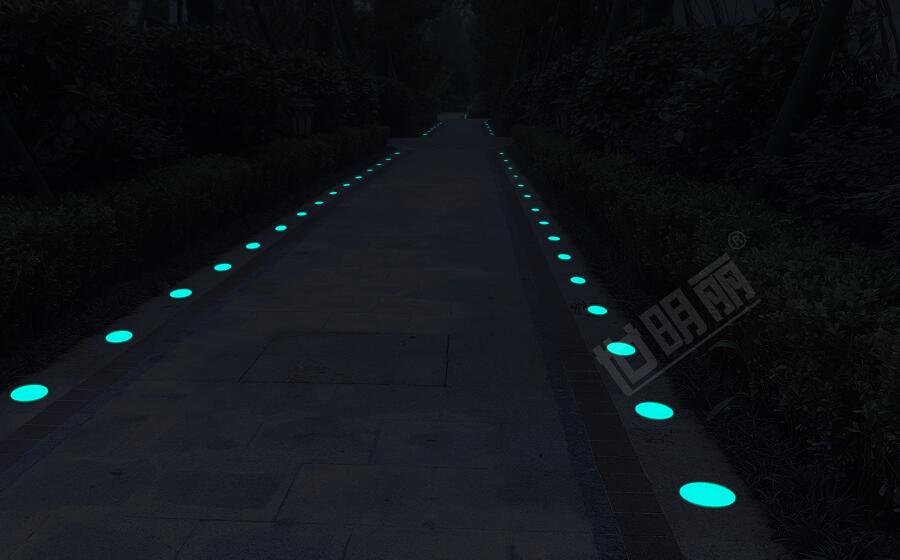
Inorganic self-luminous road studs offer a "third option". They are embedded into the road surface, blending seamlessly with the paving material during the day, without compromising the overall aesthetics of the landscape. At night, they automatically illuminate, outlining the path with low-level light points, satisfying basic directional needs while creating a romantic atmosphere akin to a "starry avenue". This effect of "seeing light without seeing lights" aligns with the scenic area's aesthetic pursuit of "though made by man, it seems as if created by nature".
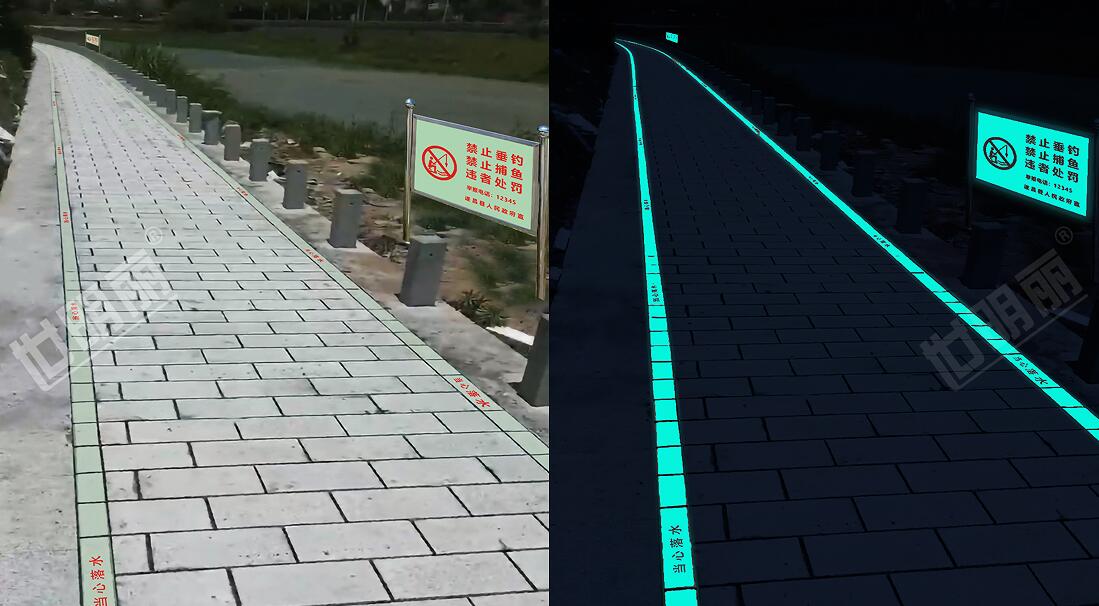
On the waterfront trail, blue-green self-luminous road studs are arranged along the curve of the waterfront, echoing the reflection on the water surface and forming a flowing light strip. After adopting this scheme, the number of visitors at night in a wetland park increased by 40%, and no complaints about light pollution were received. On the forest footpath, yellow-green self-luminous road studs are dotted at a lower density, marking the path without disrupting the dark night environment and protecting the habitat space of luminescent organisms such as fireflies. In the historical and cultural district, blue-green self-luminous road studs are coordinated with the stone road, with the luminous part only outlining the edges of the steps, balancing cultural relic protection and safety reminders.
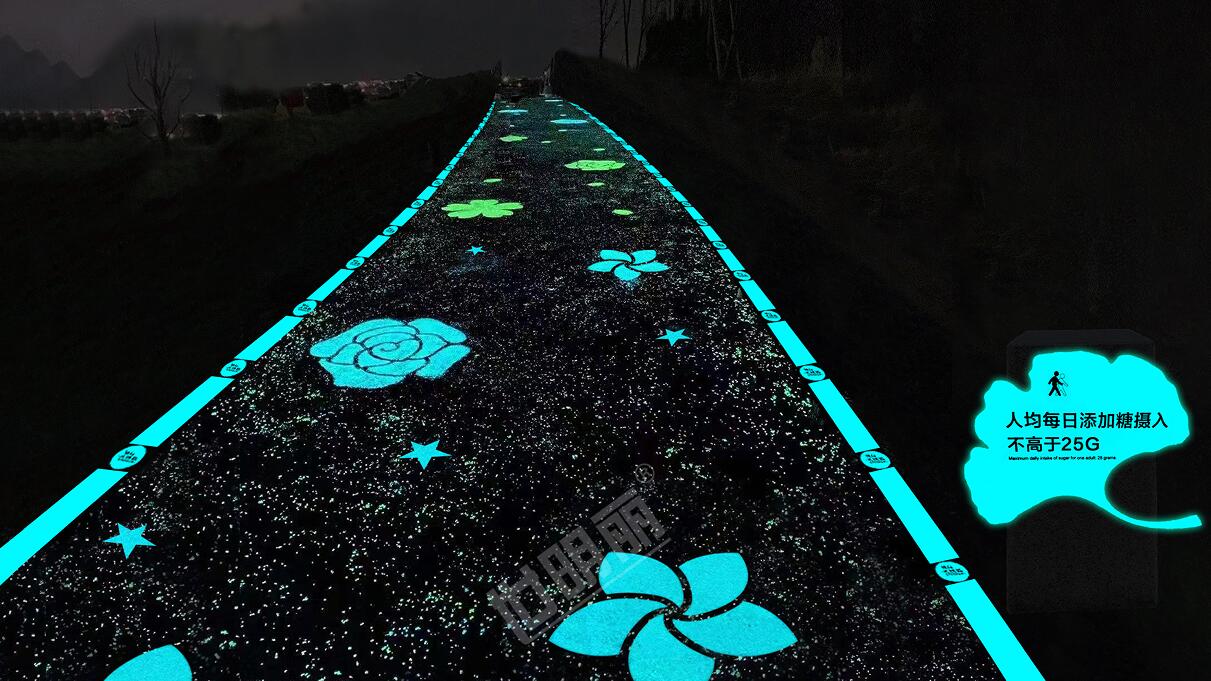
A more creative application lies in pattern customization. Through mold forming and graphic customization, the surface of the spike can present shapes such as leaves, petals, constellations, etc., forming patterns when illuminated. A starry sky theme park has embedded self-illuminating spike patterns resembling star charts into its walking trails, making it a core experience project and achieving the transformation of safety facilities into tourist attractions.
The roads in scenic areas are often winding and far away from municipal infrastructure, making the construction and maintenance of power facilities extremely costly. The self-luminous road studs, with their maintenance-free nature, allow scenic areas to focus their limited human and material resources on core services. Furthermore, their characteristics of no electromagnetic radiation and no heat generation make them particularly suitable for sensitive areas such as the vicinity of ancient and famous trees, and near the foundations of ancient buildings, avoiding potential risks associated with power facilities.
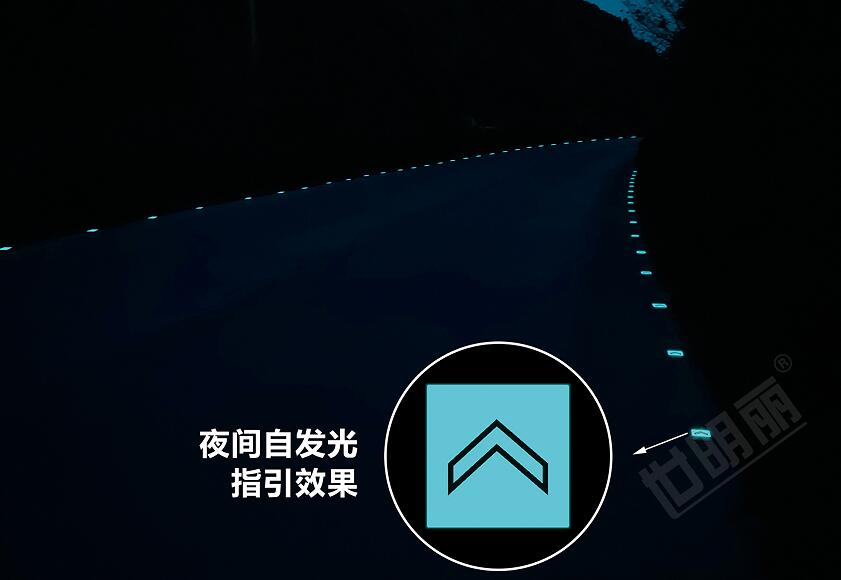
Inorganic self-luminous road studs are unaffected by environmental factors. Whether it's cloudy or raining, as long as there is natural light, they can complete light storage and emit light for more than 10 hours at night. In addition to their application on scenic roads, inorganic self-luminous road studs can also be used on country roads, winding mountain roads, tourist roads, rural roads, etc., providing directional lighting for pedestrians and vehicles.