Tel: +86 139 0589 5606
E-mail:info@globri.com

Tel: +86 139 0589 5606
E-mail:info@globri.com
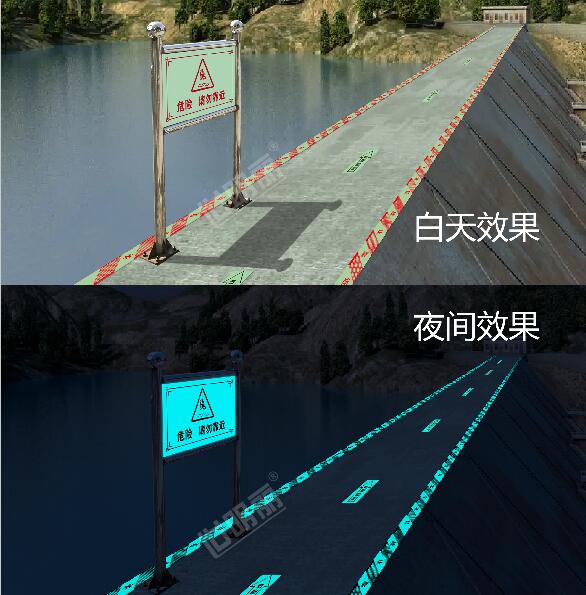
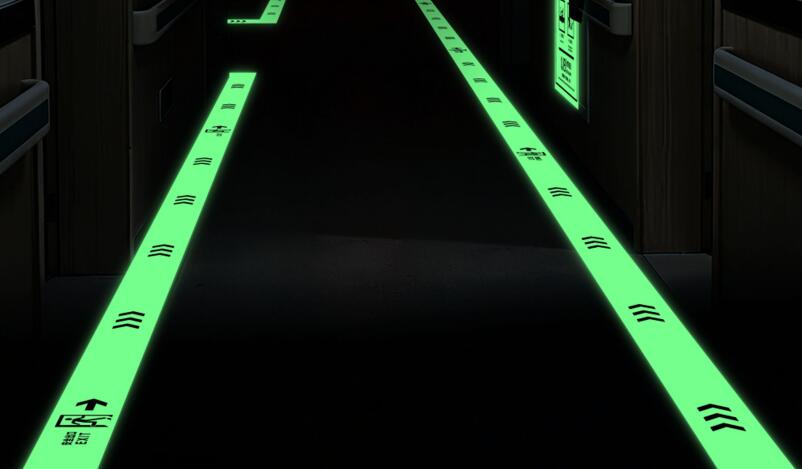
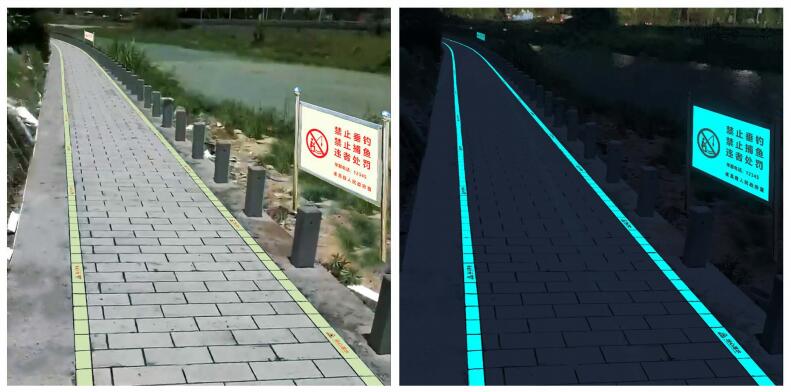
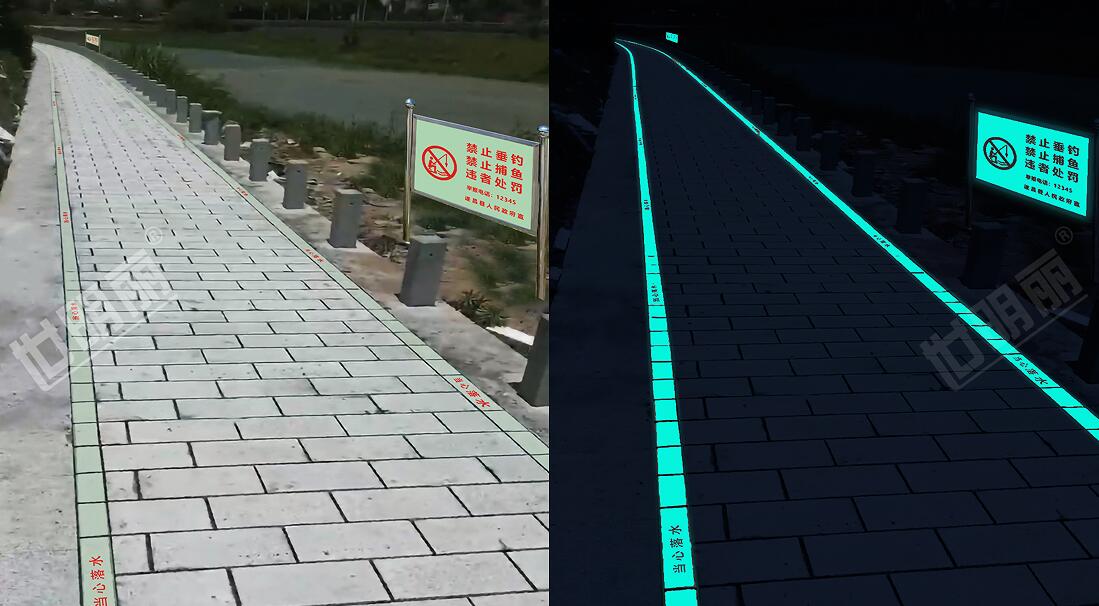
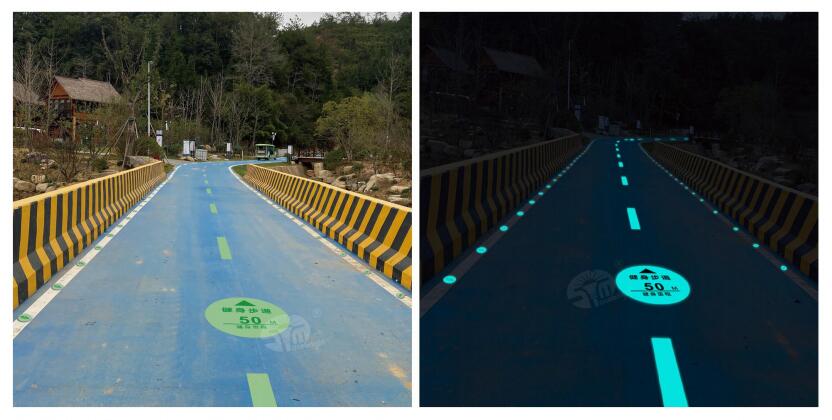
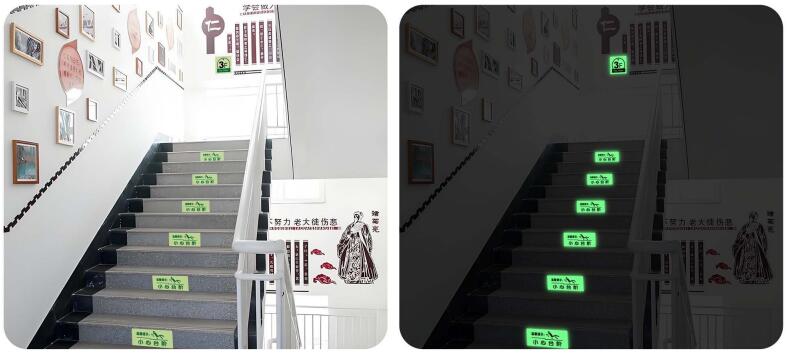
Photoluminescent signs are widely used in fire evacuation, factory warning, water conservancy, electric power, municipal facilities and other scenarios. However, products on the market vary greatly in quality. Common problems include falsely marked parameters, rapid photoluminescence attenuation, fading and peeling, which make buyers vulnerable to poor purchases. In fact, professional equipment is not required for quality inspection of photoluminescent signs. The most straightforward and effective method is to test the residual brightness after placing the signs in a dark environment for 2 hours. Long-term luminescence stability serves as the core criterion to distinguish high-quality products from inferior ones, and this performance is essentially determined by the base material and manufacturing process of photoluminescent signs.
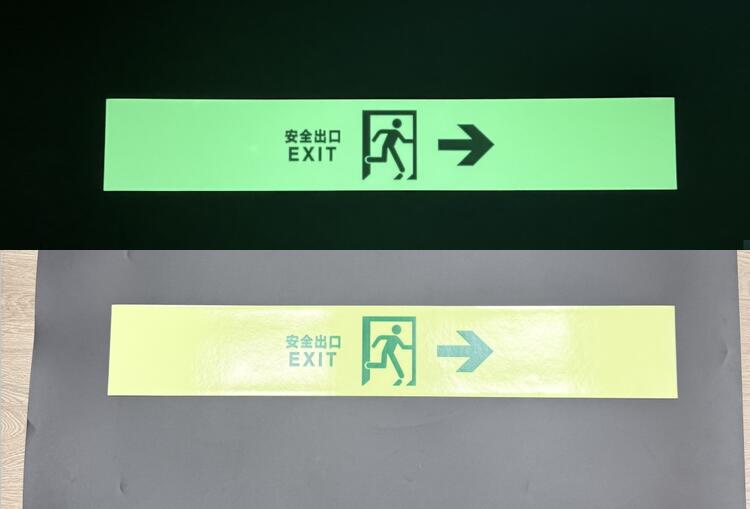
Place the sign sample under natural light or a desk lamp for uniform irradiation of 15–20 minutes to fully charge light. Then put it in a completely dark enclosed space (such as a wardrobe or dark room), avoiding light leakage from door gaps, screen light and other interference. Observe the clarity of graphics and texts after standing for 2 hours, so as to directly judge the quality and expose false claims of long luminescence duration.
High-quality engineering-grade photoluminescent signs retain clear and eye-catching graphics and texts after 2 hours with gentle brightness attenuation, boasting a total luminescence duration of more than 10 hours. Inferior products darken significantly after 1 hour, leaving only faint light or even failing completely after 2 hours. Their so-called "long-lasting luminescence" is mostly false promotion.

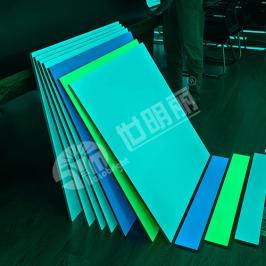
Currently, only the inorganic photoluminescent plate signs and organic photoluminescent roll signs manufactured by Shiming Technology can achieve a luminescence duration of over 10 hours.
Photoluminescence testing is result verification, while material and process are the core determinants of quality. For the four mainstream types of photoluminescent signs on the market, ordinary users can quickly grade them through appearance, hand feel and simple operations.
High-quality products are integrally fired at high temperatures of thousands of degrees using a variety of inorganic minerals. The texts on signs are fully embedded inside the luminescent layer, with a dense crystalline glaze covering the surface. No delamination or adhesive splicing traces can be found. Ordinary users can conduct quick verification from three aspects: weight — products of the same size feature high density and solid hand feel; scratch test — no scratches or powder falling off when scraped hard with keys or utility knives; combined with the 2-hour luminescence test, the brightness stays stable without sharp attenuation.
Most inferior products on the market are made by mixing luminescent powder with glue to fake photoluminescent plates. They get damaged easily once scratched, and their luminescence performance decays greatly under outdoor aging.
It consists of a special wear-resistant protective layer on the surface, a long-lasting light-storing layer in the middle and a highly stable adhesive layer at the bottom. Made of new polymer resin base material, it has no pungent odor and meets the B1 flame retardant standard. Simple verification methods: repeated bending will not cause cracking or whitening marks; scratching the surface gently with nails leaves no powder falling or traces; small-scale open flame test on the edge — it self-extinguishes within 10 seconds after fire removal without molten dripping.
This type of product is essentially ultra-thin PET/PP film coated with low-grade luminescent powder, with no wear-resistant protective layer or flame-retardant structure. Only faint light remains after the 2-hour luminescence test, and the film itself is prone to tearing and deformation. Regardless of merchants' promotion, this product is only suitable for short-term temporary decoration and cannot meet the requirements of fire protection engineering and long-term safety warning.
Acrylic photoluminescent plates are extruded and formed by mixing PMMA plastic with luminescent powder, which is essentially combustible plastic. Ordinary users can identify it visually: the plate surface tends to have bubbles and impurities, and it will turn yellow and brittle after long-term light exposure. In the 2-hour test, its brightness attenuates much faster than qualified inorganic and organic products. This material is only applicable to simple indoor decoration scenarios and fails to meet the compliance standards for fire emergency signs.
To judge the quality of photoluminescent signs, the 2-hour luminescence test in dark environments serves as the most direct and effective hard indicator. Combined with comprehensive evaluation of material structure, wear resistance and flame retardancy, users can accurately distinguish good products from bad ones. During procurement, priority should be given to three core attributes: long-lasting luminescence, material durability and flame retardancy compliance. Avoid traps of low price and false marking to select truly safe and durable photoluminescent sign products.