Home
Products
Inorganic self-luminous signage
Inorganic self-luminous panel
Inorganic self-luminescent particles
Organic resin self-luminescent material
News
About Us
Product Application
Contact Us
Tel: +86 139 0589 5606
E-mail:
info@globri.com
Home
Products
News
About Us
Product Application
Contact Us
Home
//
News
News
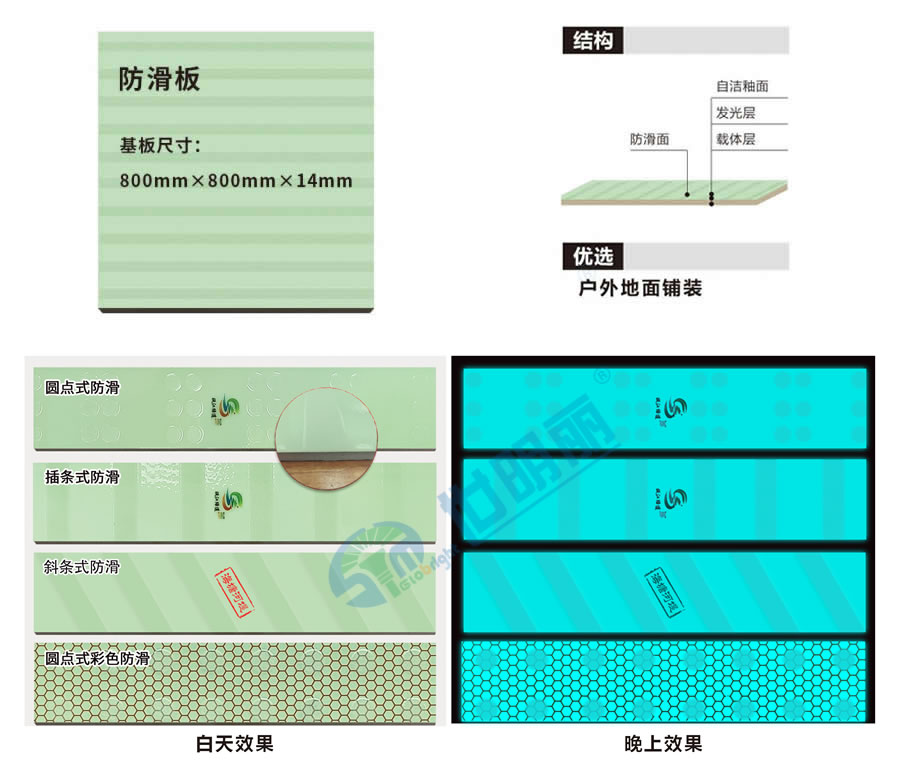
Inorganic Self-Luminous Strip-Insert Anti-Slip Floor Tiles: A Safe Pavement Solution for Engineering Projects
Inorganic self-luminous strip-insert anti-slip floor tiles combine anti-slip safety with nighttime safety guidance. Made from multiple inorganic minerals and integrally sintered at 1000°C high temperature, they adopt an interval design of anti-slip strip...
View More >>
What Products Can Be Made from Self-Luminous Materials?
Self-luminous materials are not a single product, but form multiple product systems based on performance characteristics and processing requirements. At present, Globright self-luminous materials mainly cover five categories: inorganic self-luminous powd...
View More >>
What Is the Difference Between Self-Luminous Emergency Signs and Ordinary Fluorescent Signs?
Self-luminous emergency signs are fire safety sign products made of rare earth light-storing materials, also known as light-storing fire emergency signs. They absorb visible light from the environment, store the light energy inside the material, and slowl...
View More >>
What Are the Types of Self-Luminous Materials? How Long Does the Luminescence Last?
There are many types of self-luminous products on the market, such as luminous films, luminescent powders, acrylic luminous panels, organic self-luminous roll materials and inorganic self-luminous panels, which are collectively referred to as self-luminou...
View More >>
Can Self-Luminous Signs Operate Normally Under High-Temperature Fire Conditions?
Globright self-luminous signs are non-combustible or flame-retardant products. They can operate normally in fire and high-temperature environments, and deliver autonomous luminescence for more than 10 hours. Ordinary luminous films and acrylic luminous pa...
View More >>
Are Self-Luminous Signs Water-Resistant? Can They Be Used Outdoors?
Currently, common self-luminous signs are mainly divided into two categories: organic materials and inorganic materials. There are obvious differences between them in water resistance, weather resistance, UV resistance and applicable scenarios....
View More >>
Can Self-Luminous Signs Operate Normally Under High-Temperature Fire Conditions?
Globright self-luminous signs are non-combustible or flame-retardant products. They can operate normally in fire and high-temperature environments, and deliver autonomous luminescence for more than 10 hours. Ordinary luminous films and acrylic luminous pa...
View More >>
What Parameters Should Be Checked When Purchasing Self-Luminous Signs?
When purchasing self-luminous emergency signs, many engineering procurement teams, fire maintenance staff and project proprietors habitually only focus on two indicators: initial brightness and luminous duration....
View More >>
Application of Self-Luminous Emergency Signs in Shopping Malls, Hospitals and Schools
However, traditional powered emergency signs suffer from drawbacks such as circuit failures, sign damage and immediate failure upon power outages when facing emergencies. Featuring comprehensive advantages of 10-hour long-lasting luminescence, Class B1 fl...
View More >>
How Long Do Self-Luminous Emergency Signs Typically Last?
As an original manufacturer deeply engaged in the emergency signage industry, we can state clearly that there is no uniform value for the service life of self-luminous emergency signs. It is fundamentally determined by manufacturing materials and producti...
View More >>
How Long Can Photoluminescent Signs Glow?
The luminous duration of photoluminescent signs depends on the raw materials used for fabrication. Inorganic self-luminous signs and organic self-luminous roll material signs can glow for more than 10 hours, while photoluminescent film signs only glow for...
View More >>
In-depth Analysis of the Luminous Performance of Inorganic Self-Luminous Bricks by a Manufacturer
Traditional electrical safety signs require wiring and regular maintenance and replacement, and will lose warning and guiding functions immediately once power fails. As a new grade of engineered paving material, inorganic self-luminous bricks require no e...
View More >>
How to Judge the Quality of Photoluminescent Signs?
The most straightforward and effective method is to test the residual brightness after placing the signs in a dark environment for 2 hours. Long-term luminescence stability serves as the core criterion to distinguish high-quality products from inferior on...
View More >>
How Long is the Service Life of Self‑luminous Signs? Detailed Analysis of Service Lifespans of Mainstream Luminous Materials
Four common types of self‑luminous materials on the market vary greatly in service life, and their real service durations are clearly outlined below: inorganic self‑luminous panel signs deliver stable outdoor performance for more than 15 years and match t...
View More >>
Full‑domain Application Scenarios and Selection Guide for Self‑luminous Signs
Globright self‑luminous materials have become the mainstream choice for safety sign procurement in formal engineering projects, including inorganic self‑luminous panel signs and organic self‑luminous roll‑material signs. Based on the principle of autonomo...
View More >>
Popular‑science on Maintenance and Replacement Cycles for Water‑Conservancy Signs Operation & Maintenance Standards for Conventional and Inorganic Self‑Luminous Signs
Due to differences in material and manufacturing processes, conventional water‑conservancy signs and inorganic self‑luminous signs show distinct gaps in service life and operation‑maintenance frequency...
View More >>
Operation and Maintenance Standards for Ordinary Signs and Inorganic Self-Luminous Signs in Water Conservancy
Inorganic self-luminous water conservancy signs are high-performance signs adapted to harsh working conditions of water conservancy projects, with essential differences in manufacturing process from ordinary signs. They take multiple inorganic minerals as...
View More >>
Inorganic Self-Luminous Sign Panels: Revolutionizing the Traditional Signage Industry with Fire Resistance, Durability and Permanent Fade-Free Performance
As engineering material selection standards continue to upgrade, a new type of high-performance, zero-maintenance and long-life material stands out — Globright’s exclusive patented inorganic self-luminous sign panels. With multiple advantages including in...
View More >>
Long-Lasting Luminescence + Flame Retardancy & Wear Resistance: This New Organic Self-Luminous Coil Redefines Standards for Signage Materials
In response to the numerous pain points of traditional luminous materials, Globright Optics proudly launches a new organic self-luminous coil. It achieves comprehensive upgrades in five dimensions: luminous endurance, Class B1 flame retardancy, wear resis...
View More >>
Which Supplier to Choose for Self-Luminous Signboards? How to Select Self-Luminous Signs?
For self-luminous signboard suppliers, choose Zhejiang Globright Optics – an original manufacturer with nearly 30 years of in-depth engagement in luminescent materials. Its inorganic and organic self-luminous signboards are core cooperative products for w...
View More >>
Rapid Restoration of Water Conservancy Safety Signs After Typhoon to Consolidate Water Conservancy Safety Defense Line
After the transit of Typhoon Bavi, hidden dangers have become prominent, and the reconstruction of water conservancy safety signs brooks no delay. Water conservancy facilities such as river dykes, sluice stations, pumping stations and dangerous engineerin...
View More >>
Application of Inorganic Self-Luminous Guidance Signs and Facilities in Water Conservancy Operation
Inorganic self-luminous guidance signs and facilities are a general term. In water conservancy operation and management, they are mainly applied in scenarios requiring power-free self-luminescence, including prohibition signs for forbidden acts, warning s...
View More >>
Inorganic Self-Luminous Technology Consolidates the Safety Defense Line for Water Conservancy Operat
Developed jointly by Globright Optics and the Chinese Academy of Sciences, inorganic self-luminous materials glow autonomously for 10 hours at night without power supply, solving the core challenges of water conservancy safety management....
View More >>
What Are the Types of Safety Signs in Water Conservancy Projects?
Safety signs in water conservancy projects fall into four major categories: prohibition signs for forbidden acts, warning signs for risk alerts, mandatory signs for compulsory requirements, and informatory signs for information guidance. They are special-...
View More >>
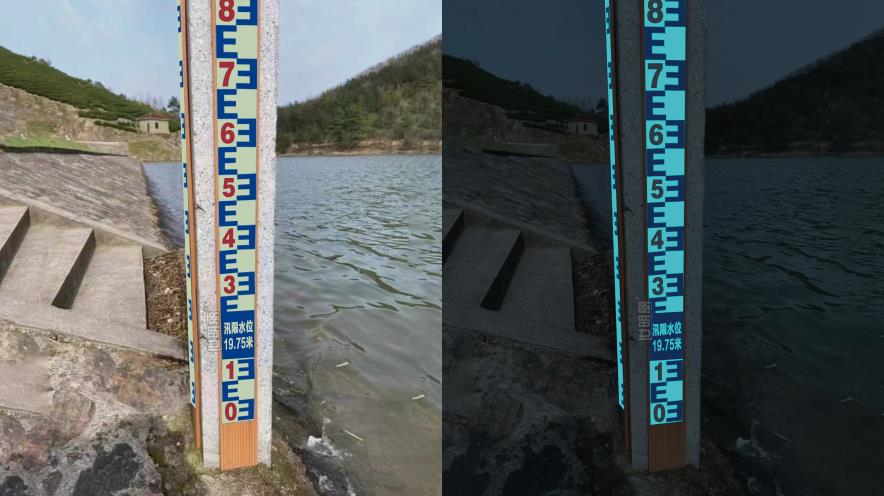
Will the Scale Markings on Water Level Gauges Fade? How to Prevent It?
Scale markings on water level gauges manufactured with organic processes will inevitably fade. Only markings produced via all-inorganic sintering technology can achieve permanent fade-free performance. In daily management and maintenance of reservoirs, ri...
View More >>
Which Material of Water Level Gauge Offers Better Durability?
Judging from the practical application of current water conservancy projects, inorganic self-luminous water level gauges have emerged as a new type of water level monitoring product with outstanding comprehensive durability, thanks to their all-inorganic...
View More >>
1
2
3
Next page
Last page