Tel: +86 139 0589 5606
E-mail:info@globri.com

Tel: +86 139 0589 5606
E-mail:info@globri.com
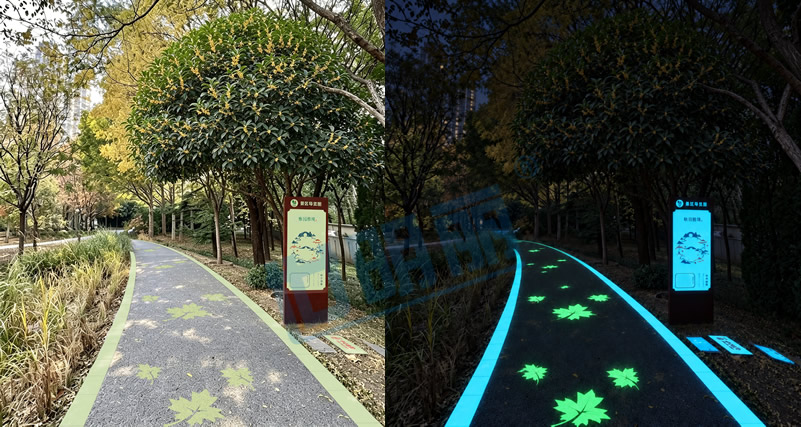
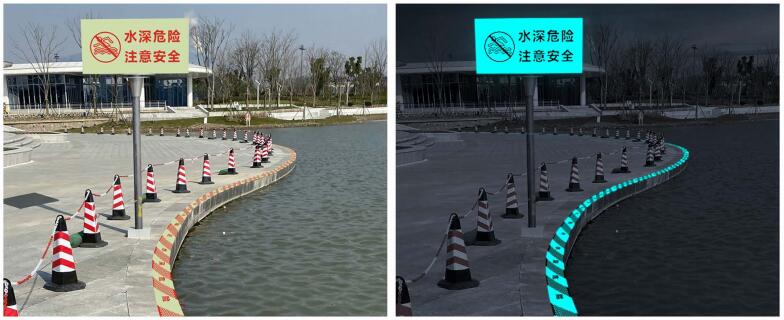
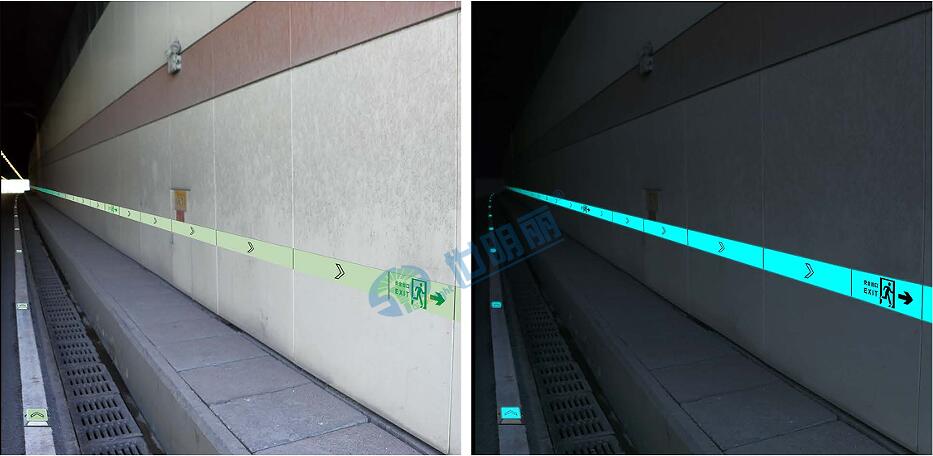
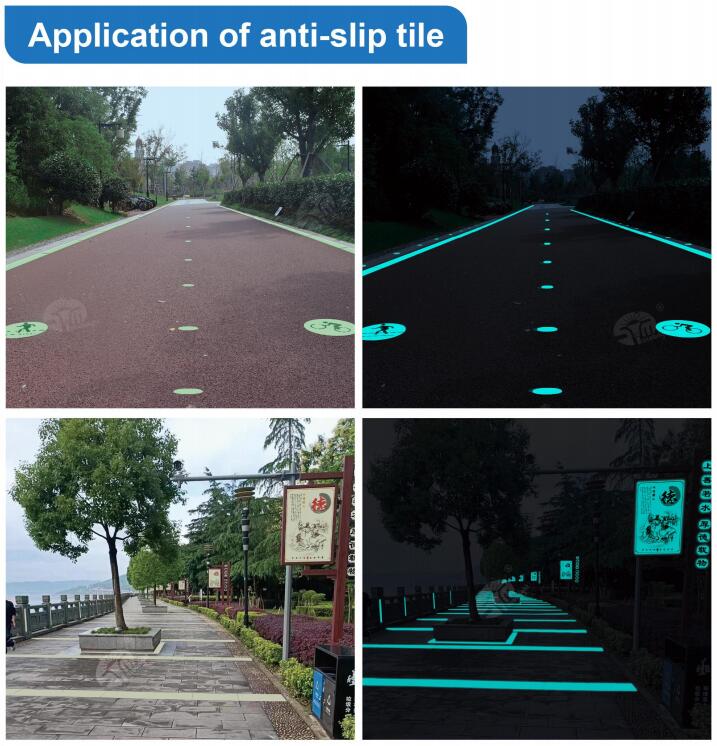
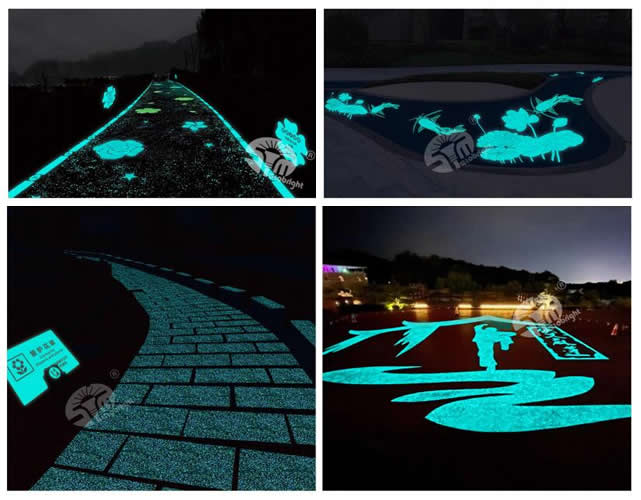
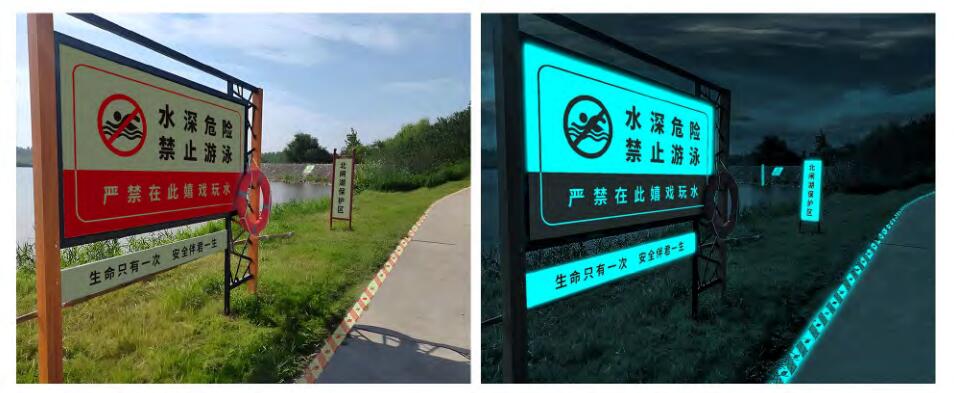
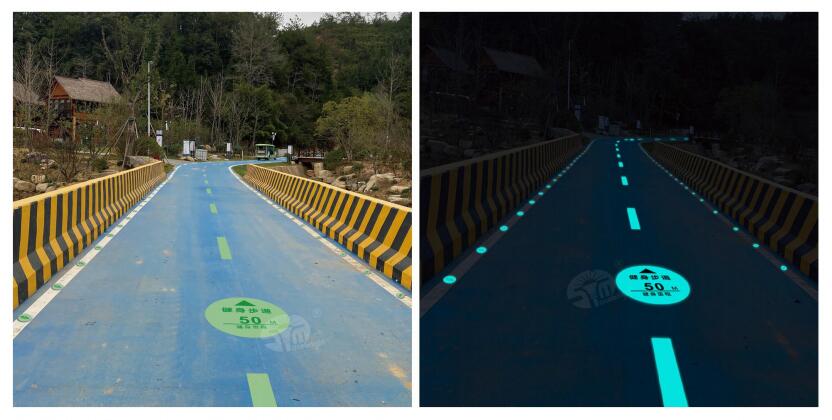
In engineering projects such as tunnel works, civil air defense passages, fire evacuation routes and municipal footpaths, inorganic self-luminous tiles serve as core materials for safety emergency marking by virtue of their 10+ hours of long-duration afterglow and maintenance-free features. However, the self-luminous tile market is currently in chaotic order. Many merchants take advantage of purchasers’ insufficient professional knowledge to sell organic self-luminous tiles at low prices as fake substitutes for inorganic ones. Though the counterfeits deliver acceptable luminous effect in the short term, they will suffer scratches, abrasion and even damage to the luminous layer around 3 months after installation, impairing the safety warning function of the site. Globright Optics will teach you practical methods to quickly verify genuine inorganic self-luminous tiles and avoid material selection risks.
Organic Self-Luminous Tiles (Mainstream Market Counterfeits)
They take ordinary floor tiles as the base substrate, with the luminous layer formed by mixing organic adhesive and luminous powder and coating it onto the substrate surface. They are prone to aging, peeling and other defects.
Inorganic Self-Luminous Tiles (Genuine Engineering-Grade Products)
They are stone blocks integrally sintered from multiple inorganic minerals at temperatures above 1000°C, fundamentally eliminating the risks of peeling and aging, and are specially designated for high-standard engineering projects.
Test Method: Scratch the surface of the tiles with keys, utility knives or other hard objects; organic and inorganic products will show totally different results.
Organic self-luminous tiles feature a resin plastic surface with a smooth, relatively soft texture and extremely low hardness. Obvious scratches will be left once scraped by hard items, making them completely unsuitable for floors subject to frequent trampling and friction.
Authentic inorganic self-luminous tiles have an inorganic crystalline surface layer with high hardness and excellent scratch & wear resistance. No damage will occur under daily hard-object scraping, fully meeting the requirements of long-term floor application.
Test Method: Directly burn the tile surface with a windproof lighter to tell authenticity at a glance.
Fake organic luminous floor tiles will rapidly soften, emit smoke and burn when exposed to open flame, releasing distinct plastic odor, with the surface layer melting and peeling off directly.
Genuine inorganic self-luminous tiles reach Euroclass A1 non-combustible standard, featuring high temperature resistance and open flame resistance. They will not melt or peel under fire exposure, fully complying with fire acceptance codes for engineering projects.
Test Method: Focus on acid & alkali resistance testing. Drop concentrated sulfuric acid directly onto the luminous layer: organic materials will be corroded immediately, while inorganic materials produce no chemical reaction at all.
Organic resin materials are inherently poor in UV resistance and acid & alkali resistance. After several months of outdoor exposure to strong sunlight and rain, they will turn yellow/black, suffer coating chalking and cracking, with luminous performance fading rapidly until complete failure.
Inorganic self-luminous tiles boast stable mineral material properties, delivering outstanding UV resistance, corrosion resistance and anti-aging performance. They maintain intact material structure and stable luminescence even under long-term harsh outdoor conditions.
Test Method: Expose both types of tiles to the same light source for identical light absorption time, then place them in total darkness simultaneously. Their initial brightness is roughly equivalent, while obvious gaps will emerge after 1 hour.
The luminous layer of organic self-luminous tiles contains low content of luminous powder with extremely poor light storage capacity, characterized by the rule of "brightens fast and fades fast". Their luminance nearly drains within 1–2 hours in darkness, failing to meet the demand of long-night emergency warning.
The luminous layer of inorganic self-luminous tiles stores sufficient light energy with uniform luminescence and slow attenuation, realizing continuous stable luminescence for over 10 hours, perfectly fitting emergency warning scenarios.
Most failed engineering cases stem from three typical procurement traps:
Low Price Trap: Self-luminous tiles priced far below the market average are almost inferior organic coated counterfeits disguised as inorganic products.
Sample Fraud Trap: Merchants display high-quality inorganic tiles as samples but deliver cheap organic materials in bulk, leading to rapid performance failure after construction.
Parameter Falsification Trap: Many vendors falsely label products as inorganic material, Class A fire-rated or long-durable, while they are actually manufactured with ordinary organic techniques.
As a professional manufacturer of self-luminous materials, Zhejiang Globright Optics produces inorganic self-luminous tiles through integral high-temperature sintering of inorganic minerals above 1000°C. All products pass full-item tests covering fire resistance, weather resistance, wear resistance and luminous attenuation, completely overcoming all defects of organic materials. They are applicable to high-standard projects including tunnels, civil air defense works, fire escape passages and municipal footpaths. We can provide comparative samples, authoritative test reports and one-on-one customized material selection schemes.
In short, organic self-luminous tiles are temporary luminous products for short-term use. Though cost-effective, they have prominent performance drawbacks and poor durability. Inorganic self-luminous tiles are genuine engineering-grade products. With core strengths of stability, durability and safety, they are the top choice for high-standard safety projects. Mastering the above identification skills can fundamentally block counterfeit products, avoid risks of project rework and acceptance rejection, and guarantee compliant and safe project delivery.