Tel: +86 139 0589 5606
E-mail:info@globri.com

Tel: +86 139 0589 5606
E-mail:info@globri.com
Nighttime inspection is a crucial aspect of ensuring safety on embankments, in parks, and at power sites. It serves as a vital line of defense in safeguarding public safety and preventing potential safety hazards. However, for a long time, the pain points of "poor visibility, low efficiency, and high risk" have plagued operation and maintenance personnel during nighttime inspections, making it a difficult problem to solve within the industry. Whether it's the pitch-black environment of nighttime inspections on embankments, the blind spots of footpath inspections in parks, or the complex scenarios of equipment inspections at power sites, darkness has become the biggest obstacle to inspection work. It not only affects inspection efficiency but also increases the risk of safety accidents such as falls and equipment misjudgments, posing significant challenges to operation and maintenance work.
Traditional nighttime inspections rely on flashlights, temporary lighting, and other methods, which are not only cumbersome to operate and have limited coverage, but also suffer from issues such as insufficient battery life and weak light. Especially in extreme weather conditions or sudden power outages, lighting equipment completely fails, forcing the inspection work to be interrupted, and potential safety hazards cannot be promptly identified. However, laying traditional lighting facilities faces problems such as complex wiring, high construction costs, high electricity bills in the later stages, and difficult maintenance. For outdoor open embankments, vast parks, and power sites with complex lines, it is more of a loss than a gain, making it difficult to achieve comprehensive and all-weather inspection lighting coverage.
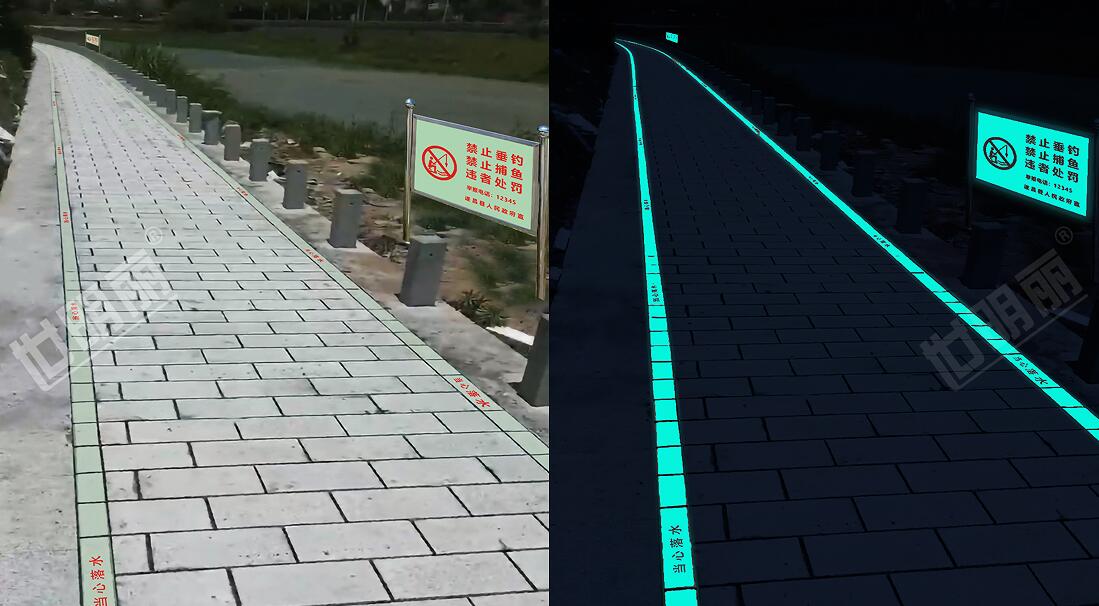
To address the pain points of nighttime inspections, the key lies in finding a solution that does not rely on electricity, can emit light for a long time, and is adaptable to multiple scenarios. The emergence of Shimingli's inorganic self-luminous floor tiles has precisely filled this industry gap, becoming a "safety artifact" for nighttime inspections. This inorganic self-luminous floor tile, with inorganic light-storing and self-luminous materials as its core, completely breaks the traditional lighting's dependence on electricity. It requires no power connection or wiring, truly achieving zero energy consumption and maintenance-free, and solving the lighting problem of nighttime inspections from the root.
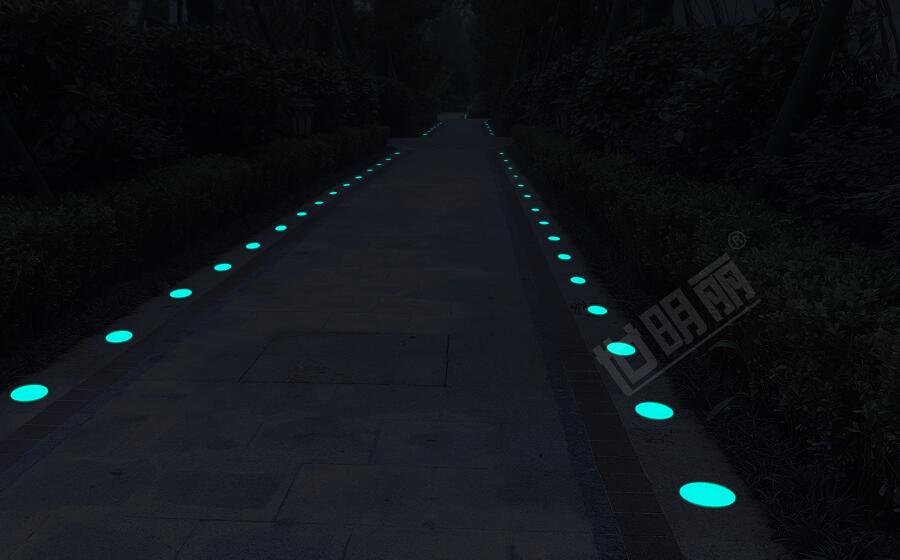
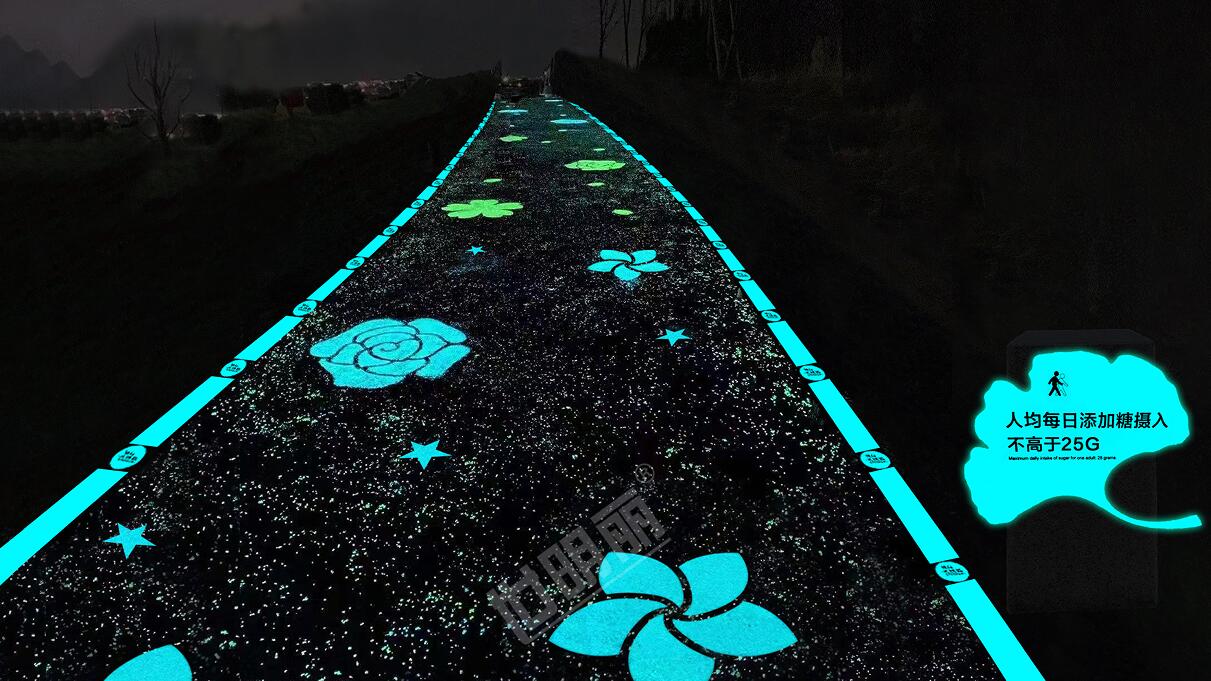
During the day, the inorganic self-luminous floor tiles can automatically absorb natural light, artificial light, and other types of light for energy storage, without requiring human intervention. At night, the tiles will automatically emit light, with a continuous glow lasting for several hours. The brightness is uniform and soft, not glaring but clear enough to be visible from a distance, even in a pitch-black environment. Whether it's for path guidance during embankment inspections, area division during park inspections, or equipment identification and inspection route marking at power sites, the inorganic self-luminous floor tiles can clearly present information, allowing inspectors to see at a glance in the dark and accurately identify every potential safety hazard.
What's more noteworthy is that inorganic self-luminous floor tiles exhibit excellent adaptability, perfectly fitting the usage requirements of complex outdoor scenarios such as embankments, parks, and power sites. Made of high-strength inorganic materials, they possess advantages such as resistance to high and low temperatures, corrosion resistance, anti-aging, and wear resistance. They can withstand wind, sun, rain immersion, and ice and snow erosion, and will not fade, crack, or fail even after long-term outdoor use, significantly reducing maintenance costs in the later stages. Additionally, the installation of these floor tiles is simple and convenient, without requiring complex wiring construction. They can be directly laid on the ground without affecting the normal use of the original site, significantly shortening the construction period and enhancing project efficiency.
The application of inorganic self-luminous floor tiles not only completely solves the core pain point of "not being able to see clearly" during night inspections, but also significantly enhances the safety and efficiency of inspection work. It allows inspectors to bid farewell to the cumbersomeness and limitations of flashlight lighting, without worrying about the troubles caused by power outages or interruptions. Inspectors can confidently carry out inspection work in the dark, promptly identify potential safety hazards, and prevent safety accidents. For industries such as municipal administration, electricity, and park operation and maintenance, inorganic self-luminous floor tiles are not only an efficient and convenient inspection aid product, but also an important guarantee for reducing operation and maintenance costs and strengthening safety defenses. They provide a new solution for night inspection work and promote the development of industry inspection work towards a safer, more efficient, and more energy-saving direction.