Tel: +86 139 0589 5606
E-mail:info@globri.com

Tel: +86 139 0589 5606
E-mail:info@globri.com
Safety signs in water conservancy projects fall into four major categories: prohibition signs for forbidden acts, warning signs for risk alerts, mandatory signs for compulsory requirements, and informatory signs for information guidance. They are special-purpose signs installed on hydraulic structures, waterfront shorelines and construction areas to convey prohibition, warning, mandatory and guidance information, serving as the first physical line of defense for water area safety.
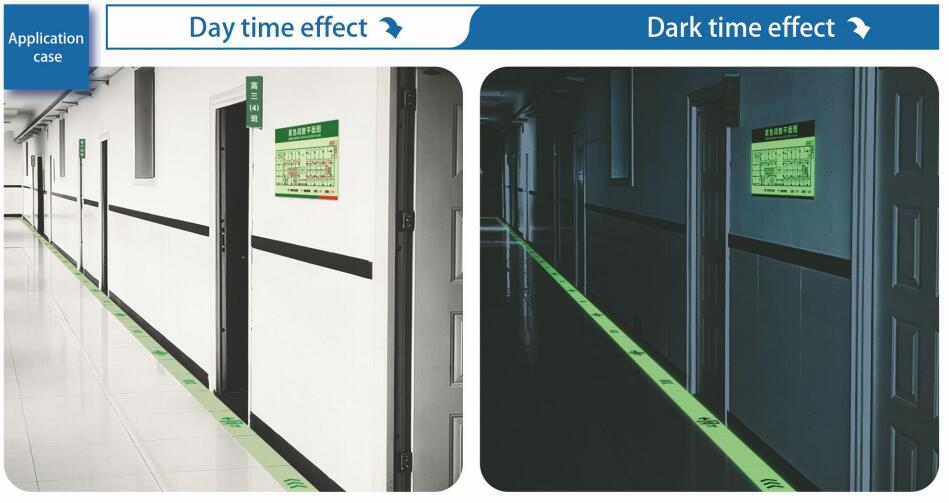
In accordance with the classification and installation requirements specified in GB 2894 Safety Signs and Guidelines for Their Use and water conservancy industry management specifications, Globright inorganic self-luminous safety signs are recommended for long-term effective and maintenance-free application. They glow autonomously for more than 10 hours in dark environments without power supply. As a new material product included in the promotion catalogue of the Ministry of Water Resources of the People's Republic of China, it has been applied for many years in over ten provinces including Zhejiang, Fujian and Sichuan.
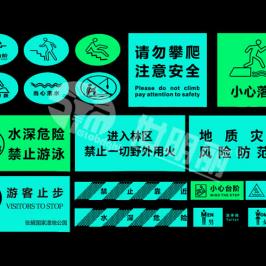
Used to prohibit dangerous activities of personnel and vessels, mainly installed in areas such as steep waterfront banks, flood discharge outlets and closed reservoir areas. Common types in water conservancy: No swimming in the river, No fishing, No climbing over the dam, No approaching the flood discharge area, Illegal sand mining prohibited, No debris piling on floodplains.
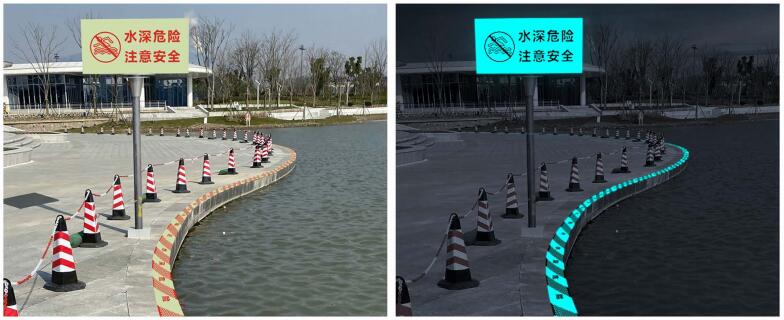
Used to indicate potential hidden dangers, and are the most widely used type of signs in water conservancy scenarios. Common types: Deep water hazard, Undercurrent underwater, Dyke landslide risk, Fall risk on steep slopes, No walking on ice surface, Flash flood prone area. They are mainly deployed at hidden risk points such as deep water camouflage sections, backflow bends and dyke slopes.
Stipulate safety actions that personnel must perform when entering the area, mostly used in sluice station platforms, construction areas and patrol wharves. Common types: Life jacket must be worn, Safety helmet must be worn, Anti-slip shoes must be worn for wading operations, Real-name registration required for reservoir entry.
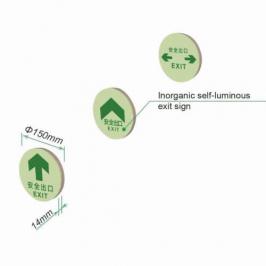
Used to indicate safety facilities, emergency passages and rescue information. Common types: Life-saving equipment storage point, Emergency assembly point, Water level observation point, Emergency rescue hotline, Emergency exit.
Frequent replacement of traditional safety signs not only increases operation and maintenance costs, but also creates warning blind spots that pose potential safety hazards. Drowning in reservoirs, suction by underwater undercurrents, accidental entry into flood discharge areas, and intrusion into mountain flash flood zones — in most water conservancy safety accidents, the vast majority of hidden dangers stem from missing risk prompts or failed warnings, and the core root lies in the insufficient performance of traditional safety signs.
Made of inorganic silicate substrate and rare-earth light-storing crystals via integral high-temperature fusion and sintering above 1000°C, the warning graphics, luminous layer and panel body are permanently fused. It fundamentally eliminates aging and hydrolysis problems caused by water immersion, and never turns pale, peels or falls off for life, thoroughly solving the functional obsolescence problem of "intact sign but illegible text".
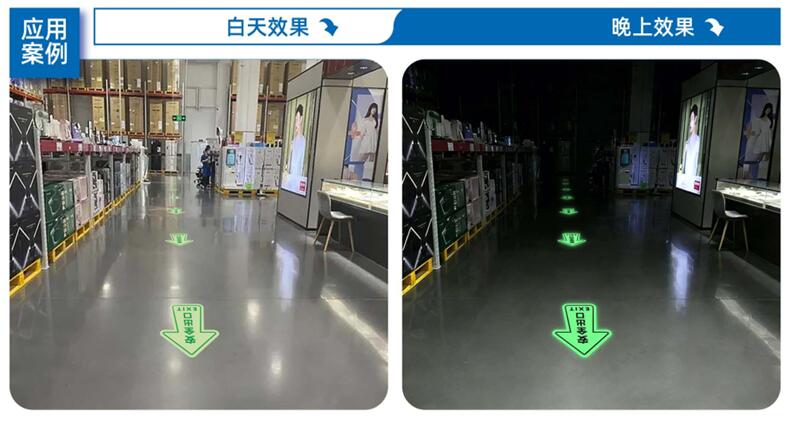
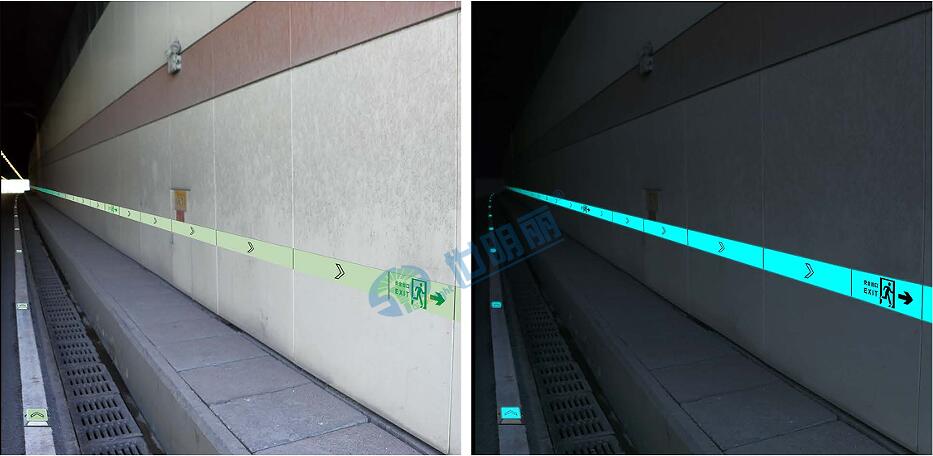
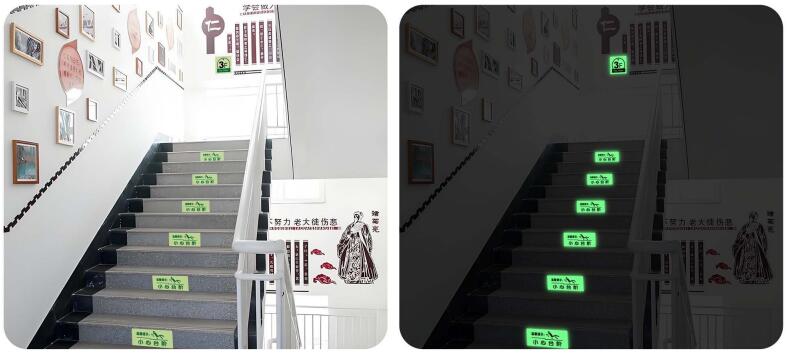
It automatically stores energy by absorbing natural light and ambient lighting in daytime, and sustains autonomous luminescence for ≥10 hours in dark environments, with no wiring, no power supply and zero electricity consumption. Perfectly adaptable to unpowered mountain reservoirs, remote river sections and nighttime tidal reaches, it thoroughly solves the problem of nighttime invisibility of traditional signs, and is also compatible with remote AI video recognition for smart water conservancy.
The all-inorganic material naturally withstands salt spray corrosion, acid-alkaline water erosion and extreme temperature changes. It can operate stably for a long time whether in coastal dykes, alpine mountainous areas or sites around sewage, making up for the environmental shortcomings of metal and plastic signs.
The dense crystalline glaze layer on the panel surface features self-cleaning properties, making it difficult for moss, silt and shells to adhere. With high substrate hardness, graphics will not be damaged by low-pressure water washing, steel wool friction or soft brush cleaning, eliminating the need for frequent patrol and maintenance.
With a designed service life of ≥20 years, no annual batch replacement is required. Although the initial purchase price is higher than ordinary signs, it can save a lot of labor and material costs in the long run, making it a standard product for unattended water conservancy stations.
Essential signs: Flood discharge hazard – no approaching, Deep water hazard, No swimming or fishing, No climbing over the dam, Emergency escape guidance.
For unattended reservoir areas and flood discharge passages, inorganic self-luminous safety signs are strongly recommended. Sintered from multiple inorganic minerals at high temperature above 1000°C, they withstand strong UV exposure and alternating dry-wet immersion of water levels, with permanently fade-proof and peel-free graphics. They glow autonomously at night without external power supply, accurately solving the nighttime warning blind spot in unpowered reservoirs and effectively preventing the risk of accidental entry during flood discharge in flood seasons.
Essential signs: Undercurrent underwater, Dyke landslide risk, Illegal sand mining prohibited, No occupation of flood passage beaches, River chief public notice board. Landscape rivers require additional child-oriented waterfront warning signs.
Open river channels have long shorelines and large management scopes, so inorganic self-luminous safety signs are preferred. The self-cleaning property of the surface crystalline glaze layer resists moss and silt adhesion in river channels, reducing daily cleaning and maintenance workload. Long-lasting nighttime luminescence reminds people walking or fishing at night to identify risks of undercurrents and steep slopes, meeting the demand for all-weather safety management of open river channels.
Vortex and negative pressure suction are core hidden risks, requiring key deployment of: No touching equipment, Water flow suction hazard, Life jacket must be worn, Confined space operation warning.
Most sluice and pumping stations are 24-hour operation sites, so inorganic self-luminous safety signs are preferred. They glow autonomously after power outages in equipment rooms and lights-off at night, continuously reminding of hidden risks such as water flow suction and equipment electric shock. The all-inorganic material resists moisture corrosion in equipment rooms and does not delaminate in long-term humid environments, adapting to the high-humidity operating conditions of hydraulic structures.
Exclusive signs: Flash flood prone area, No passage during rainstorms, Tailings pond flood discharge warning, Escape transfer route signs. Inorganic self-luminous safety signs are mandatory.
Most areas around mountain flash flood zones and tailings ponds have no power supply and face the highest risks at night during rainstorms. The signs can continuously glow at night after storing energy in daytime, with far better visibility than ordinary reflective signs in rainstorms and heavy fog. Resistant to freeze-thaw cycles and mountain humid corrosion, they do not age for a long time in alpine mountainous areas and harsh outdoor environments, and accurately guide the public along escape and transfer routes.
Water conservancy safety signs are divided into four categories: prohibition, warning, mandatory and informatory, covering all scenarios of reservoirs, rivers, sluice stations and flash flood areas. Traditional signs are plagued by fading, nighttime invisibility, corrosion and aging, resulting in high long-term operation and maintenance costs.
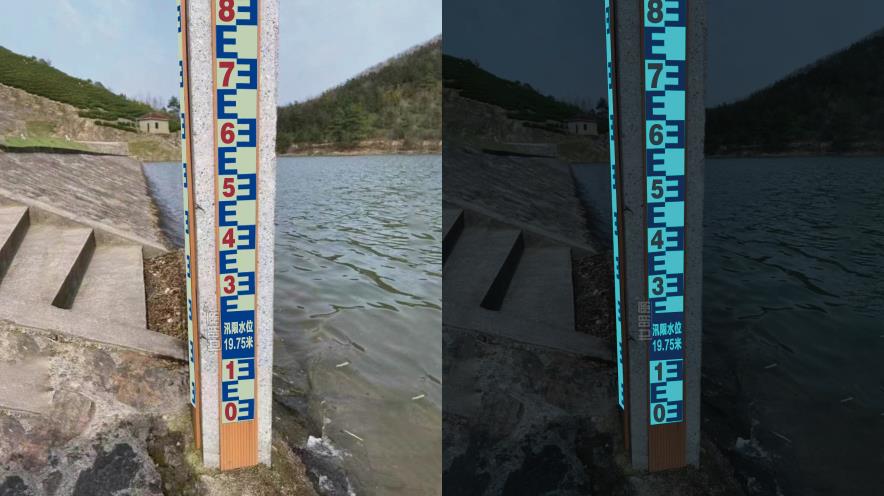
Engineering selection suggestion: Deploy national standard basic signs for conventional sites, and prioritize inorganic self-luminous safety signs for unattended reservoirs, remote river sections, coastal dykes and flash flood points. Used in conjunction with inorganic self-luminous water level gauges, they can build a full-domain water conservancy safety prevention and control system featuring fade-proof performance, nighttime visibility and maintenance-free operation, reducing safety risks and operation & maintenance costs from the source.