Tel: +86 139 0589 5606
E-mail:info@globri.com

Tel: +86 139 0589 5606
E-mail:info@globri.com
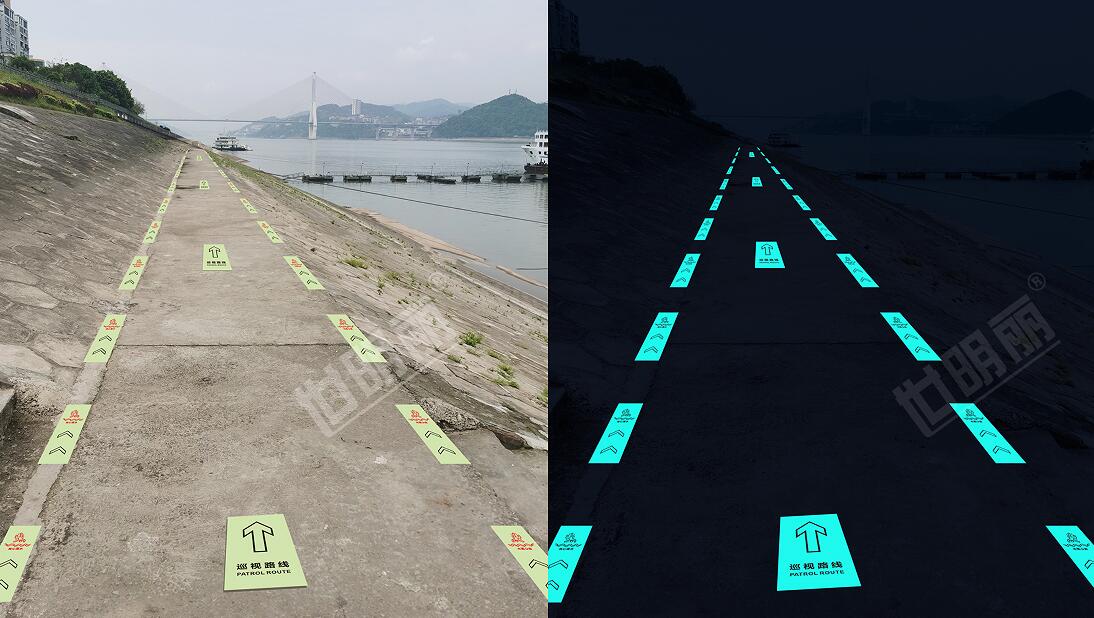
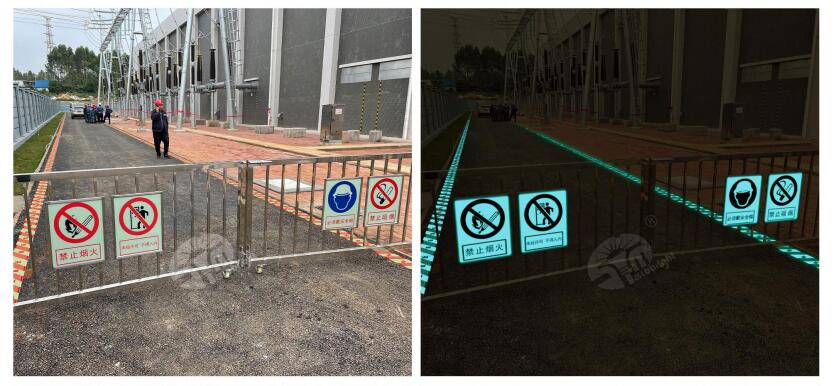
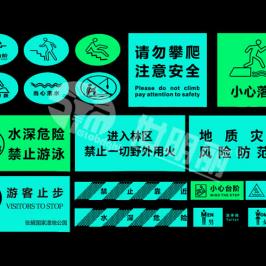
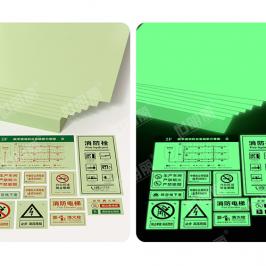
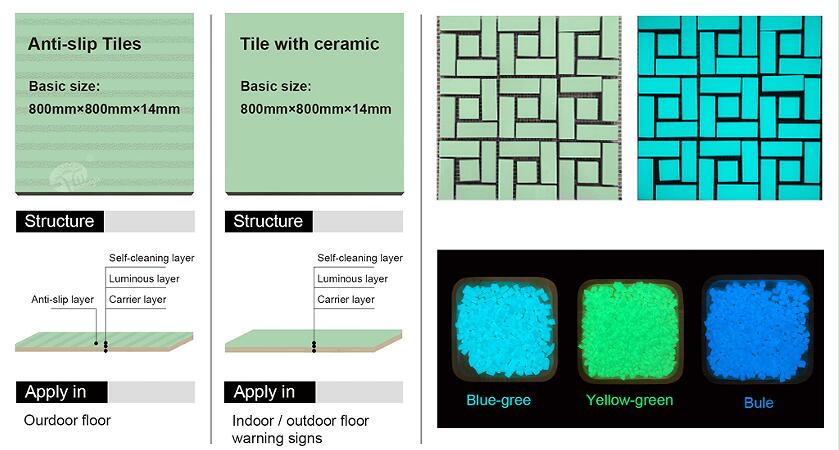
Self-luminous emergency signs are fire safety sign products made of rare earth light-storing materials, also known as light-storing fire emergency signs. They absorb visible light from the environment, store the light energy inside the material, and slowly release the light energy when the environment darkens, achieving continuous luminescence without power supply or batteries. This luminescence process belongs to physical energy storage and release and does not rely on electronic components, so it can still provide certain visual guidance in power outages, at night or in low-illuminance environments. Its core function is to help personnel quickly identify safety exits, evacuation directions and hazardous areas in emergencies.
Ordinary fluorescent signs are made of fluorescent pigments or dyes, mainly relying on excitation by external light sources to produce visual effects. They feature bright colors and high recognizability in daytime or illuminated environments, but their brightness decreases rapidly once the light source is removed, and they cannot emit light continuously like light-storing materials. Simply put, self-luminous emergency signs address the safety demand of "being conspicuous and visible in daytime, and continuously clear in dark environments", while ordinary fluorescent signs address the display demand of "improving conspicuity in bright environments".
Self-luminous emergency signs use light-storing materials to store light energy, replenishing energy in illuminated environments and releasing light energy in dark environments. Therefore, they require no external power supply and can continue to perform guiding functions even in the event of a power outage.
Ordinary fluorescent signs belong to photo-excited materials, which require continuous stimulation by external light to produce obvious effects. When the environment becomes completely dark, the fluorescent effect disappears quickly, failing to meet emergency demands such as fire evacuation.
Self-luminous emergency signs belong to safety emergency products. In engineering projects, indicators such as luminous brightness, duration, flame retardant performance and durability need to be focused on, and they are an important part of the fire evacuation system.
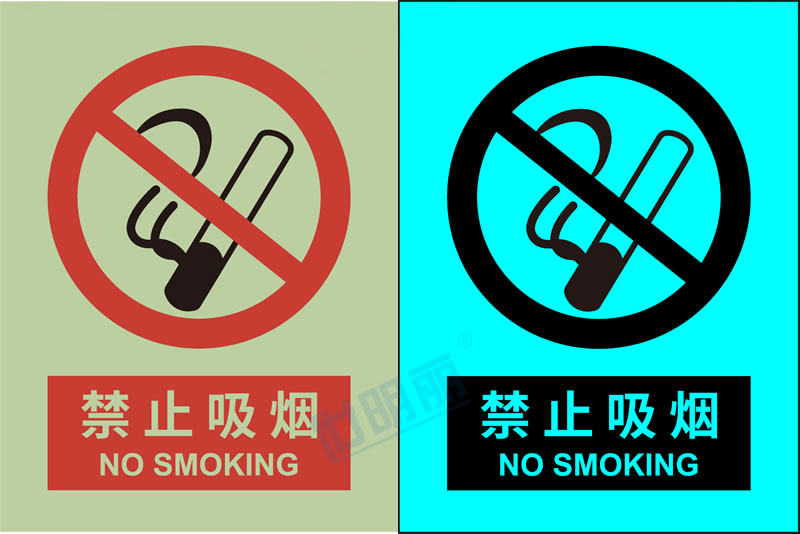
Ordinary fluorescent signs belong to ordinary visual sign materials, mainly used for reminders, decoration and display. They do not have fire emergency functions and cannot replace formal fire emergency signs.
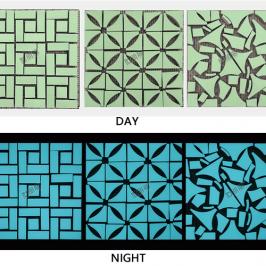
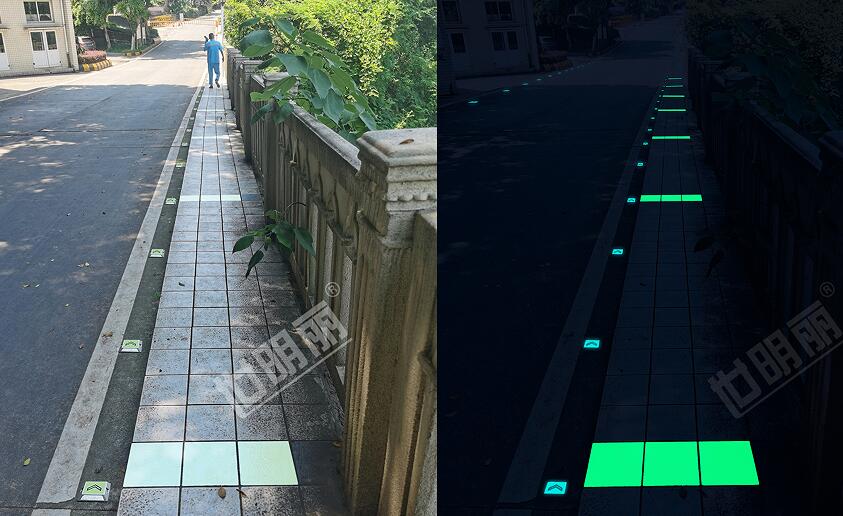
High-quality organic self-luminous emergency signs are made of polymer resin as the base material compounded with high-performance light-storing materials. For example, Globright organic self-luminous roll materials feature good weather resistance, stability and Class B1 flame retardant performance. Inorganic self-luminous materials are integrally fired at temperatures of over 1000°C from a variety of inorganic minerals, featuring high temperature resistance, corrosion resistance, wear resistance and anti-aging properties, suitable for long-term engineering applications in all scenarios.
Ordinary fluorescent signs mainly rely on fluorescent pigments to produce effects. After long-term exposure to ultraviolet radiation, temperature and humidity, problems such as color fading and reduced visual effect are prone to occur, with a relatively short service life.
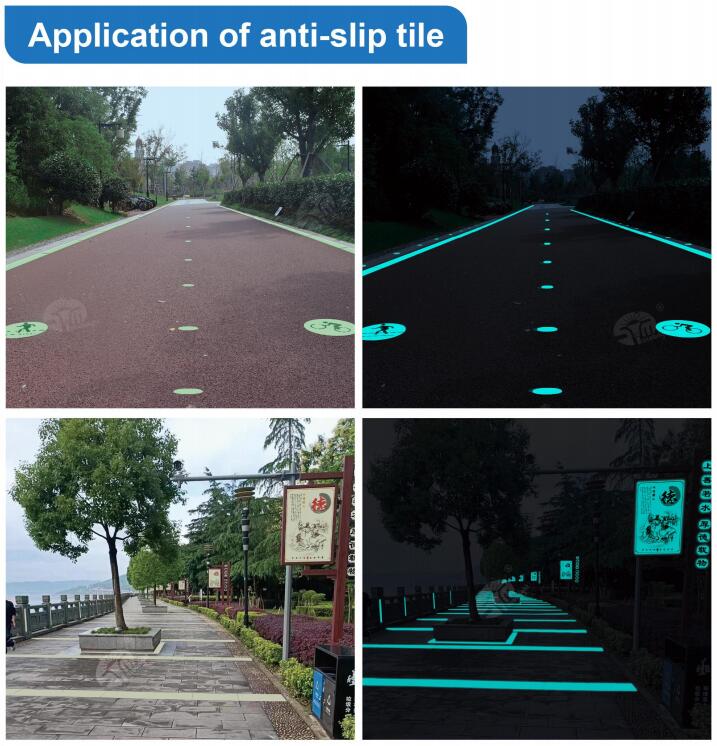
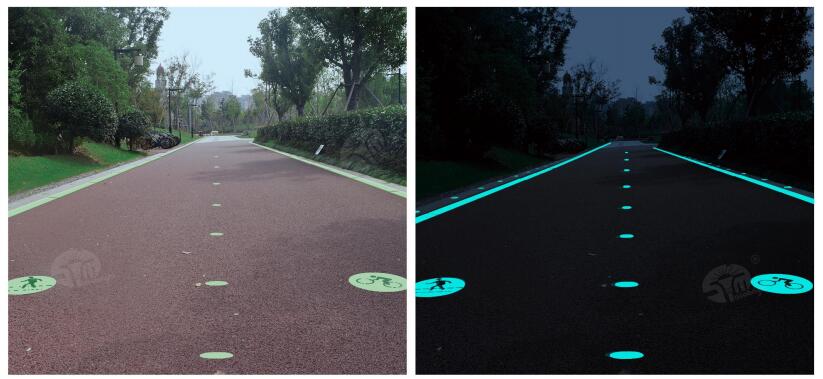
Self-luminous emergency signs are suitable for environments requiring nighttime identification and safety evacuation, such as shopping malls, hospitals, schools, underground garages, fire passages, subway spaces, water conservancy facilities and industrial plants.
Ordinary fluorescent signs are mainly used in non-emergency scenarios, such as advertising displays, product packaging, event decoration and ordinary warning reminders, focusing more on visual effects rather than safety evacuation capability.
Although self-luminous emergency signs and ordinary fluorescent signs are similar in appearance, their practical uses are completely different. Self-luminous emergency signs focus on solving the problem of safety guidance in dark environments, while ordinary fluorescent signs are mainly used for daily visual reminders. During procurement, focus should be placed on product test data, luminous performance, flame retardant grade and actual application environment. Selecting products that meet engineering requirements can truly give play to the role of fire safety signs.