Tel: +86 139 0589 5606
E-mail:info@globri.com

Tel: +86 139 0589 5606
E-mail:info@globri.com
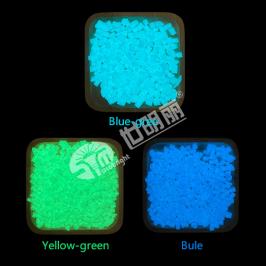
There are many types of self-luminous products on the market, such as luminous films, luminescent powders, acrylic luminous panels, organic self-luminous roll materials and inorganic self-luminous panels, which are collectively referred to as self-luminous materials. Although all these products feature autonomous luminescence, they differ significantly in material structure, luminous performance, weather resistance, flame retardant grade and service life. Currently, the mainstream self-luminous materials on the market are luminous films, luminescent powders, acrylic luminous panels, organic self-luminous roll materials and inorganic self-luminous panels, with different materials corresponding to different application scenarios.
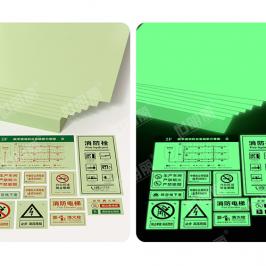
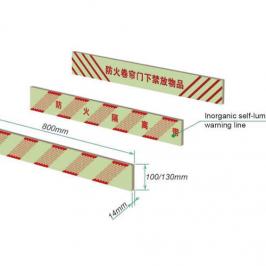
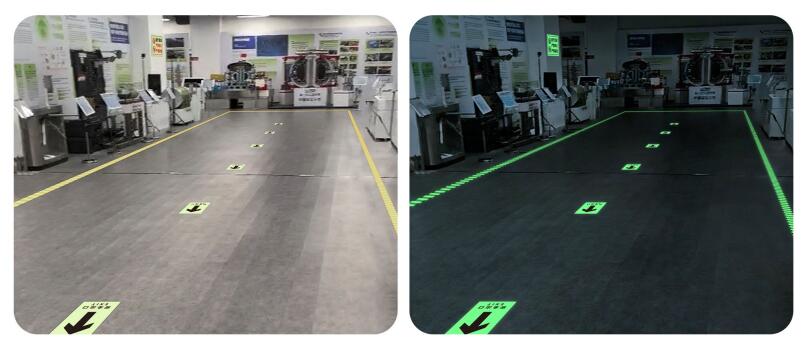
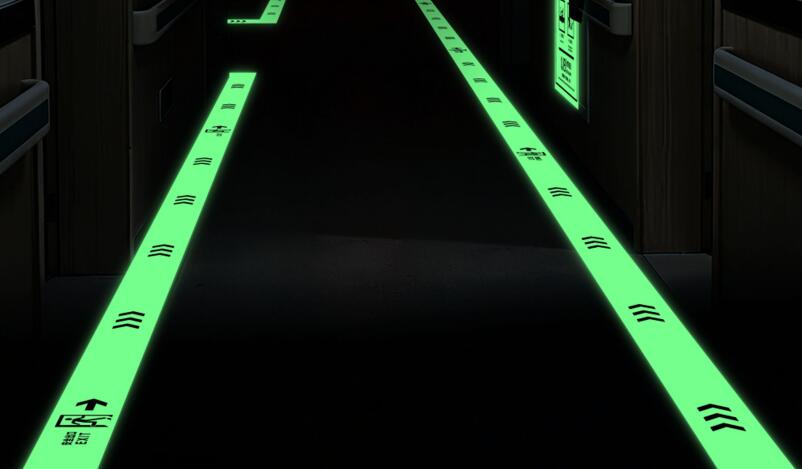
Organic self-luminous roll materials are engineering-grade self-luminous materials, which are currently widely used in the field of indoor fire safety. The products usually adopt polymer flame-retardant resin as the base material, add long-acting rare earth light-storing powder, and are processed through compounding technology. The fire protection grade of the products reaches Class B1, featuring non-combustion-supporting performance, carbonization upon combustion and self-extinguishing after flame removal.
Formal engineering-grade organic self-luminous roll materials generally have an effective visible luminous duration of more than 10 hours, which can meet the safety evacuation requirements in case of nighttime power outages.
In addition, the material has the advantages of uniform luminescence, good wear resistance and convenient construction, and is suitable for indoor public building environments such as shopping malls, hospitals, schools, office buildings, underground garages and stair passages.
However, since organic self-luminous roll materials still belong to the organic material system, long-term exposure to ultraviolet radiation, high temperature and high humidity environments can easily accelerate aging. Therefore, this material is mainly applicable to indoor environments, and long-term outdoor exposure is not recommended.
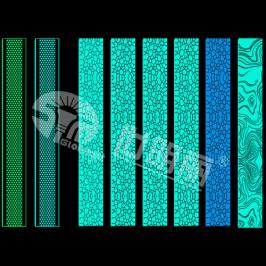
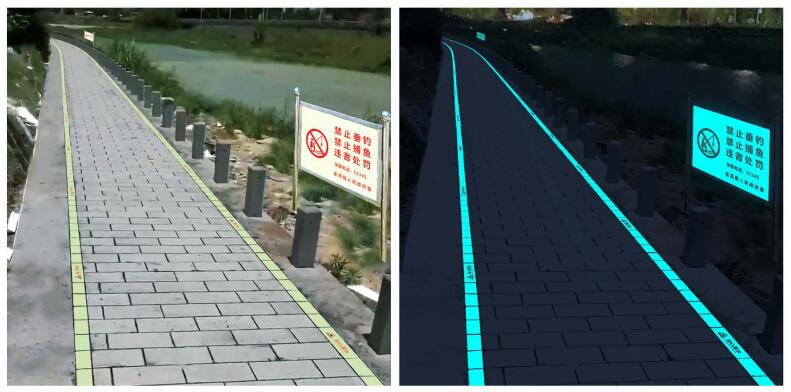
Inorganic self-luminous panels are a category of products with relatively high performance in the field of self-luminous materials at present, mainly developed for complex outdoor environments and long-term safety application requirements.
This material uses inorganic minerals as the base raw material, and fully integrates light-storing crystals with the inorganic substrate through a high-temperature sintering process at over 1000°C, forming a stable integrated structure.
In terms of luminous performance, high-quality inorganic self-luminous panels usually have an effective visible duration of more than 10 hours, and their luminous performance can still maintain good stability after years of use.
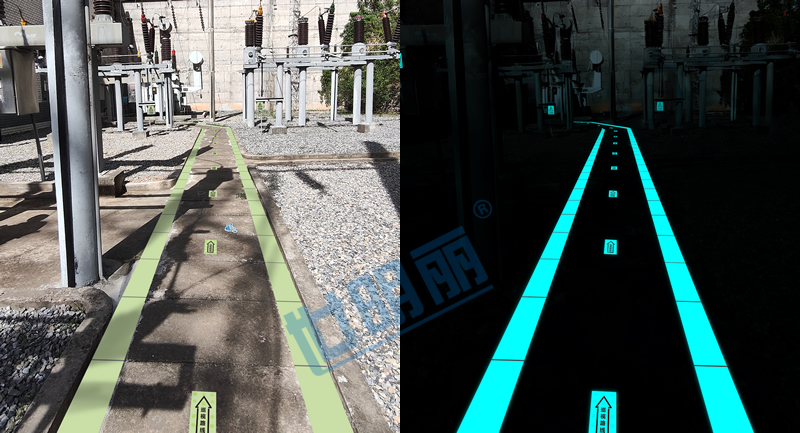
Due to the adoption of inorganic material system, the product features Class A1 non-combustibility, high temperature resistance, waterproofing, moisture proofing, UV resistance, corrosion resistance and anti-aging properties, and can adapt to complex working conditions such as sun and rain exposure, temperature fluctuation and salt spray environments.
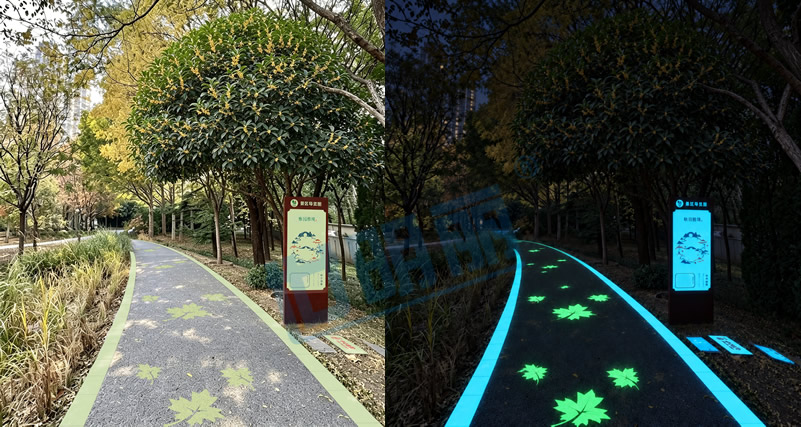
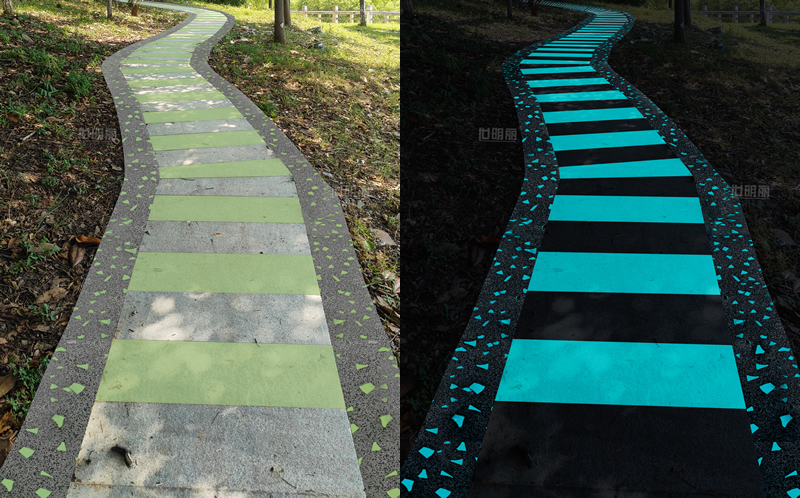
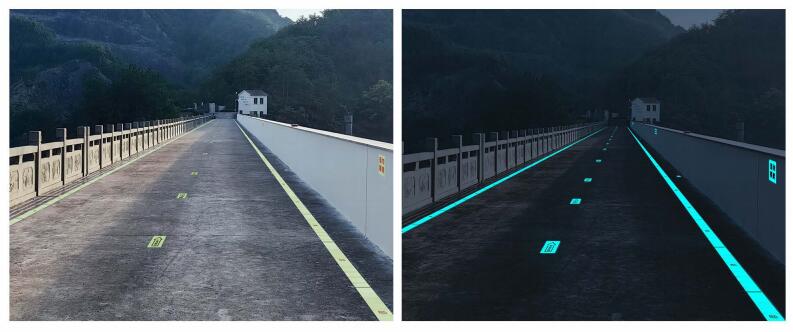
Therefore, inorganic self-luminous panels are widely used in municipal road signs, scenic luminous footpaths, water conservancy engineering signs, mine safety guidance, mountain road warnings and high-risk industrial areas. They are an important choice for long-term outdoor engineering applications, and can also be used indoors with a service life matching that of buildings.
Luminous films are a relatively common type of self-luminous products on the market. They mainly use plastic films such as PET as the base material, and form a luminous effect by coating luminescent powder on the surface.
Due to the relatively simple production process and low manufacturing cost, luminous films are widely used in decorative stickers, temporary prompt signs and small display products.
In terms of luminous performance, the effective visible duration of ordinary luminous films is usually about 1 hour. The product has high brightness just after absorbing light energy, but over time, the light attenuates rapidly, and only weak residual glow can be maintained in the later stage, which cannot meet the demand for long-term safety guidance.
At the same time, due to the simple material structure, luminous films have deficiencies in wear resistance, water resistance, flame retardancy and weather resistance. After long-term exposure to ultraviolet radiation or humid environments, problems such as aging, discoloration and peeling are prone to occur.
Therefore, luminous films are more suitable as short-term decoration and display materials, and are not recommended for fire safety engineering and long-term outdoor projects.
Acrylic luminous panels mainly use transparent acrylic panels as the carrier, and realize nighttime luminous effect by adding luminescent powder.
Compared with ordinary luminous films, acrylic luminous panels have the characteristics of smooth surface and strong processability, so they are widely used in interior decoration, display spaces and cultural and creative scenarios.
In terms of luminous duration, the effective visible time of ordinary acrylic luminous panels is about 2–3 hours, and high-quality products can reach about 4–6 hours, but they still belong to decorative display products as a whole.
It should be noted that acrylic is an organic plastic material, which has certain limitations in high temperature resistance, fire protection and long-term outdoor use. After long-term exposure to sunlight, yellowing and embrittlement are prone to occur.
Therefore, acrylic luminous panels are more suitable for indoor display and decorative signs, and are not suitable for use as fire evacuation systems and long-term outdoor safety facilities.
At present, self-luminous materials on the market mainly include four types: luminous films, acrylic luminous panels, organic self-luminous roll materials and inorganic self-luminous panels. Different materials have obvious differences in luminous duration, weather resistance, flame retardant grade and service life. Among them, luminous films and acrylic luminous panels are mainly used for decoration and display, organic self-luminous roll materials are suitable for indoor fire protection engineering, and inorganic self-luminous panels are more suitable for long-term outdoor engineering applications.