Tel: +86 139 0589 5606
E-mail:info@globri.com

Tel: +86 139 0589 5606
E-mail:info@globri.com
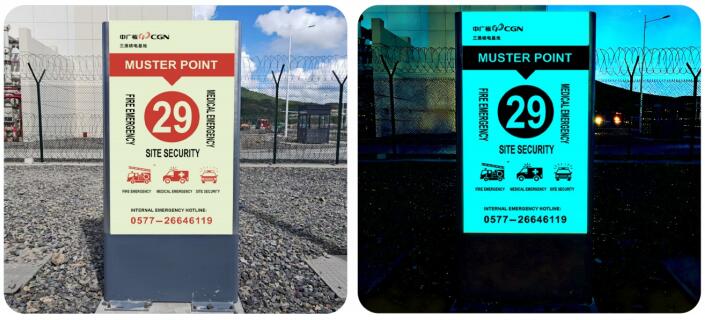
In scenarios such as fire evacuation, factory warning signs, municipal roads and underground parking garages, the visibility of markings in darkness or power-outage conditions is directly linked to personal safety. Conventional reflective signs rely heavily on external light sources and become completely ineffective without illumination. In contrast, self-luminous signs absorb and store light energy to emit light autonomously, requiring no power supply and zero maintenance, making them the mainstream choice for safety signage nowadays.
Most purchasers struggle with material selection when buying self-luminous signs, as different materials vary drastically in luminous effect, service life, weather resistance and cost performance.
As an enterprise specializing in the R&D, production and customization of self-luminous materials with years of on-site project experience, Zhejiang Globright Optics provides a detailed breakdown of mainstream self-luminous sign materials on the market, sorting out the advantages, disadvantages and applicable scenarios of each type to help you make accurate selections and avoid procurement pitfalls.
The core technology of self-luminous signs is light-storing self-luminescence. The light-storing layer on the surface absorbs energy from natural sunlight, indoor lighting and ambient brightness. After energy storage, it continuously emits light autonomously in dark, power-off or lightless environments, featuring zero power consumption, zero radiation and eco-friendliness.
Compared with traditional reflective signs and electrically powered light box signs, they possess prominent strengths:
No wiring or power supply needed, adaptable to extreme power failure emergencies;
Free from ambient light restrictions, delivering warning and guidance around the clock;
Almost no later operation and maintenance costs and extended service life.
They are widely applicable to indoor and outdoor safety warning scenarios. Four mainstream self-luminous sign materials dominate the current market: inorganic light-storing self-luminous panels, organic resin self-luminous coils, self-luminous PVC, self-luminous acrylic (PMMA).
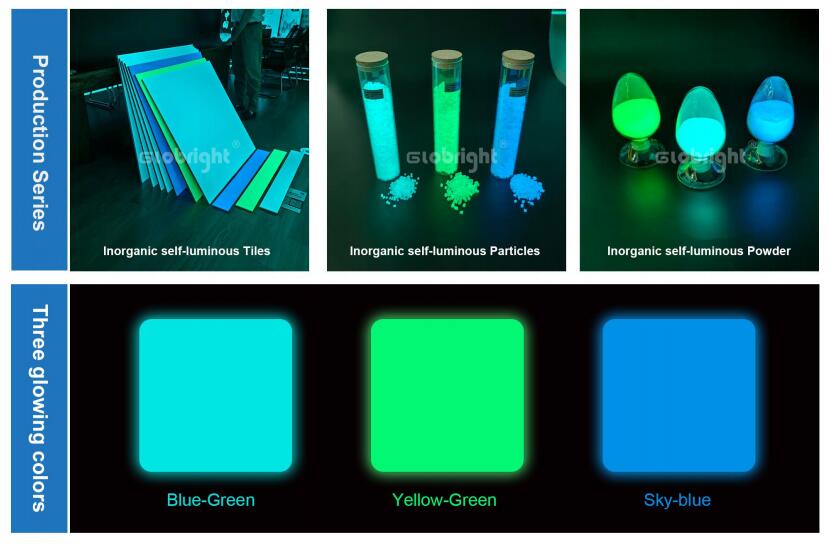
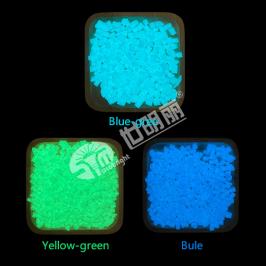
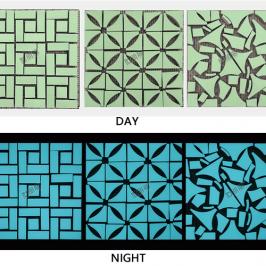
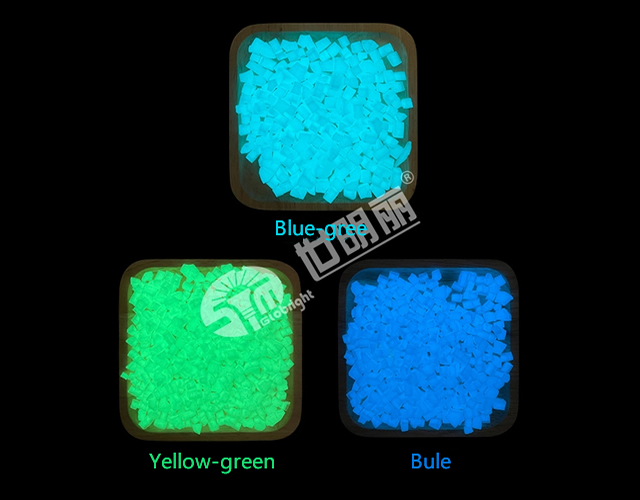
Manufactured by fusing multiple inorganic minerals under high temperature above 1000°C, these panels can sustain autonomous luminescence for more than 10 hours in darkness after a single light charging cycle. Unlike traditional organic coated materials, they feature integral luminous performance instead of relying solely on surface coating.
Core Advantages
Excellent fire resistance, reaching Class A non-combustible grade; high temperature and open flame resistant, eliminating risks of high-temperature aging, melting and peeling off;
Chemically stable inorganic composition, acid & alkali resistance, corrosion resistance and UV resistance; no fading or pulverization under long-term outdoor sunlight exposure;
Through-body luminous structure prevents cracking or peeling of the luminous layer, delivering far more uniform and durable luminescence than ordinary coated products;
Non-toxic, anti-aging, with a service life of over 15 years and no need for subsequent maintenance.
Applicable Scenarios
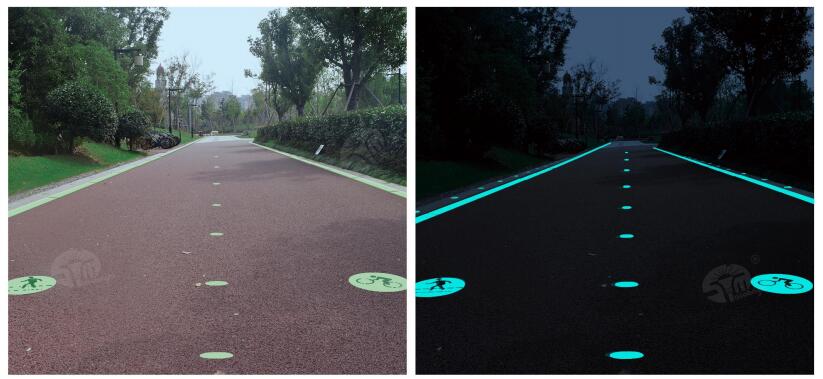
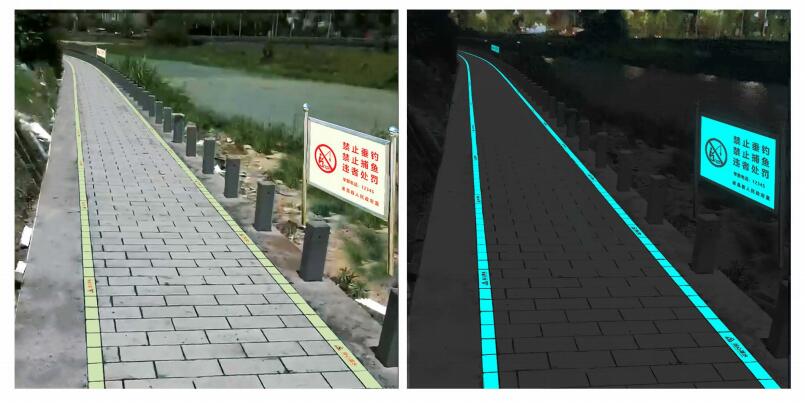
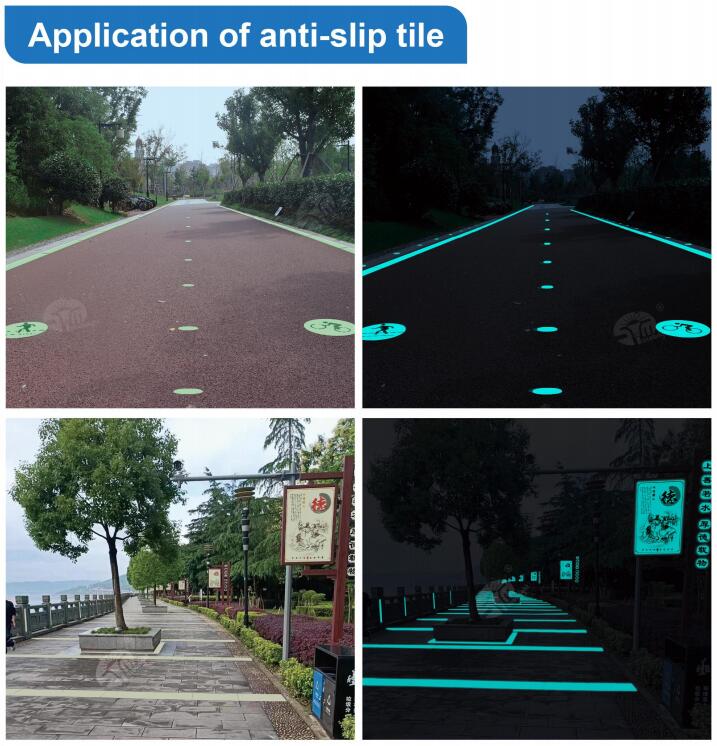
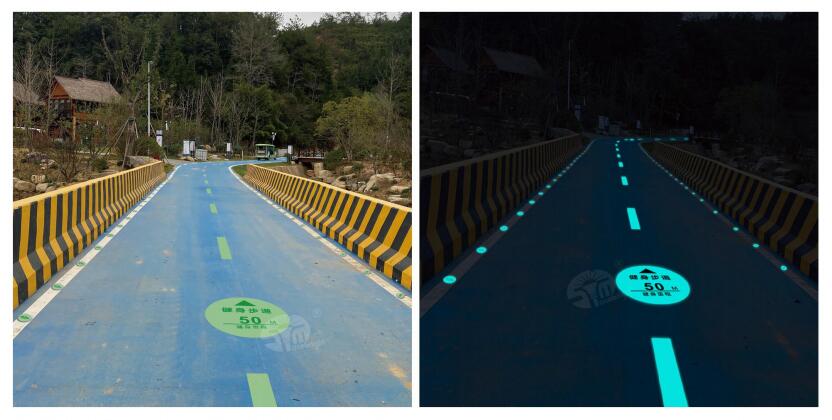
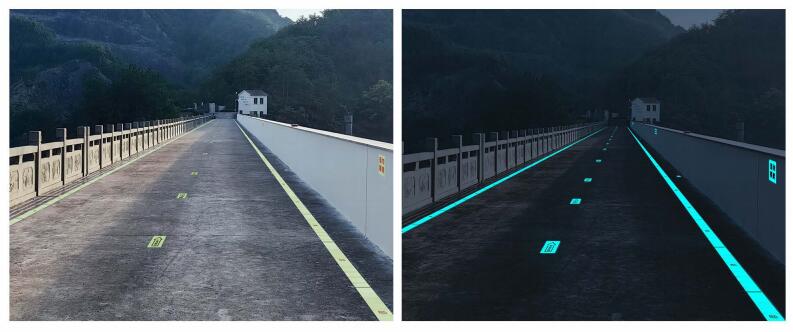
Widely used in landscape gardens, pedestrian trails, waterfront landscapes, rural roads, fire emergency passages, underground utility tunnels, municipal roads, water conservancy projects, shopping malls, schools, hospitals, power grids, high-risk facilities and signage systems. Suitable for all indoor, outdoor, floor and vertical wall mounting positions.
Especially ideal for special scenarios with stringent requirements on fire protection, durability, stability and safety: key fire prevention zones, flammable & explosive chemical plants, long tunnels, airports, metro stations, large cultural & sports venues, chemical industrial parks and public emergency walkways.
Flexible coils based on high-molecular organic resin substrate compounded with long-acting light-storing self-luminous raw materials. They can emit light continuously for over 10 hours in darkness after full light absorption and allow large-area seamless laying, which fundamentally differentiates them from conventional luminous film and light-storing film.
Core Advantages
Outstanding flexibility and ductility, supporting UV laminating printing and customized graphics & texts; tensile-resistant and crack-proof, adaptable to curved surfaces, corners, floors, walls and other irregular base surfaces;
Floor-specific version features high wear resistance, trampling resistance and friction resistance for high-frequency ground use;
Excellent flame retardancy up to Class B1 flame-retardant standard;
Available in full rolls for cutting and seamless splicing, equipped with self-adhesive backing for easy installation, high construction efficiency and integral complete luminous graphics;
Cost-effective for large-scale mass engineering paving.
Applicable Scenarios
Recommended for indoor use with a service life of 5–8 years. Suitable for ground guidance in underground passages, stair tread warning markings, continuous emergency directional signage in large shopping malls, schools, hospitals and stadiums.
The most widely applied and cost-effective flexible self-luminous material in the market. It takes flexible PVC sheet as the base, with long-acting luminous powder evenly coated on the surface. The production process is mature and highly adaptable.
Defect: Extremely short afterglow duration, generally only around 1 hour, typical products include luminous film and light-storing film.
Features: Soft texture, arbitrarily foldable and cuttable, compatible with laminating printing and customized patterns & texts, easy to install. It can meet the demands of ordinary indoor environments without high requirements on luminous brightness and duration.
Limited by material properties, it has mediocre wear resistance and anti-aging performance, prone to fading and coating aging under prolonged outdoor sunlight exposure, so it is not fit for long-term open-air outdoor deployment.
Self-luminous acrylic panels are produced via casting process by mixing high-brightness luminous powder with acrylic raw materials.
Strengths
Ultra-smooth and transparent panel surface, high-definition delicate printed images, soft and uniform luminous effect, premium overall texture, dust-proof and easy to clean with regular shape, perfect for high-precision customized signage projects.
Weaknesses
Limited panel hardness, vulnerable to damage from heavy impact; poor outdoor weather resistance, easy yellowing and deformation under long-term outdoor exposure, only for indoor application. Low luminous brightness and short afterglow time (approximately 1 hour). Mainly adopted for indoor projects with no strict standards for luminous intensity and duration.
Simplified Selection Logic
Conventional indoor scenarios: Choose organic self-luminous coils
Outdoor industrial & municipal projects: Choose inorganic light-storing self-luminous panels
Budget-sensitive indoor projects with no strict requirements on luminous duration and service life: Optional PVC or acrylic
Nowadays, numerous low-cost inferior self-luminous signs flood the market, commonly suffering from low luminous powder content, thin coating and poor adhesion. They will dim drastically, peel off or completely fail after short-term use, posing severe potential safety hazards.
Our company always prioritizes product quality. All self-luminous products are manufactured in strict accordance with industrial safety standards, delivering stable luminescence and long service life. We also provide one-stop services including material selection consultation, scheme design, size & pattern customization and mass production to satisfy the full-range demands of all types of projects.