Tel: +86 139 0589 5606
E-mail:info@globri.com

Tel: +86 139 0589 5606
E-mail:info@globri.com
After the transit of Typhoon Bavi, hidden dangers have become prominent, and the reconstruction of water conservancy safety signs brooks no delay. Water conservancy facilities such as river dykes, sluice stations, pumping stations and dangerous engineering sections in the jurisdiction have been scoured by strong winds and heavy rainstorms, resulting in damage, fading, peeling and lodging of a large number of safety warning signs, and the original safety warning system has completely failed.
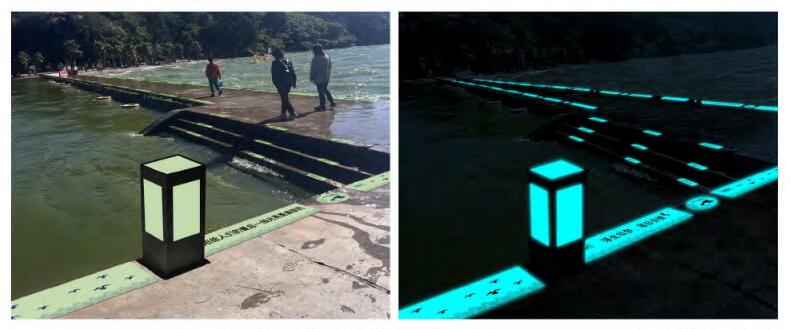
Water conservancy safety signs serve as a critical barrier to prevent water-related accidents, guide patrol and rescue work, and warn the public of escape risks. Failed signs will deprive hazardous water areas of visual early warning, creating a large number of safety blind spots in scenarios such as nighttime power outages, which can easily trigger secondary safety hazards such as accidental entry of personnel and falling into water. To consolidate the bottom line of post-disaster water conservancy safety and address the shortcomings of extreme environment prevention and control, inorganic self-luminous safety signboards are replaced across the entire region. Featuring 10 hours of autonomous nighttime luminescence, these all-weather standardized warning facilities consolidate the safety defense line for rivers, lakes and water conservancy projects.
Limited by manufacturing processes and materials, traditional water conservancy safety signs have shortcomings such as poor weather resistance, weak disaster resistance and limited warning effectiveness, which cannot adapt to the complex outdoor working conditions of water conservancy projects. Most of these signs adopt ordinary spraying and reflective film pasting processes, which are prone to paint peeling, blurring and deformation in environments with typhoons, rainstorms and high-humidity corrosion. They are vulnerable to large-scale damage after extreme weather, resulting in persistently high reconstruction and operation & maintenance costs.
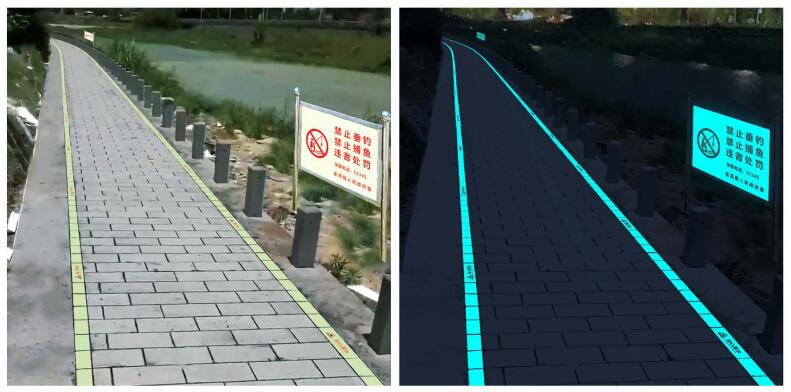
Meanwhile, traditional reflective signs rely on external light sources and become completely ineffective at night and in power outage environments. Water conservancy operations are mostly carried out near water and hazards, and flood season patrols and emergency rescue often cover nighttime periods. The warning gap of traditional signs forms regulatory loopholes, making it difficult to meet the work requirements of all-weather and refined management and control of water conservancy safety.
Inorganic self-luminous safety signboards are adaptable to the special scenarios of outdoor waterfront water conservancy with frequent disasters and changes, making them the optimal choice for post-disaster sign upgrading. Their core advantages are prominent:
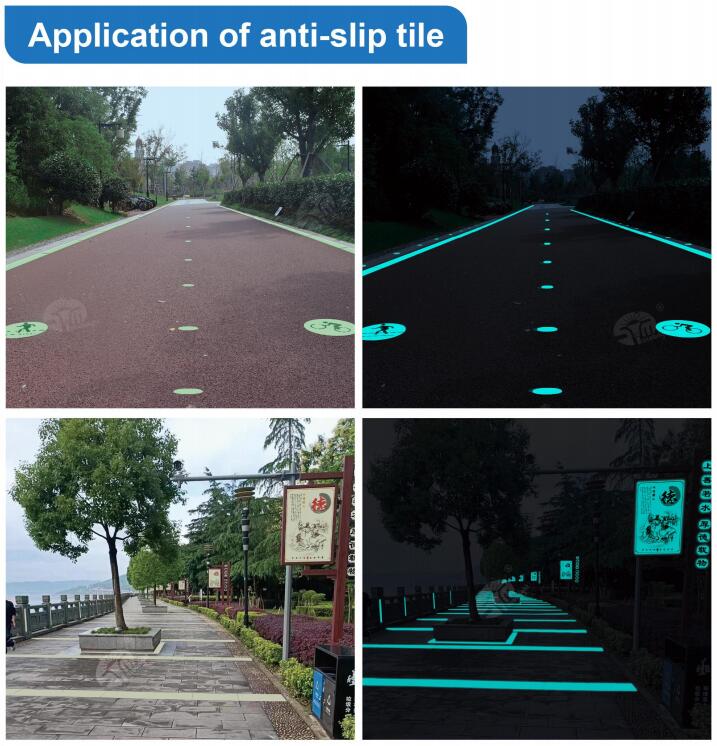
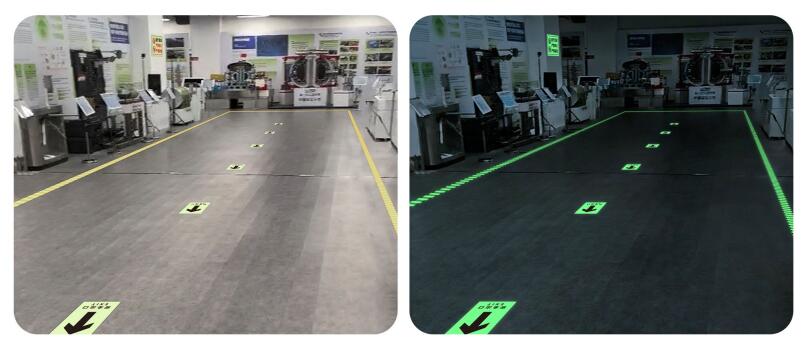
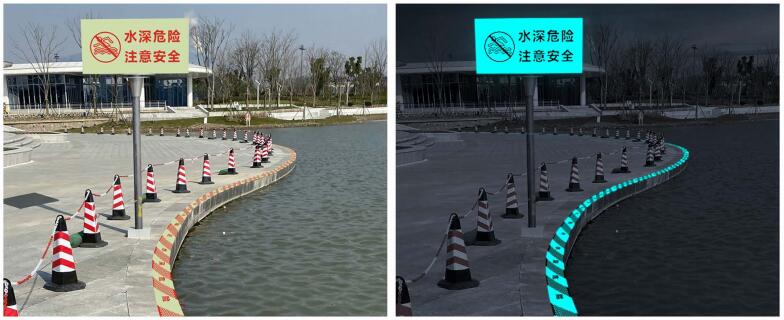
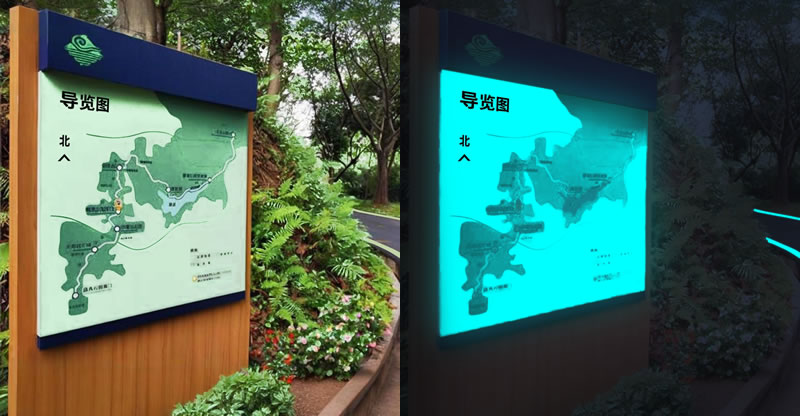
All-weather visibility and round-the-clock duty: They require no power supply or energy consumption, store energy in daytime and glow autonomously at night, remaining clear and striking in dark environments and completely eliminating nighttime warning blind spots.
Strong weather resistance and disaster-resistant durability: They withstand strong winds, heavy rainstorms, moisture corrosion and high-temperature aging, are not prone to fading or deformation, adapt to humid and foggy outdoor environments, and remain unaffected by extreme weather.
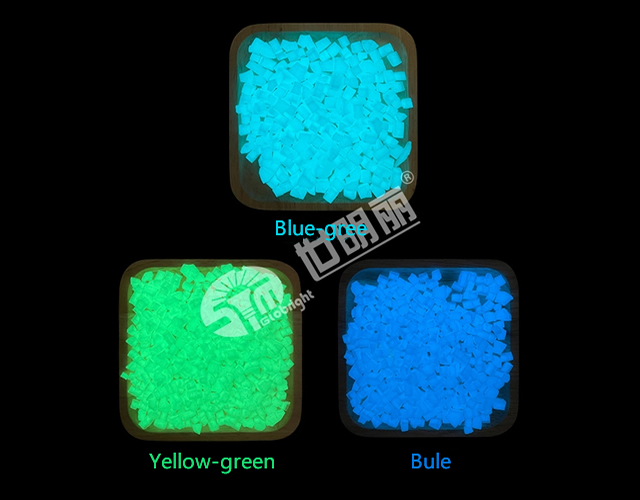
Safe, low-carbon and maintenance-free: The inorganic material is non-combustible, wear-resistant, stable in performance and long in service life, with zero energy consumption and no radiation, greatly reducing the daily operation and maintenance costs of water conservancy facilities.
Adaptable to emergency scenarios: They can continue to glow in emergencies such as floods and power outages, providing clear visual guidance for post-disaster hidden danger investigation, emergency rescue and public escape, and comprehensively improving emergency safety support capabilities.
To complete the post-disaster reconstruction and upgrading of safety signs with high quality, we adhere to problem orientation, targeted measures and full-region coverage, and steadily promote all work:
Carry out full-region dragnet investigation: Conduct comprehensive inspections of rivers, dykes, sluice dams, pumping stations, dangerous sections, reservoirs and water-related construction areas in the jurisdiction, clarify the 底数 of damaged and missing signs, establish a complete ledger, and 压实 rectification responsibilities.
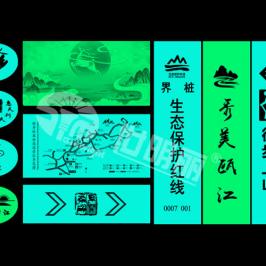
Implement standardized upgrading and replacement: Fully dismantle old and damaged signs, and uniformly replace them with standardized inorganic self-luminous warning, prohibition, informatory and directional signs as well as self-luminous water level gauges, to realize quality improvement and renewal of signs across the entire region.
Scientific and standardized deployment: Focus on high-risk points such as deep-water shorelines, steep dangerous sections, construction areas and management blind spots, optimize the location and density of sign deployment to ensure no dead ends in warning and no blind spots in prevention and control.
Strengthen safety popularization: Take the opportunity of sign renewal to popularize water-related safety knowledge, guide the public to stay away from dangerous waters, and build a safety pattern of mass prevention and control.
This post-disaster sign reconstruction is not a simple restoration, but an iterative upgrading of the water conservancy safety prevention and control system, with both practical effects and long-term value.
In the short term, it can quickly make up for post-disaster safety shortcomings, repair warning loopholes, effectively prevent secondary water-related safety accidents, and lay a foundation for post-disaster facility restoration and flood season safety management and control.
In the long run, by phasing out backward traditional signs, a modern water conservancy warning system with strong disaster resistance, all-weather visibility, maintenance-free performance and high reliability will be built, greatly improving the emergency support capacity for extreme weather. We will adhere to the concept of "prevention first and taking preventive measures before disasters occur", take standardized sign construction as the starting point, promote the refined, normalized and long-term management and control of water conservancy safety, and consolidate the bottom line of safe operation and management.
In short, safety is no trivial matter, and preventive measures must be taken in advance. Going forward, we will take this post-disaster sign reconstruction as an opportunity, continuously adhere to the bottom-line thinking of safety, carry out normalized operation and maintenance of water conservancy facilities, hidden danger investigation and facility upgrading, continuously improve the water conservancy safety warning and protection system, address weak links in safety production management, strive to consolidate the safety barrier of rivers, lakes and water conservancy projects, ensure the stable operation of water conservancy projects, and effectively protect the lives and property of the people.