Tel: +86 139 0589 5606
E-mail:info@globri.com

Tel: +86 139 0589 5606
E-mail:info@globri.com
Corrosion-resistant warning signs are essential safety assets in harsh industrial and coastal environments. In chemical parks, coastal tidal flats, saline-alkali irrigation districts, mining facilities and other highly corrosive locations, safety markers constantly endure corrosive fumes, salt spray, acids, alkalis and chemical dust. Standard sign materials quickly corrode, age, peel off and stop working properly.
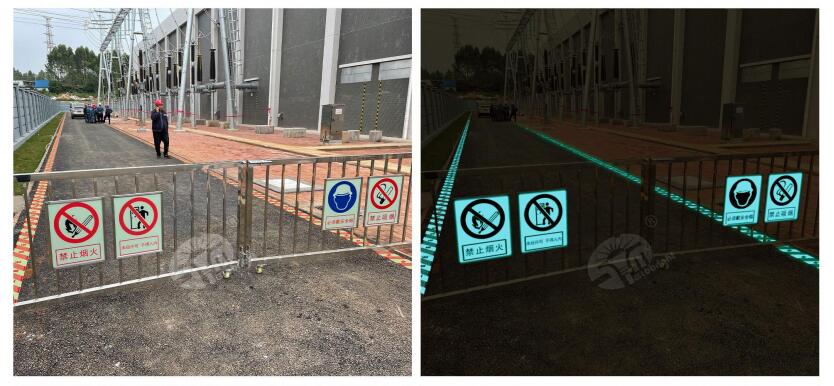
Globright inorganic self-luminous warning signs deliver superior corrosion resistance at the material level. Manufactured with a high-temperature sintered all-inorganic substrate, these signs resist acids, alkalis, salt spray and chemical dust far better than conventional metal or organic alternatives. They are the top choice for reliable safety marking in high-corrosion applications.
Corrosion-resistant warning signs are required where aggressive media and extreme conditions prevail, including chemical and pharmaceutical manufacturing zones, coastal ports and shorelines, saline-alkali water conservancy sites, municipal wastewater treatment plants, metal mines and pickling workshops. These locations contain gaseous, liquid and particulate corrosive contaminants that demand much higher stability and chemical resistance than general-purpose sign installations.
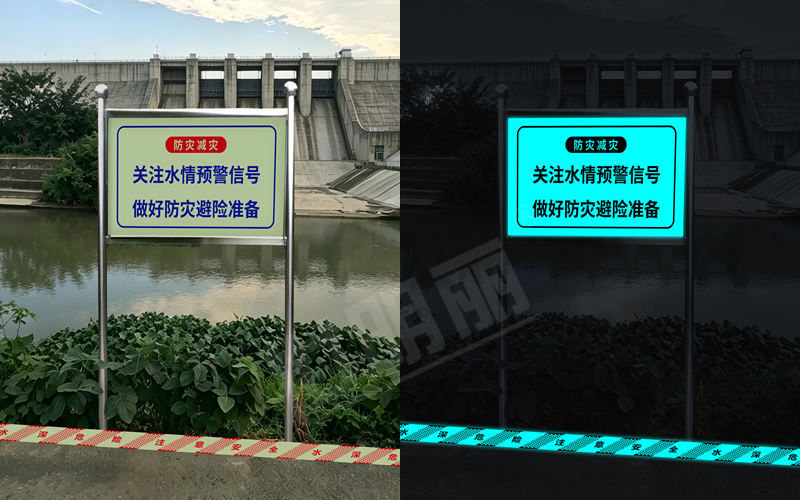
Made from natural inorganic minerals such as kaolin and quartz sand and sintered at over 1000°C into a single dense, non-porous body, the substrate has extremely stable chemical properties. It naturally resists acids and alkalis without the rust risk of metals or the gradual breakdown of organic plastics, forming a fundamental barrier against corrosive agents.
Globright inorganic self-luminous warning signs withstand acid and alkali gases, chemical dust, coastal salt spray, saline-alkali soil moisture and wastewater vapor. They remain rust-free, non-chalking, non-peeling and dimensionally stable whether deployed amid chemical fumes, salt-laden coastal air or submerged periodically in saline water.
Hazard symbols and text are sintered directly into the base material, not laminated, painted or printed on the surface. Corrosive agents cannot penetrate and damage the graphic layer. Even after years in heavily corrosive environments, the warning message stays clear, eliminating the typical failure mode of surface-coated signs.
These signs operate without electricity, wiring or electronic components. There are no vulnerable connectors, gaskets or circuit boards that commonly corrode and fail. This design eliminates electrical hazards and circuit breakdowns triggered by corrosive exposure.
Excellent UV resistance and water immersion resistance complement the chemical protection. The material resists the combined destructive effect of sunlight, rainwater and corrosive pollutants, extending the service life in complex outdoor corrosive environments and lowering total lifecycle maintenance costs.
When choosing warning signs for high-corrosion locations, corrosion resistance should be the primary evaluation factor. Globright inorganic self-luminous warning signs deliver long-term corrosion resistance built into the substrate. They withstand diverse corrosive media while offering passive self-luminescence, superior weathering performance, long service life and intrinsic safety. They are the preferred corrosion-resistant warning sign solution for high-risk corrosive environments.