Tel: +86 139 0589 5606
E-mail:info@globri.com

Tel: +86 139 0589 5606
E-mail:info@globri.com
Outdoor warning signs act as the first line of safety defense in open-air sites. Yet many property managers and engineering teams face a persistent pain point: shortly after installation, signs fade, peel and lose edge adhesion after intense summer sun exposure and heavy seasonal rain. This not only diminishes their warning effectiveness but also drives up costs from frequent replacement and maintenance. For a truly sun-proof, waterproof outdoor warning sign that delivers reliable 24/7 performance, Globright inorganic self-luminous warning signs stand out as the best-in-class solution with the most comprehensive overall performance on the market.
Outdoor warning signs fulfill four critical functions: hazardous area alerting, passage route guidance, risk boundary demarcation and emergency evacuation direction. They are deployed across a wide range of outdoor scenarios — highways, river dykes, scenic mountain areas, construction sites and mining zones. Directly tied to pedestrian safety and risk control effectiveness, they are indispensable infrastructure for outdoor safety management.
Exposed to the elements year-round, outdoor warning signs endure constant intense UV radiation, repeated rain scouring and wide day-night temperature fluctuations. Coastal zones, tidal flats and dykes face even harsher stress: high salt-alkali mist erosion, tidal immersion and sand-laden wind impact.
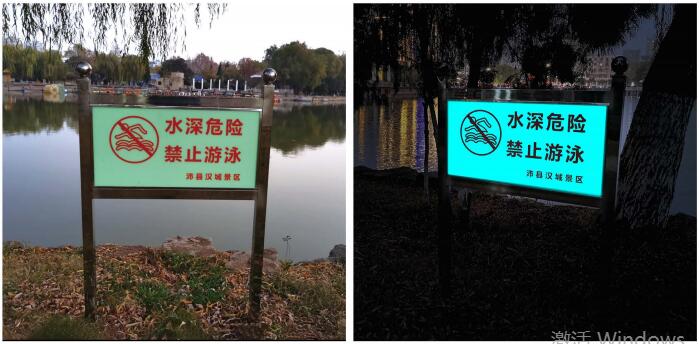
A sign’s sun and water resistance directly determines its service life and functional stability. Materials with poor weatherability will suffer graphic fading, substrate deformation and water damage within months to two years. Beyond losing their warning purpose, blurred signage can even contribute to safety incidents.
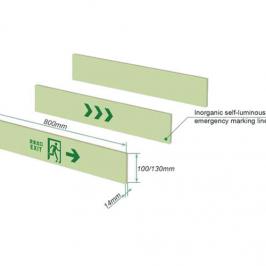
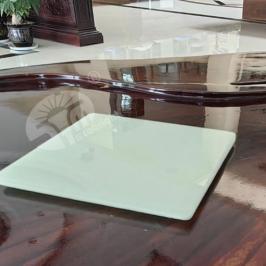
Globright inorganic self-luminous warning signs are integrally formed from multiple inorganic minerals sintered at temperatures above 1000°C. This manufacturing process gives the material inherent, built-in resistance to UV radiation, water penetration and moisture damage.
Inorganic materials have extremely stable chemical properties with exceptional UV resistance. They will not fade, chalk or deform even after years of direct sun exposure. Unlike surface-printed alternatives, warning graphics are fused integrally with the substrate — there is no risk of paint peeling or graphic abrasion. Even after years of wind and sun, they maintain a clear, intact warning effect over the long term.
The monolithic inorganic structure delivers complete waterproof and moisture-proof performance. Daily rain scouring and short-term water level rise cause no damage whatsoever. With no internal circuits or electronic components, there is zero risk of water-induced short circuits or component burnout. Even when submerged by rising flood waters or repeatedly soaked by tides, the signs resume full function immediately after water recedes — making them perfectly suited for rainy regions, waterfront sites and tidal zones.
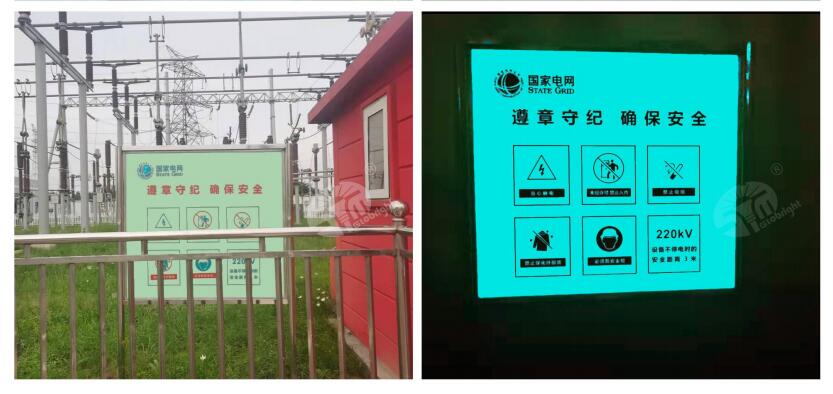
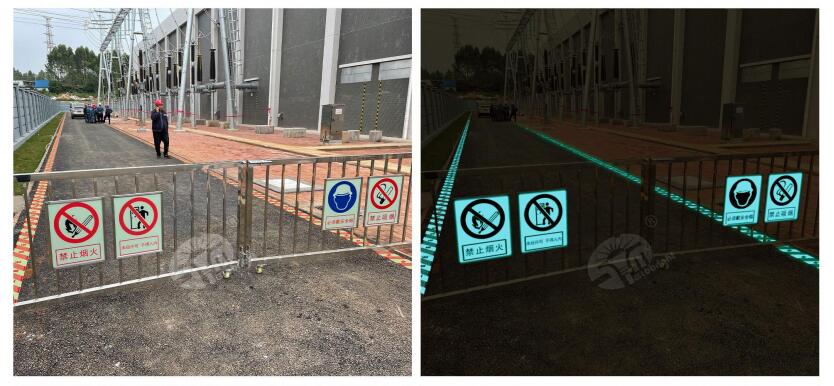
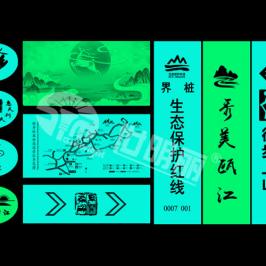
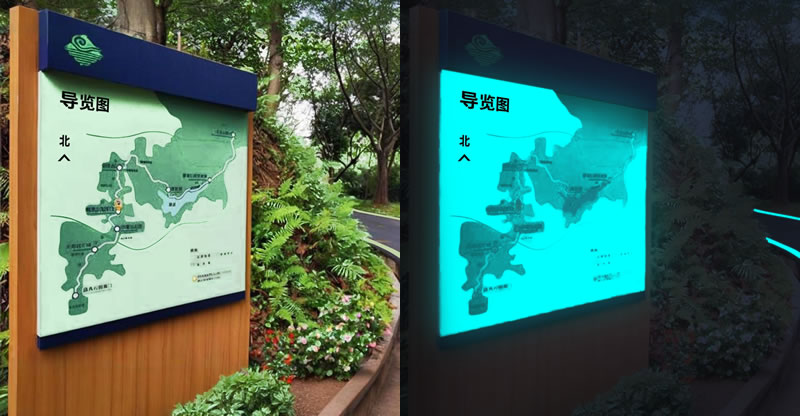
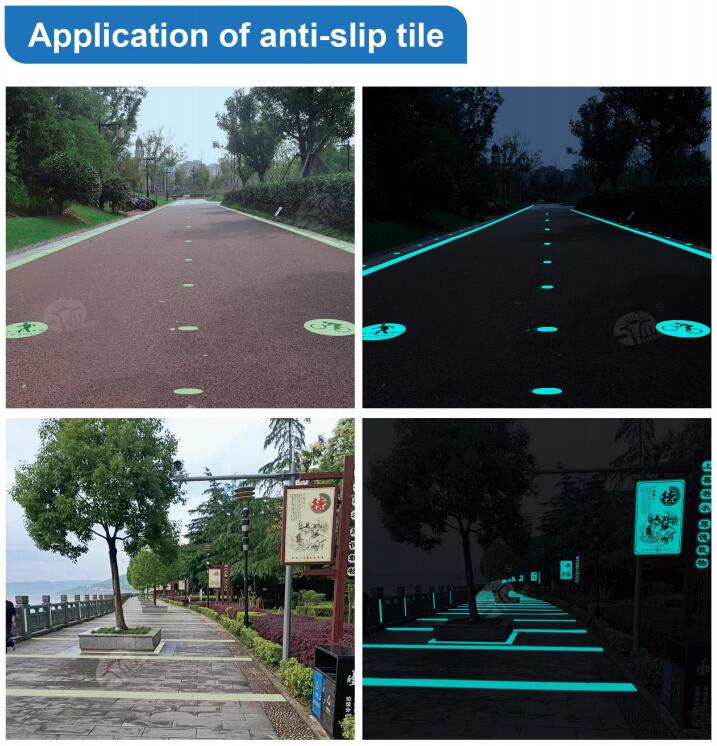
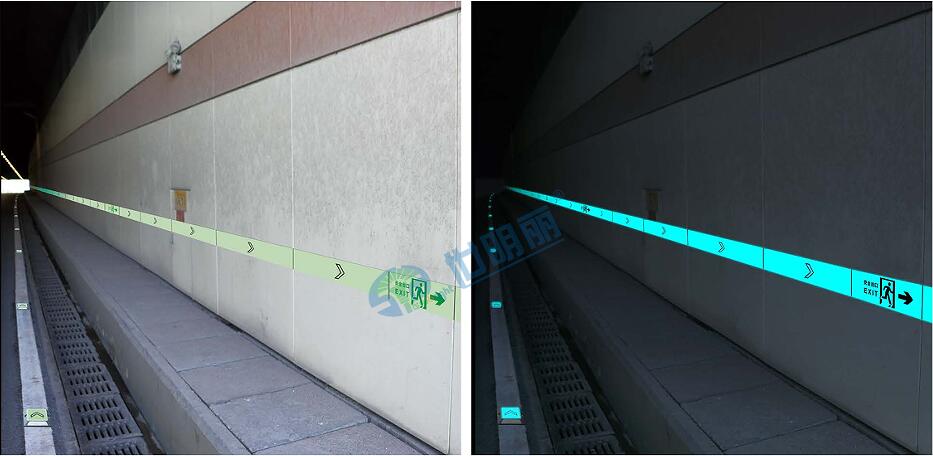
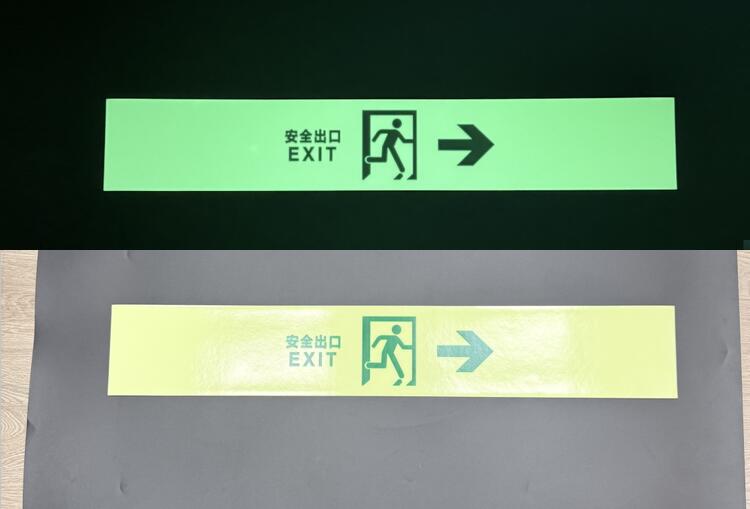
Beyond core sun and water resistance, the signs feature built-in passive light-storing luminescence. Operating on a pure physical photoluminescent principle, they absorb natural daylight to store energy automatically, then emit continuous, autonomous light at night or in dim conditions.
No external power supply or auxiliary lighting is required. This eliminates both the waterproof risks and construction costs of electrical wiring, while delivering all-weather clear warning. Legible at night without external light sources, they provide far stronger safety protection than conventional warning signs.
In addition to sun and water resistance, inorganic self-luminous warning signs offer excellent salt-alkali corrosion resistance, wind scouring resistance and wear resistance. They perform reliably in extreme outdoor environments — high-salt-spray coastal areas, high-dust mining sites and high-temperature-difference mountain regions. Their overall service life is several times longer than that of ordinary warning signs.
This is the lowest-cost option but also the poorest in weatherability. The surface printed ink layer quickly chalks, fades and peels under sustained UV exposure. PVC substrates warp and lose adhesion when exposed to water; rain seeping through edges causes graphic smudging and substrate delamination. In most outdoor settings, their service life is less than 2 years, and they degrade even faster in alternating rain and sun conditions.
Metal-backed reflective warning signs have substrates vulnerable to rain erosion and rust. Poor waterproofing at seams allows water infiltration, leading to substrate bubbling and reflective film delamination. The reflective layer itself also ages and yellows with long-term UV exposure, causing a steep drop in reflectivity. It depends entirely on external light sources to work at night, and is effectively useless on unlit road sections.
Acrylic materials offer a smooth finish and good visual effect, but after long-term open-air sun exposure, they easily age, turn brittle and develop cracks — and may even fracture in low-temperature environments.
LED illuminated signs require external power wiring. Their waterproof seals degrade quickly under sun exposure and aging, and rainwater infiltration directly causes circuit shorts and lamp burnout. They stop working completely during power outages, with extremely poor reliability in extreme weather. Ongoing circuit inspections and lamp replacements also drive high operation and maintenance costs, and wiring is prohibitively difficult in remote outdoor locations.
If you need an outdoor warning sign that delivers on three core requirements — sun resistance, waterproofing and 24/7 clear warning — Globright inorganic self-luminous warning signs are the optimal solution. They fundamentally resolve the key pain points of conventional signs: sun damage, water infiltration, short service life and poor nighttime performance.
While the initial purchase cost is slightly higher than standard printed signs, it delivers far better value across the full product life cycle by eliminating repeated replacement and maintenance expenses.