Tel: +86 139 0589 5606
E-mail:info@globri.com

Tel: +86 139 0589 5606
E-mail:info@globri.com
There are obvious gaps in sustainable luminous duration among different types of self-luminous materials, with clearly stratified luminous performance of mainstream products on the market: ordinary organic luminous film, light-storing film and acrylic luminous panels generally have an effective luminous duration of less than 1 hour; inorganic self-luminous panels can stably emit light autonomously for more than 10 hours after a single light charging cycle; organic resin self-luminous coils also achieve 10 hours of long-duration luminescence. Many purchasers and engineering practitioners wonder about the core reasons for such huge gaps in luminous duration across materials. Combined with raw material composition, production processes and comprehensive performance, Zhejiang Globright Optics provides a professional analysis of the core differences between various self-luminous materials.
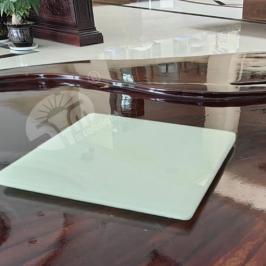
Inorganic self-luminous panels: Appearance similar to stone tiles, with a standard specification of 800mm×800mm×14mm. The panel surface is covered with a dense crystalline glaze layer, featuring outstanding overall hardness and a thick, solid texture.
Organic self-luminous coils: Conventional size of 25000mm×1200mm×1.5mm, with a dedicated wear-resistant protective layer added on the surface. The material is soft and bendable, adaptable to construction on irregular base surfaces.
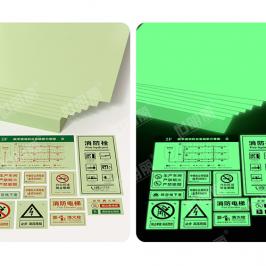
Organic luminous light-storing film: Standard size of 45700mm×1240mm×0.3mm, ultra-thin with a paper-like texture. It is convenient for cutting and processing but has weak protective performance.
Self-luminous acrylic (PMMA) panels: General specification of 1220mm×2440mm×3mm, overall rigid plastic panels with smooth and translucent surfaces, only suitable for making short-term simple indoor signs.
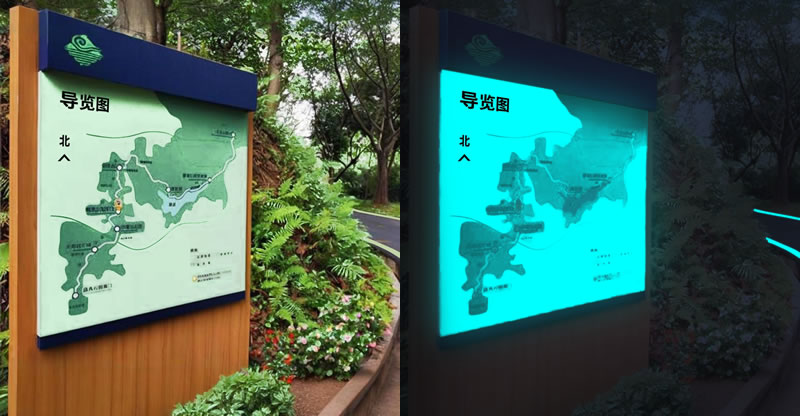
Made from multiple inorganic minerals via integral high-temperature fusion and sintering above 1000°C, the product boasts comprehensive excellent performance: high hardness, scratch and wear resistance, tolerance to extreme temperature differences, as well as corrosion resistance, anti-aging performance, water immersion resistance, Euroclass A1 non-combustibility, non-toxicity and zero radiation. Its optical performance remains stable for a long time with no attenuation of long-duration luminescence.
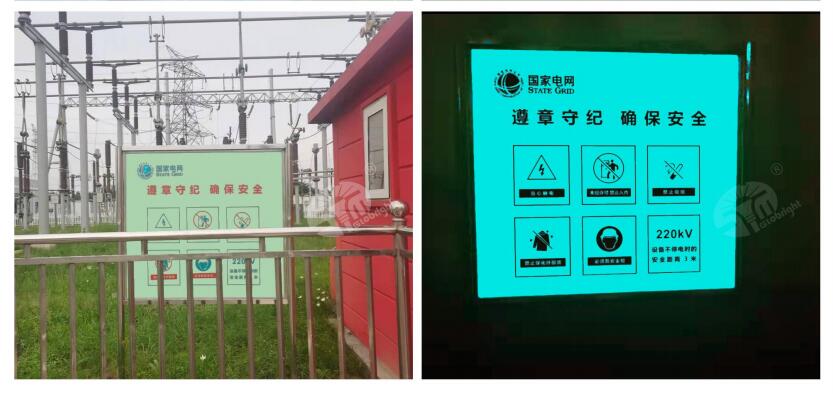
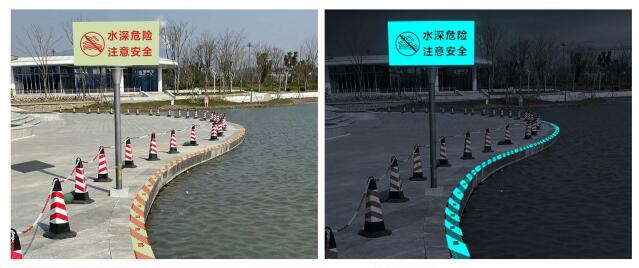
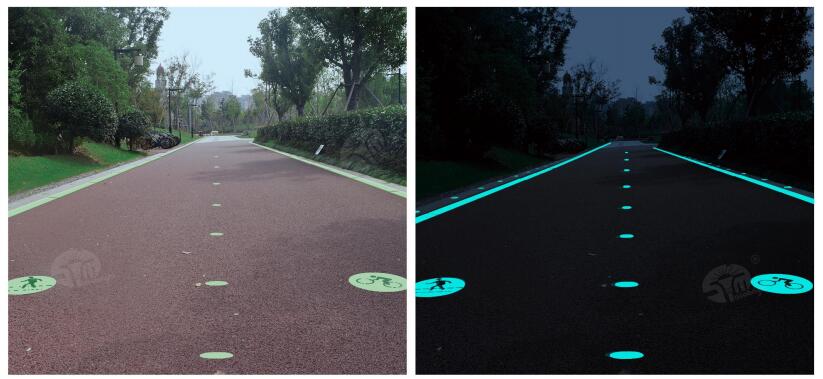
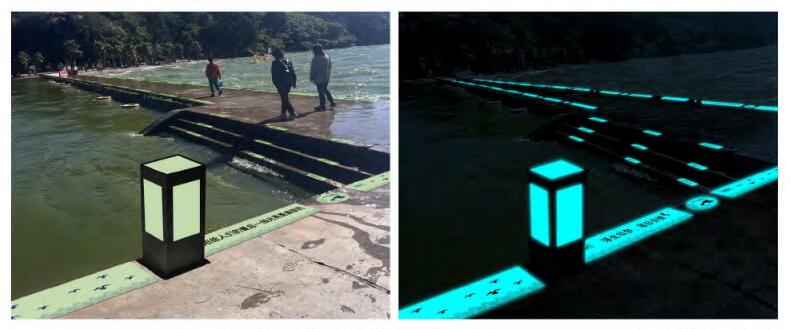
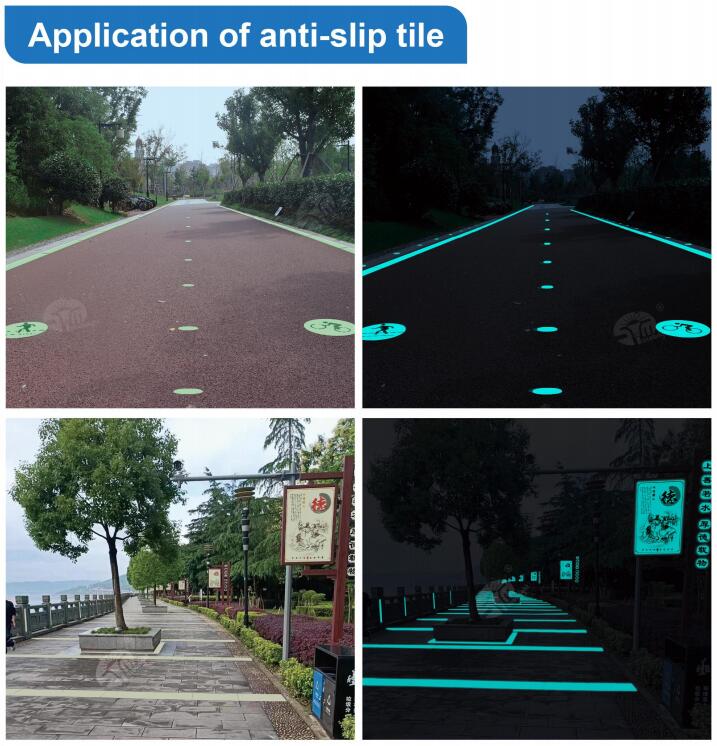
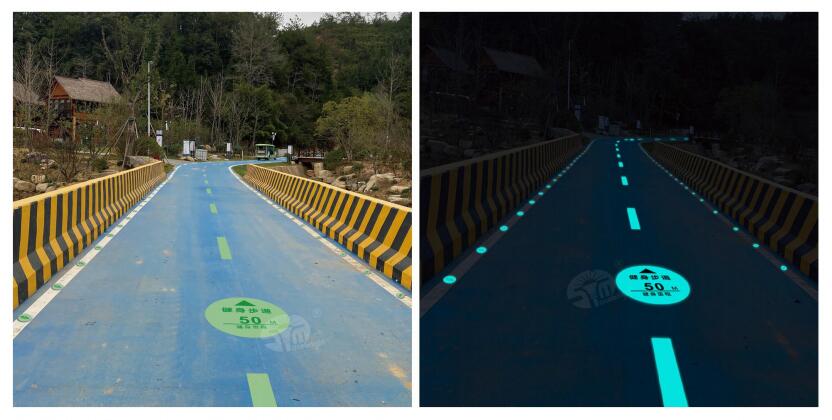
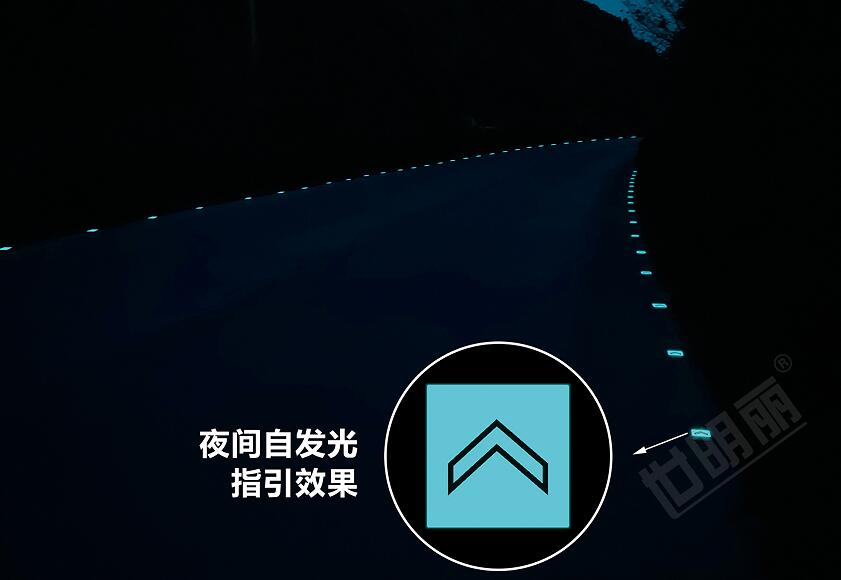
Under outdoor working conditions free from man-made damage, the luminous effect remains stable and unchanged after 15 years of continuous use. Universal for all indoor and outdoor scenarios, it can be processed into various facilities such as luminous signs, glowing pavements, water conservancy footpaths and municipal luminous roads.
Flexible coils made of high-molecular organic resin as the base substrate compounded with long-acting energy-storing self-luminous raw materials. The flexible material fits both flat and curved mounting surfaces, with a wear-resistant and scrub-resistant surface. It meets the national Class B1 flame-retardant standard, is eco-friendly, non-toxic, odorless and free of radioactive substances, supports customized UV graphic printing, and is equipped with self-adhesive backing for peel-and-stick installation without grooving or wiring, suitable for paving and hanging in all types of indoor scenarios.
The service life reaches 5 years for floor paving and over 8 years for vertical wall installation. When ignited by open flame, the material self-extinguishes within 10 seconds after the fire source is removed. The burning melt carbonizes without dripping fire risks, complying with the manufacturing specifications for fire emergency signs.
Flexible coils produced by coating, drying and compounding processes, using highly transparent PET/PP film as the substrate, matched with acrylic transparent resin carrier and inorganic luminous powder.
The material fails to meet fire protection standards: it burns continuously when exposed to open flame, and produces molten drips during combustion, which can easily ignite surrounding materials and cause secondary fires. With low luminous brightness and short effective glowing time, it is only suitable for temporary simple indoor signs and not applicable to high-standard safety projects such as fire protection, water conservancy and power facilities.
Processed from PMMA acrylic matrix mixed with inorganic light-storing powder through multiple procedures:
Precise proportioning & low-speed closed mixing: Acrylic transparent particles are accurately proportioned with inorganic light-storing powder and mixed at low speed in a closed environment to ensure uniform powder dispersion;
High-temperature extrusion: Melted and extruded at a constant temperature of 180–200°C, enabling deep integration of powder and acrylic molecules;
Calendering and sizing: Precision roller pressing controls panel thickness, followed by cooling and shaping.
This panel is a combustible material that burns continuously and drips molten substances in open flame environments. With poor sustainable luminescence capacity, it can only be used for simple indoor decorative scenarios with no fire protection requirements and no nighttime guidance demands.
Through comprehensive comparison of luminous duration, fire performance, weather resistance and service life of various self-luminous materials, the applicable scenario boundaries of different materials are clearly defined.
For projects requiring long-duration luminescence and high-brightness guidance, inorganic self-luminous panels and organic self-luminous coils are prioritized. For working conditions such as open-air outdoor areas, waterfront sun-exposed zones, long-term flood control water conservancy projects and outdoor power facilities, only inorganic self-luminous panels are adaptable. Long-term outdoor sun exposure will cause coating aging, fading and luminous attenuation of organic materials, making them unable to operate stably for a long time.
Zhejiang Globright Optics has devoted over 30 years to the R&D of self-luminous materials, and independently developed two core product lines: inorganic self-luminous panels and organic resin self-luminous coils. With stable luminous performance and the core advantage of 10 hours of autonomous luminescence per single charging, their comprehensive performance is superior to ordinary light-storing products on the market, making them the preferred base materials for various safety marking projects in fire protection, municipal administration, water conservancy, civil air defense and power industries.