Tel: +86 139 0589 5606
E-mail:info@globri.com

Tel: +86 139 0589 5606
E-mail:info@globri.com
In engineering construction and property management procurement, selecting the right material for warning signboards is one of the most common decision points. Many purchasers overemphasize upfront costs while overlooking actual site conditions and safety functional requirements. This often leads to premature fading and delamination of outdoor signs, as well as failed fire emergency signage during power outages — driving up long-term maintenance and replacement costs, and creating potential safety hazards.
In practice, warning signboard material selection shall follow three core principles: scenario adaptability, functional alignment and long-term durability. Today’s mainstream sign materials fall into two broad categories: organic and inorganic. Each material differs in weather resistance, luminous performance, service life and installation method. Only science-based material selection matched to on-site working conditions can strike a balance between safety, durability and full-life-cycle cost efficiency.
Indoor environments are relatively stable, with high requirements for sign aesthetics, installation convenience and spatial coordination. Fire emergency signage must also meet specified combustion performance and safety codes. For operational buildings such as hospitals, shopping malls and schools, the impact of construction on existing finishes, pedestrian flow and daily operations shall be fully considered. Products with easy installation and low maintenance are the preferred choice.
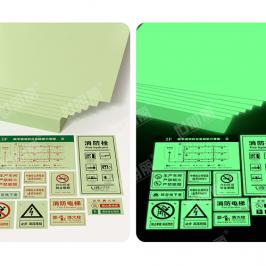
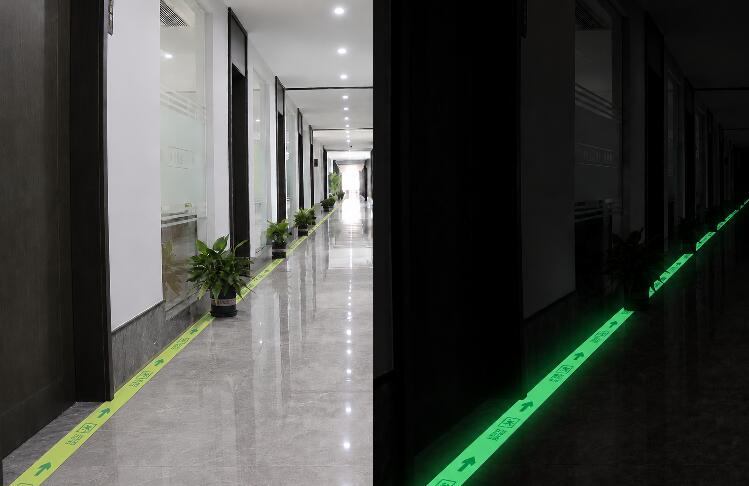
For fire emergency signage, Class B1 flame-retardant organic self-luminous roll materials with long-duration light-storing function are recommended. This flexible material supports custom graphics and sizes, comes with pressure-sensitive adhesive backing, and requires no additional power wiring. It can be applied directly to walls, floors and irregular corners, making it ideal for fire sign retrofits in existing buildings. The material stores energy from ambient light and emits light autonomously during power outages and low-illuminance conditions, providing continuous visual support for occupant evacuation.
For temporary notices or frequently updated content, economical options such as PVC printed signs and high-definition graphic stickers are suitable. Ordinary self-adhesive stickers shall not be used directly in fire evacuation scenarios with mandatory flame retardant requirements. For general informational signs, acrylic panels are a solid choice: they feature a smooth finish and flexible fabricability, and work well for department signs, floor directories and indoor wayfinding, balancing visual appeal and cost-effectiveness.
Outdoor warning signs withstand long-term sun exposure, rain erosion and wide day-night temperature swings. Special sites such as coastal seawalls, mining areas and river dykes face even harsher conditions: high salinity, heavy dust, strong water scouring and prolonged moisture immersion. These environments impose much higher demands on material weatherability, corrosion resistance, wear resistance and service life. For outdoor signage, long-term structural stability shall be the top priority to avoid frequent maintenance and repeated replacement from material degradation.
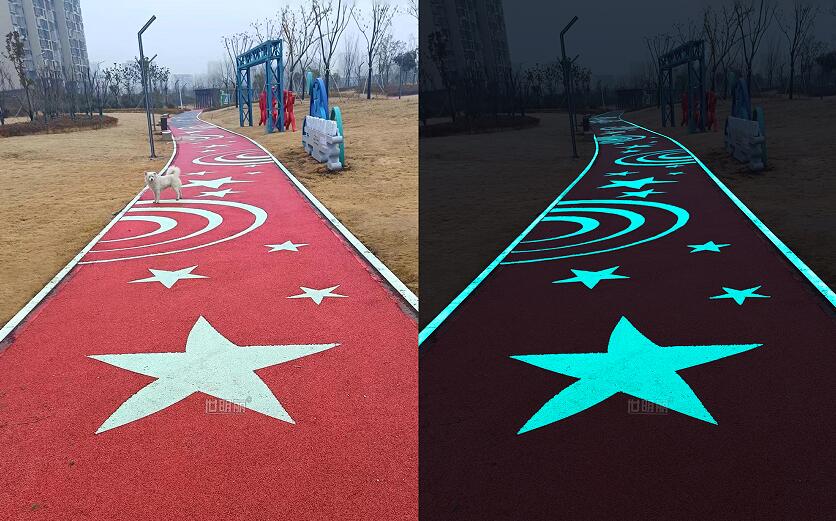
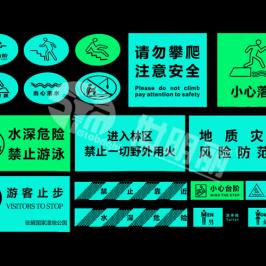
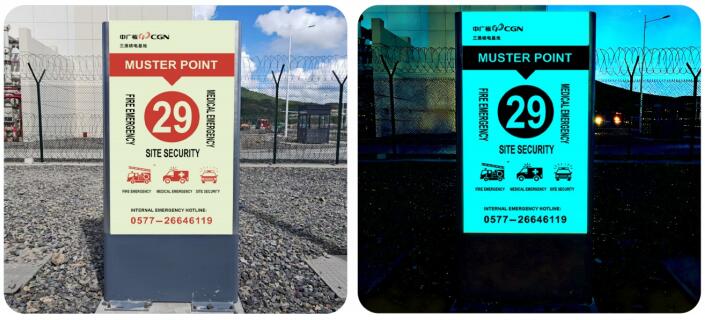
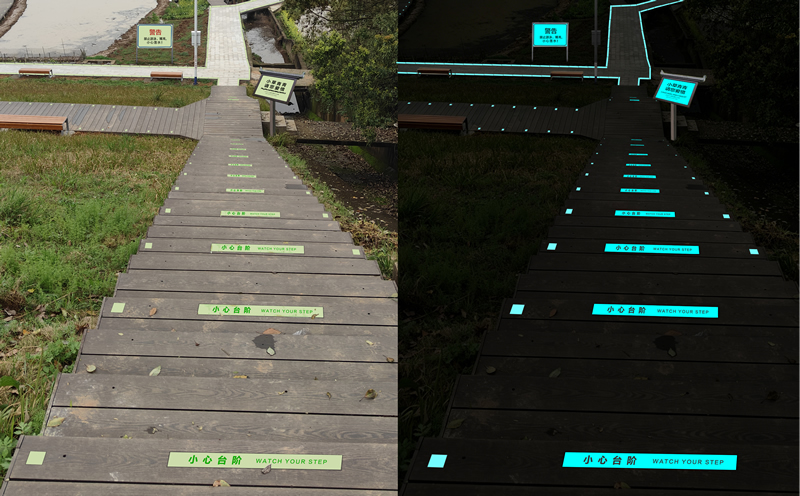
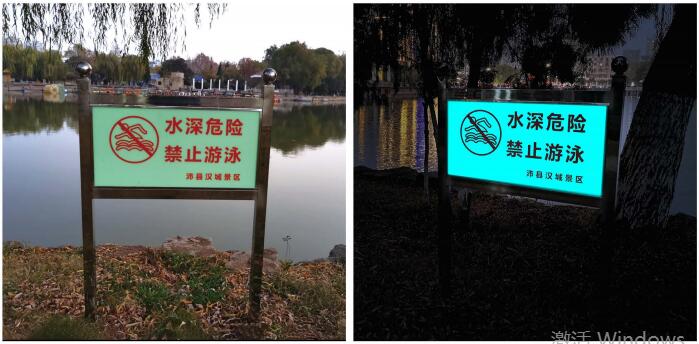
For outdoor safety warning, nighttime patrol and emergency guidance scenarios, inorganic self-luminous panels are the premium choice. Produced via high-temperature sintering of inorganic materials with a dense, stable structure, they deliver exceptional UV resistance, anti-aging performance, water immersion resistance, salt-alkali corrosion resistance and rain-scouring durability. Powered by natural light storage, they glow autonomously at night with no wiring or power supply required. They are ideal for coastal seawalls, river dykes, remote roads, tunnels and unlit areas, providing continuous visual guidance for nighttime operations and emergency passage. For standard road and traffic signage, aluminum reflective signs remain a mature, cost-effective solution that meets conventional wayfinding needs.
For factory yards, mining sites and general outdoor warning areas, stainless steel warning boards and galvanized steel printed signs are also common options, offering decent structural strength at moderate cost. Ordinary organic printed signs degrade quickly under prolonged sun exposure, humidity and corrosive conditions — they are not recommended for long-term use in harsh environments. LED illuminated signs offer active lighting benefits, but require supporting power infrastructure, wiring and ongoing electrical maintenance, making them best suited for sites with stable power access and defined lighting needs. Final selection shall be based on a holistic assessment of operating environment, nighttime visibility requirements and total life cycle costs.
Functional warning signs carry critical responsibilities for safety alerting, emergency evacuation and risk guidance, requiring strong continuous visibility, flame retardancy and long-term stability even in extreme environments. Material selection shall be driven by actual working conditions:
Both product lines use passive photoluminescent light-storing technology. They absorb energy from natural or ambient light and emit light autonomously during power outages, darkness and low-illuminance conditions — no continuous external power supply is needed, making them a reliable visual aid for evacuation and safety warning.
Inorganic self-luminous signs feature high-temperature sintered substrates with excellent water resistance, wear resistance, corrosion resistance and anti-aging performance for long-term outdoor service. Organic self-luminous rolls offer flexible fabrication, adhesive mounting and flame retardant properties for complex indoor spaces. Exact flame retardant ratings shall always be verified against official product test reports.
For long-term operations, self-luminous signs eliminate circuit inspections and battery replacements, reducing routine maintenance workload and operating costs. They are widely deployed in fire evacuation routes, flood control patrol paths, road safety warnings, high-risk zone management, tunnel emergency guidance and dyke access roads, building a durable, stable safety visual guidance system for all types of engineering projects.
General informational signs serve daily wayfinding, notice display and promotional functions. Core material requirements include clear graphics, aesthetic design, controllable cost and easy content updates. Purchasers should balance upfront cost and long-term performance based on installation environment, service cycle and display needs.
For indoor use, acrylic panels, PVC printed signs and high-definition graphic stickers offer easy fabrication, rich design options and flexible size customization, making them suitable for floor directories, department signs and promotional displays. For outdoor use, aluminum reflective signs and galvanized steel printed signs deliver a balanced mix of structural strength, outdoor adaptability and economy for standard road and campus wayfinding needs.
For temporary notices, event promotions and frequently updated content, economical materials with short lead times and easy replacement are recommended. This lowers the cost of batch deployment and future updates, and aligns sign functionality, service life and procurement budget.
There is no single “best material” for warning signboards that works across every scenario. The optimal choice always depends on the precise match between material performance and on-site requirements.
For general indoor informational signs, organic materials can be selected based on aesthetics, cost and installation needs. For indoor fire emergency scenarios, long-duration self-luminous products meeting flame retardant standards shall be prioritized. For outdoor environments with high humidity, intense sun exposure and corrosive conditions, weather-resistant inorganic self-luminous materials deliver the strongest long-term value.
By taking a holistic view of operating environment, safety function, construction conditions and total life cycle cost, operators can reduce costly frequent replacements and rework, and achieve a balanced outcome of safety, durability and economic efficiency.