Tel: +86 139 0589 5606
E-mail:info@globri.com

Tel: +86 139 0589 5606
E-mail:info@globri.com
The replacement frequency of water conservancy signs is mainly determined by application scenarios and material performance. When signs suffer from damage and deformation, blurred graphics, color peeling, or outdated information (due to engineering reconstruction or system updates), they must be replaced immediately to eliminate the retention of failed signs on site.
At water conservancy project sites such as reservoirs, dykes, sluice stations, rivers and pumping stations, safety signs undertake key functions including safety warning, on-site guidance, public display of rights and responsibilities, and area demarcation. They are important infrastructure for preventing safety hazards, standardizing operation procedures and ensuring stable project operation. The service life and operation & maintenance standards of water conservancy signs are determined by material and manufacturing processes. The maintenance and replacement frequency of ordinary water conservancy signs is far higher than that of inorganic self-luminous signs.
Ordinary water conservancy signs are basic signage types for construction sites. Common materials include reflective film-coated aluminum plates, stainless steel, PVC and spray-painted panels, with graphics formed via printing, film lamination or surface spraying. They are widely used in scenarios such as indoor pump rooms, office public notices, equipment nameplates, safety warnings and project boundaries.
The surface graphics of this type of signs are made of organic materials, with poor weather resistance and corrosion resistance. After long-term outdoor use, they are prone to fading, film peeling, blistering and deformation. They have no nighttime luminescence function, delivering poor visibility in dim environments and suffering from fast wear rate.
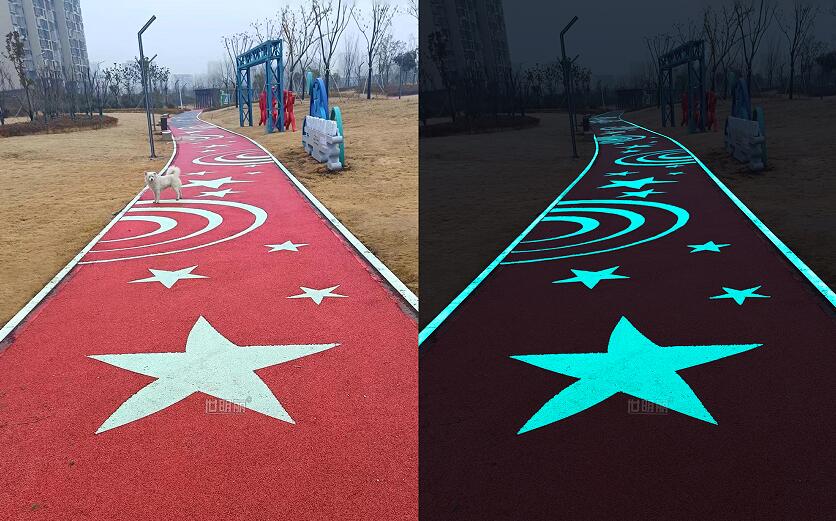
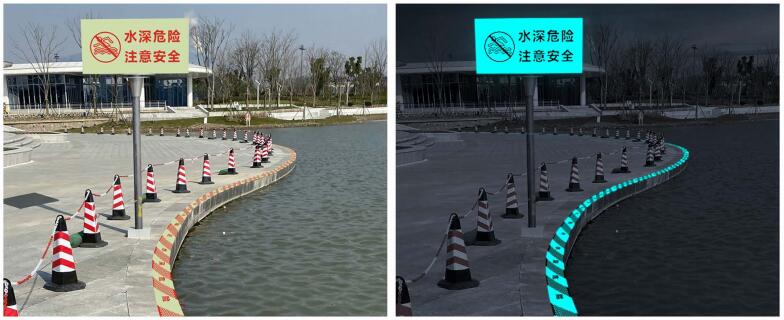
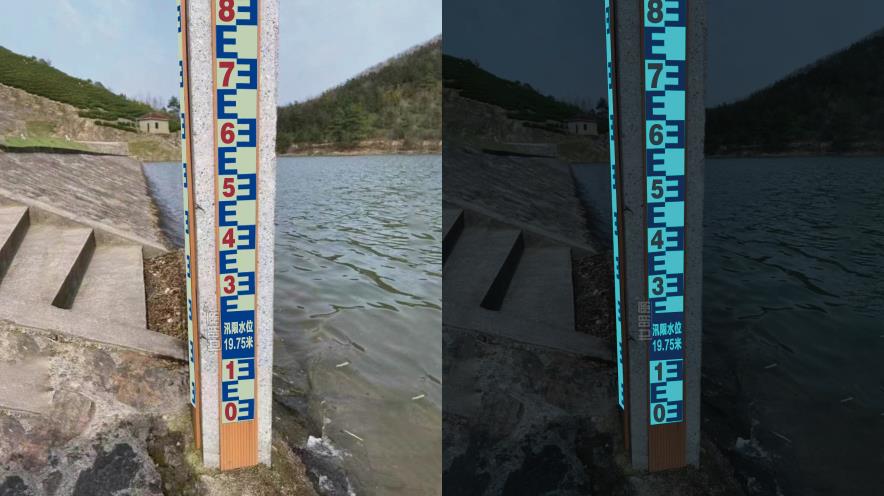
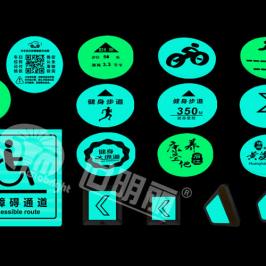
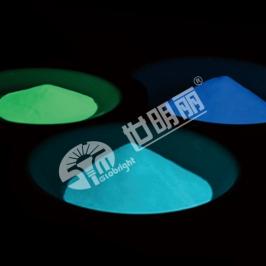
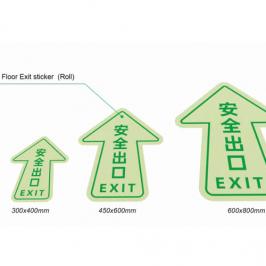
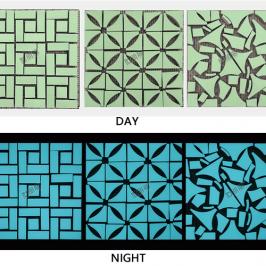
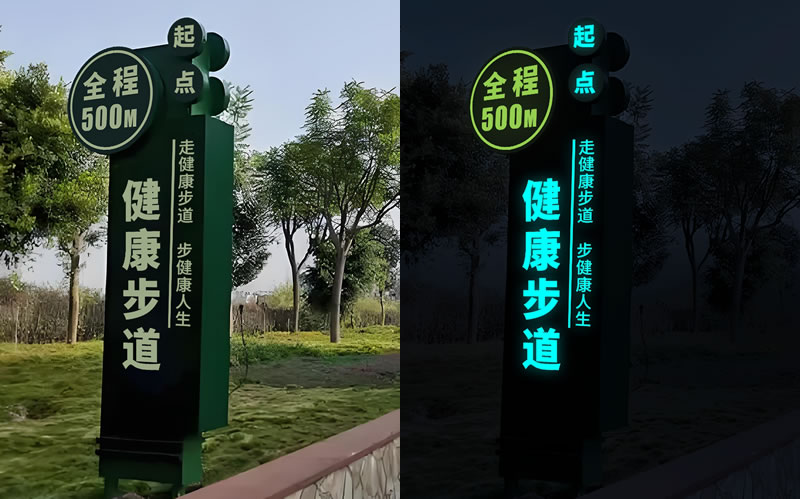
Inorganic self-luminous water conservancy signs are high-performance signs adapted to harsh working conditions of water conservancy projects, with essential differences in manufacturing process from ordinary signs. They take multiple inorganic minerals as raw materials and are integrally formed via high-temperature sintering above 1000°C, with surface graphics integrally sintered and solidified with the panel body. They truly realize permanent fade-free, peel-free and delamination-free performance, thoroughly solving the pain point of easily damaged surface layers of ordinary signs.
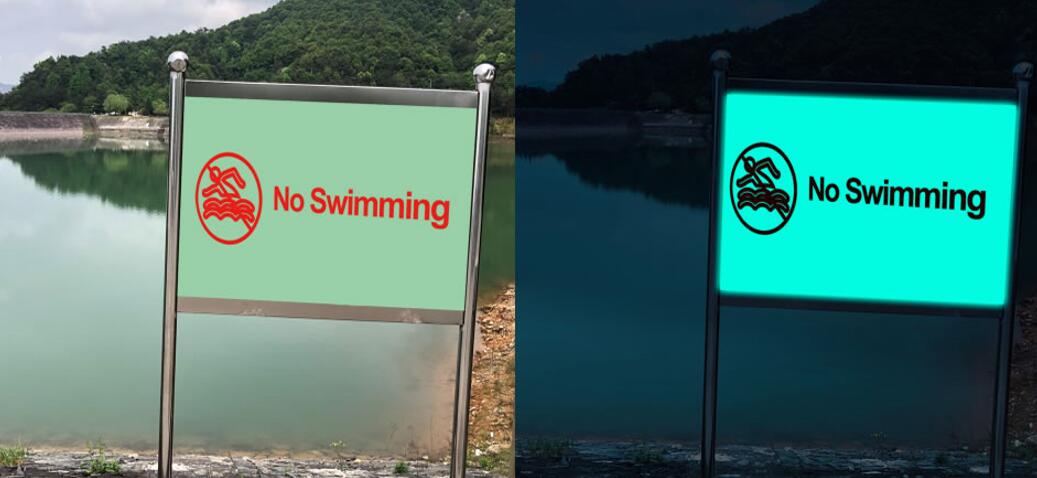
These signs store light energy via natural light and ambient lighting, adopting a pure physical light-storing luminescence mode. They are charge-free, zero-energy-consumption, eco-friendly and stable in performance. With high panel hardness and wear resistance, they boast excellent anti-aging, UV-resistant, acid-alkali resistant, waterproof, moisture-proof and impact-resistant properties. They can adapt to complex water conservancy working conditions such as outdoor sun exposure, high-humidity waterfront environments, acid-alkali corrosion and large day-night temperature differences.
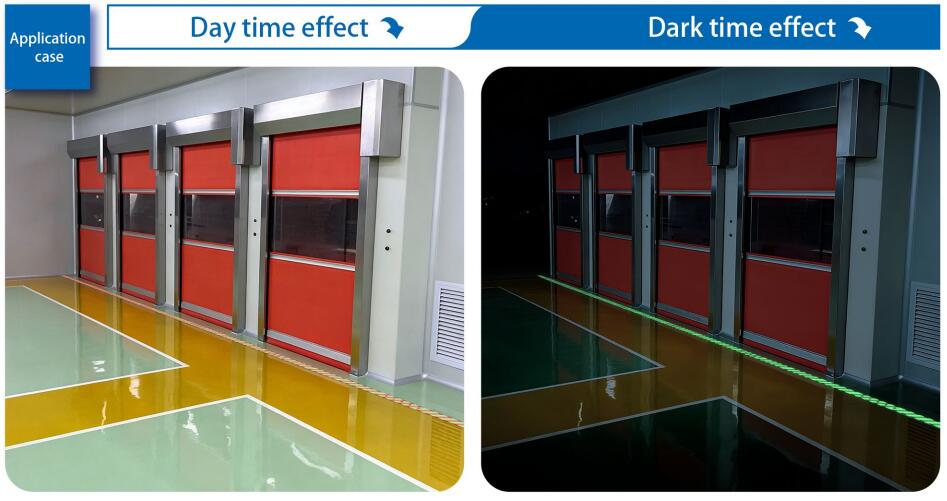
They are mainly used in low-light and unlit areas such as flood control passages, waterfront blind spots, dark areas of sluice stations, dim zones of pump rooms and water conservancy tunnels, realizing all-weather clear visibility.
Due to poor material durability and easily worn graphics, ordinary signs require normalized high-frequency inspection and maintenance, combined with fixed-period replacement, to ensure clear, effective and fully functional signs.
A graded inspection mechanism is implemented according to environmental working conditions:
Combined with practical experience in water conservancy operation and maintenance, ordinary signs are replaced at fixed intervals:
Daily maintenance focuses on service life extension and visibility guarantee: timely clean the sign surface and remove obstructing debris; fasten and correct loose and skewed signs; repair minor problems such as paint peeling, edge lifting and abrasion. Meanwhile, properly keep inspection and maintenance records and establish a complete sign operation & maintenance ledger to realize traceable management.
With the superior weather resistance of integral high-temperature sintering process and inorganic materials, this type of signs rarely suffer from fading, peeling, aging or cracking. Their service life far exceeds that of ordinary signs. They do not require fixed-year replacement, and operation & maintenance focuses on performance monitoring and condition assessment.
Conduct one special inspection per quarter in conventional areas, focusing on verifying panel integrity and nighttime luminous performance. After extreme weather such as flood seasons, rainstorms and strong winds, conduct targeted investigations for hidden dangers such as sign damage, dirt accumulation and fastener falling off to ensure safe use.
There is no mandatory replacement period for inorganic self-luminous signs. The core judgment principle: as long as the panel is free from damage and cracking, graphics are clear, and luminous performance is normal, they can continue to be used. Their luminous performance remains stable for a long time, and they can serve for a long time under conventional working conditions. Even under harsh environments of long-term outdoor sun exposure and high-humidity corrosion, their intact service life can reach more than 15 years.
The signs are wear and damage resistant. For daily cleaning, use clean water with soft cloth to remove surface dust and water stains, so as to avoid stains covering the light-storing layer and affecting luminous effect. Regularly check the firmness of fixing fasteners, prohibit debris and plants from covering the signs, and conduct regular nighttime luminescence tests to continuously track the operation performance of equipment.
Ordinary water conservancy signs have poor durability, requiring high-frequency inspection and regular rotation to timely eliminate aging and failure hazards. With the advantages of integral sintering, permanent fade-free performance and ultra-long durability, inorganic self-luminous signs greatly reduce operation and maintenance costs. They do not require regular replacement under conventional working conditions, and only need normalized performance monitoring.
In operation and maintenance work, it is necessary to accurately distinguish the performance differences between the two types of signs and implement a differentiated management model. This can not only ensure standardized and effective on-site signs, but also improve quality and reduce costs, continuously improve the refined level of safety operation and maintenance of water conservancy projects, and lay a solid foundation for safe and stable project operation.