Tel: +86 139 0589 5606
E-mail:info@globri.com

Tel: +86 139 0589 5606
E-mail:info@globri.com
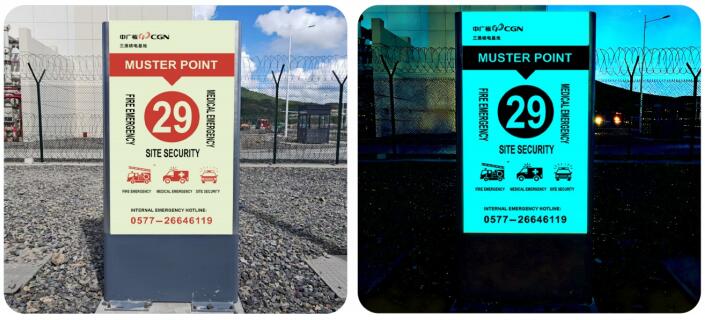
Shopping malls, hospitals and schools are highly crowded public buildings in cities, and also key venues for fire safety and emergency evacuation management. Therefore, fire emergency signs must be installed in these places. In extreme situations such as sudden fires and large-scale power outages, clear and stable emergency signs serve as the core visual defense to guide rapid evacuation and avoid stampede risks. However, traditional powered emergency signs suffer from drawbacks such as circuit failures, sign damage and immediate failure upon power outages when facing emergencies. Featuring comprehensive advantages of 10-hour long-lasting luminescence, Class B1 flame-retardant standard and convenient construction, Globright power-free self-luminous emergency signs have become the mainstream solution for upgrading emergency sign systems in densely populated places.
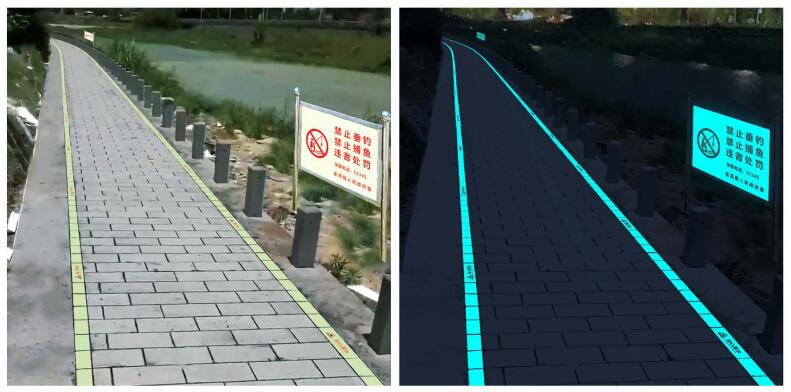
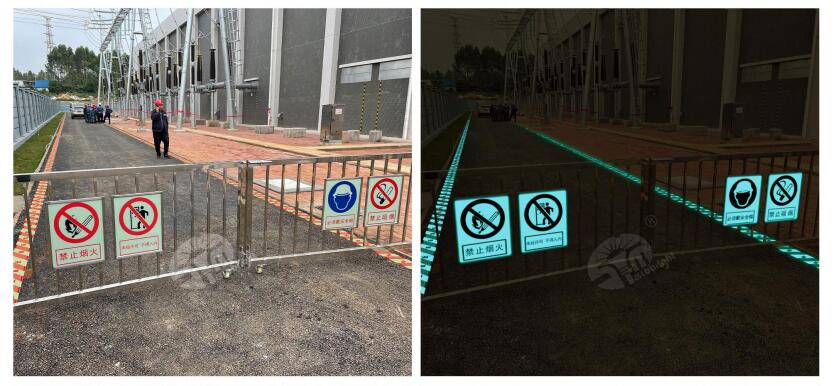
Many people’s understanding of self-luminous emergency signs stays at "glowing at night", but as fire emergency facilities, they have clear technical thresholds and compliance requirements. In terms of luminous principle, self-luminous emergency signs adopt photoluminescent energy storage technology. They absorb visible light such as natural light and indoor lighting to complete energy storage, and autonomously emit visible light in dark environments. No external power supply or built-in battery is required throughout the process, fundamentally avoiding the risks of circuit failures and battery malfunctions.
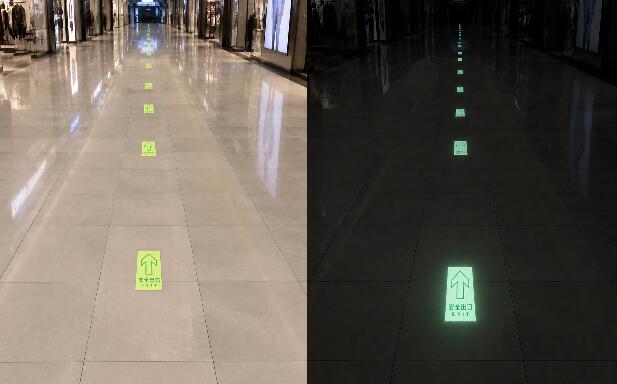
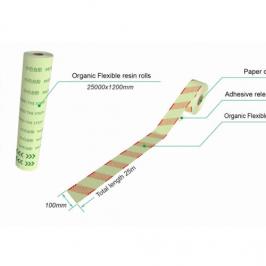
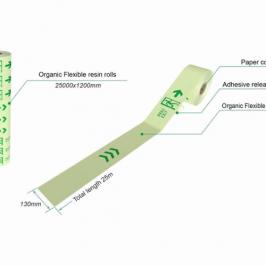
As emergency supporting facilities for public buildings, the products must meet two mandatory fire safety standards at the same time: First, the fire rating shall reach Class B1 flame-retardant standard, with self-extinguishing performance after flame removal and no molten dripping, eliminating secondary fire hazards. Second, the effective luminous duration in dark environments shall be no less than 90 minutes, covering the golden window period for personnel evacuation and emergency rescue. At present, the most widely used self-luminous emergency signs in indoor scenarios such as shopping malls, hospitals and schools are those made of Class B1 organic self-luminous roll materials. Combining fire compliance, construction flexibility and long-term cost-effectiveness, they meet the vast majority of indoor emergency sign requirements.
Different public venues have completely different operation characteristics and evacuation pain points. Self-luminous emergency signs can be deployed in a targeted manner to maximize safety protection value.
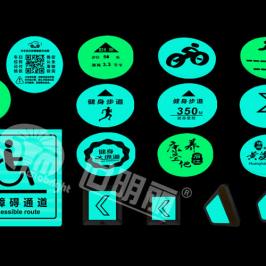
The core deployment points of self-luminous emergency signs in shopping malls cover floor guidance markings on evacuation passages, safety exit signs, warnings at escalator and elevator entrances, positioning signs for fire-fighting facilities, supplementary guidance at corners and forks, and evacuation prompts in front of shops, forming a three-dimensional evacuation guidance system combining floor and vertical surfaces.
Its core application value lies in: The completely power-free independent operation mode keeps the signs clearly visible even under extreme working conditions such as power outages and thick smoke, filling the failure blind spots of traditional emergency signs. Continuously laid floor guidance markings can form a closed-loop escape route, guiding crowds to evacuate quickly in the correct direction. The products come with self-adhesive backing for peel-and-stick application, requiring no grooving, wiring or power-off construction. They will not damage the decoration style of shopping malls, and are especially suitable for fire protection renovation projects of existing commercial buildings. Construction can be completed quickly during night closing hours, minimizing the impact on normal business operations.
Self-luminous emergency signs can be deployed in all scenarios including evacuation markings on ward corridors, safety exit indications, channel guidance for operating rooms and intensive care units, warning signs for fire passages, warnings for pharmacies and high-risk equipment areas, and barrier-free evacuation route guidance, building an emergency guidance network covering the entire hospital.
On campus, self-luminous emergency signs can be widely applied to evacuation markings on teaching building corridors, warning strips on stair steps, safety exit signs, evacuation assembly guidance on playgrounds, warnings for hazardous areas in laboratories, and evacuation route signs in canteens and auditoriums, integrating emergency guidance into the daily campus environment.
Its core advantages for campus scenarios lie in: The material is wear-resistant and durable, withstanding high-frequency student foot traffic and daily bumps, and not prone to damage or falling off. Clear and striking both day and night, it can not only strengthen students' safety awareness and memory of evacuation routes in daily life, but also stably play a guiding role in emergencies. With long service life and low operation frequency, it requires no frequent maintenance and replacement, which can effectively reduce the daily safety management burden of the school and enable long-term implementation of safety protection.
Power-free self-luminescence: The products operate completely without electricity. They can work independently and stably during fire trips and large-scale power outages, and will not fail collectively due to power interruption. They serve as an important supplement and safety backup for traditional powered emergency signs.
Class B1 flame retardant meeting fire acceptance requirements: Mainstream engineering-grade products all reach Class B1 flame-retardant standard, with self-extinguishing performance after flame removal and no molten drips. They will not become a carrier of fire spread, fully complying with fire safety specifications for public buildings.
Convenient construction reducing construction interference: Roll products with self-adhesive backing can be directly pasted on floors and walls, requiring no grooving, wiring or power-off construction. Featuring short construction period, no dust or noise, and immediate use after pasting, they have no impact on shopping mall business, hospital diagnosis and treatment, or school teaching.
Long-term stability reducing operation and maintenance costs: The effective service life can reach 5–8 years under normal indoor working conditions. During this period, no battery replacement or circuit maintenance is required, and only routine cleaning is needed daily, greatly reducing the labor and consumable costs of long-term operation and maintenance.
In conclusion, as highly crowded public spaces, the reliability of emergency evacuation signs in shopping malls, hospitals and schools is directly related to the life safety of everyone. Scientific selection and standardized deployment of self-luminous emergency signs can not only consolidate the emergency evacuation safety defense line of public buildings, but also effectively reduce long-term operation and maintenance costs. They are a high-quality choice for upgrading emergency sign systems in densely populated places, and escort urban public safety.