Tel: +86 139 0589 5606
E-mail:info@globri.com

Tel: +86 139 0589 5606
E-mail:info@globri.com
When it comes to outdoor warning sign performance, durability directly determines long-term safety effectiveness and total life cycle costs. Among all material options, inorganic self-luminous warning signs deliver the highest overall durability. Featuring a high-temperature sintered inorganic substrate, they outperform traditional organic and metal materials across core dimensions including UV & aging resistance, waterproof & corrosion resistance, and wear & impact resistance. Especially suited for harsh outdoor operating conditions, they far exceed ordinary warning signs in service life and performance stability, making them the top choice for high-durability demand scenarios.
To objectively compare durability across materials, four core performance dimensions are universally recognized in engineering and safety management:
Most conventional warning sign materials struggle to balance sun resistance, waterproofing and long-term stability. The table below summarizes key performance metrics across mainstream options:
| Material Type | Weather Resistance | Waterproof | Corrosion Resistance | Average Outdoor Service Life | Night Visibility |
|---|---|---|---|---|---|
| Inorganic Self-Luminous | Excellent | Excellent | Excellent | 15+ years | Active (passive, no power needed) |
| Metal Reflective | Fair | Poor | Fair | 2–3 years | Dependent on external light |
| PVC Printed | Poor | Poor | Poor | 1–2 years | None |
| Acrylic | Fair | Poor | Poor | 2–3 years | None |
| LED Illuminated | Poor | Poor | Poor | 2–4 years | Active (requires power) |
PVC printed warning signs are the lowest-cost option but also the least weather-resistant outdoor warning sign material. The surface printed ink layer quickly fades and chalks under continuous UV exposure. PVC substrates warp and lose adhesion when exposed to water; rain seeping in from edges causes graphic smudging and permanent damage. Under normal outdoor operating conditions, their service life is usually only 1–2 years, and they fail even faster in alternating rainy and sunny environments.
Metal-based reflective warning signs suffer from substrate rust and erosion caused by rain and moisture, and joints are susceptible to corrosion and perforation. The surface reflective film layer ages and peels off after long-term sun exposure, resulting in a steep drop in reflection efficiency. Usually after 2–3 years, large-scale functional degradation occurs, requiring frequent replacement and maintenance.
Acrylic warning signs offer high surface flatness and good visual effect, but have insufficient weather resistance for long-term outdoor use. Extended open-air sun exposure easily causes brittleness and cracking, and even fracture in low-temperature environments. Poor waterproofing at panel joints leads to internal fogging and graphic blurring after water infiltration. Overall durability is insufficient in outdoor environments, and they are mostly used for indoor low-risk scenarios.
The durability of LED illuminated warning signs is greatly limited by internal circuits and electronic components. Waterproof sealing structures degrade rapidly under sun exposure and aging, and water ingress directly causes short circuit damage. Lamps, power supplies and other components have limited service life and high failure rates, requiring regular inspection and replacement. Once the circuit fails, overall function drops to zero, with even worse reliability in extreme weather.
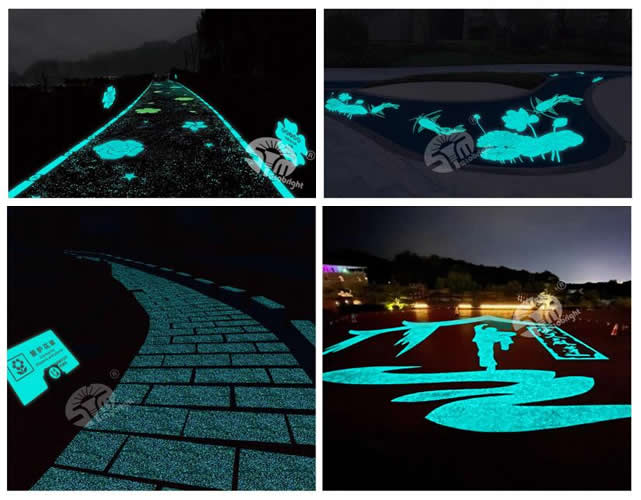
Globright inorganic self-luminous warning signs are integrally formed from inorganic mineral raw materials sintered at temperatures above 1000°C, forming a dense and stable monolithic substrate. The material inherently boasts natural properties of weather resistance, waterproofing and corrosion resistance.
Unlike organic materials that degrade over time and metal materials that oxidize and rust, inorganic materials have extremely stable chemical properties with no natural aging failure mode. This fundamentally breaks through the durability limit of traditional sign materials.
Inorganic materials have far better UV degradation resistance than organic materials. They will not fade, chalk or deform after long-term open-air sun exposure.
Unlike surface-printed or film-coated alternatives, warning graphics are fused integrally with the substrate — there is no risk of surface peeling or graphic abrasion. Even after years of wind and sun, they maintain a clear and intact warning effect, without the cliff-like performance degradation seen in traditional printed and film-coated products.
The monolithic inorganic structure is dense and pore-free, delivering complete waterproof and immersion resistance. Daily rain scouring and short-term water level rise immersion cause no damage to the product at all.
Meanwhile, it boasts excellent resistance to salt-alkali erosion and chemical dust corrosion, and stably adapts to extreme corrosive environments such as coastal tidal flats and chemical mining areas, with no rusting, corrosion perforation or interlayer delamination.
The product features high overall hardness and strong impact resistance, withstanding high-frequency pedestrian trampling, sand splash impact and external collision, and being resistant to cracking, breakage and delamination. In scenarios such as high-traffic footpaths, roads with vehicle traffic, and factories & mines with complex working conditions, it also maintains structural integrity for a long time, with durability far exceeding ordinary materials.
Completely free of circuits and electronic components, there are no common failure points such as short circuit burnout and component aging, eliminating the core failure causes of traditional powered signs from the product structure. There are no wearing parts during operation, requiring no circuit inspection or component replacement, with long-term stable performance and greatly reduced failure probability.
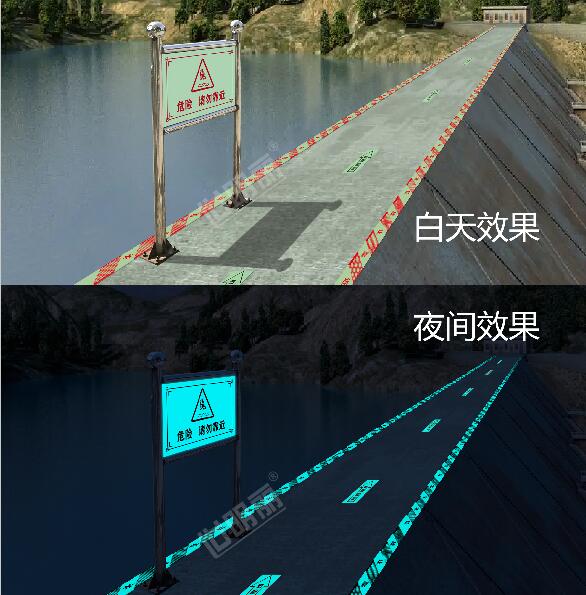
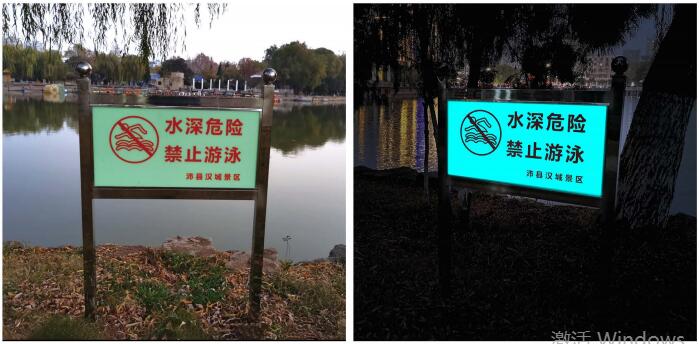
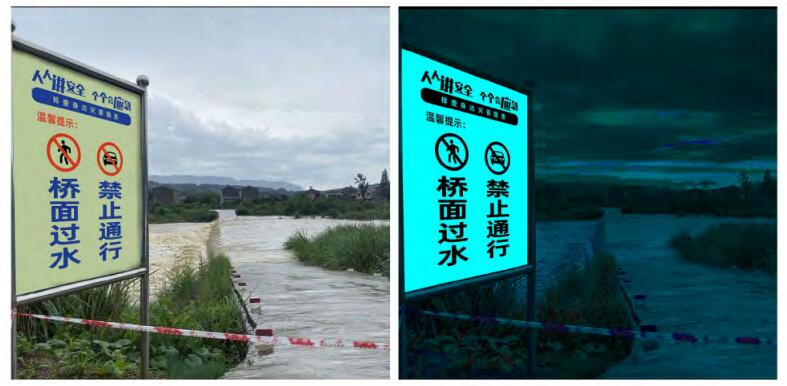
Suitable for river dykes, reservoir dams, coastal seawalls and other waterfront scenarios. They withstand long-term water immersion, salt-alkali corrosion and open-air sun exposure, with no performance loss after flood season water immersion. No frequent replacement and maintenance are required, greatly reducing long-term management costs of water conservancy projects.
Suitable for national & provincial trunk roads, mountain highways, rural roads and other transportation scenarios. They withstand wind and rain, and sand impact from vehicles, and emit light autonomously at night on unlit road sections. Long-term use does not degrade function, ensuring all-weather traffic safety.
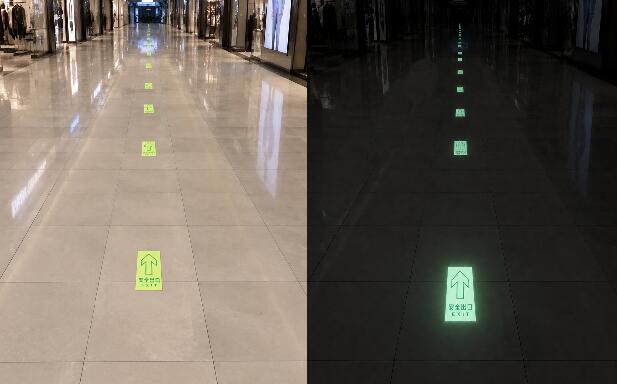
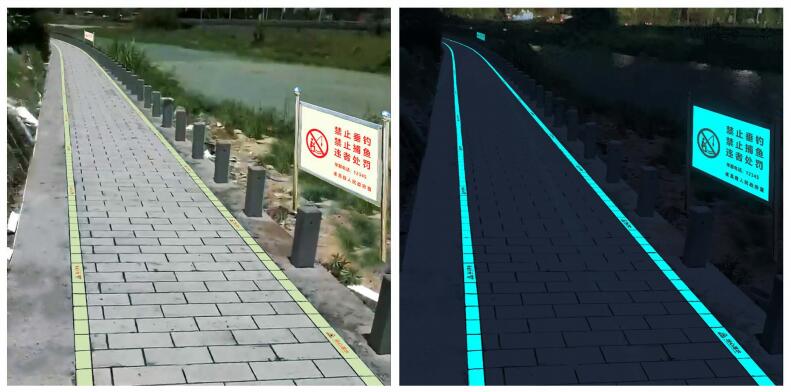
Suitable for city squares, waterfront footpaths, underground passages and other public scenarios. They withstand high-frequency pedestrian trampling and seasonal freeze-thaw cycles, with long-term stability and low maintenance, reducing the interference of repeated maintenance on urban operation and lowering full-cycle maintenance costs.
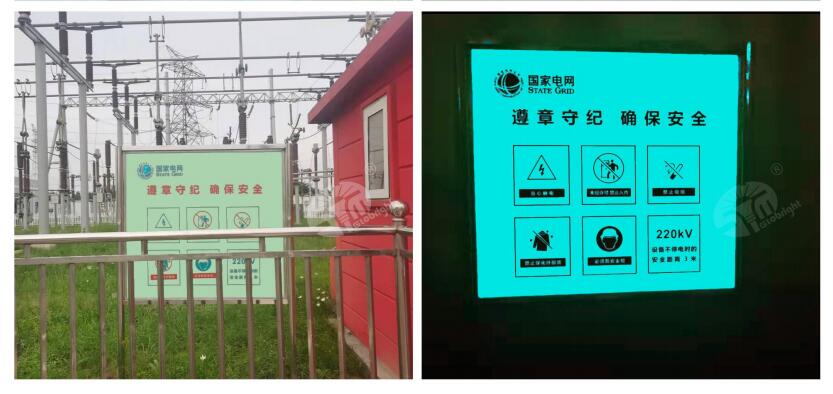
Suitable for factory areas, mining areas, chemical parks and other industrial scenarios. They withstand dust, corrosive media and harsh open-air working conditions, with significant durability advantages. They greatly reduce the frequency of sign replacement and lower the operational risk of maintenance personnel entering high-risk areas.
Q: How long do outdoor warning signs typically last? A: Standard PVC and printed signs last 1–2 years outdoors; metal reflective signs last 2–3 years; inorganic self-luminous signs can last 15+ years in harsh outdoor environments based on accelerated weathering test data.
Q: Are metal or plastic warning signs more durable? A: Metal signs generally outlast standard plastic signs in outdoor environments, but both are outperformed by inorganic sintered signs in terms of weather resistance, corrosion resistance and overall service life.
Q: What warning signs are waterproof for waterfront and tidal areas? A: Inorganic self-luminous warning signs are fully waterproof and immersion-resistant, with no internal circuits to short out. They are ideal for dykes, seawalls, tidal zones and flood-prone areas.
Comprehensively evaluating all dimensions including weather resistance, waterproofing, corrosion resistance, wear resistance and performance stability, inorganic self-luminous material warning signs are the most durable choice available today. Especially in harsh outdoor operating conditions, their advantages in service life and long-term reliability are remarkable.
Although the initial procurement cost is slightly higher than ordinary low-cost materials, it eliminates the cost of repeated replacement and maintenance, delivering higher cost-effectiveness across the full product life cycle. For long-term outdoor safety projects, Globright inorganic self-luminous warning signs provide the optimal balance of safety, durability and total cost of ownership.